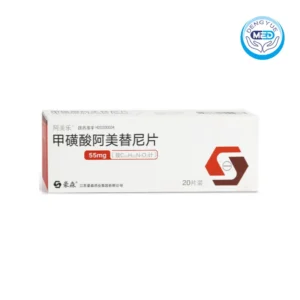
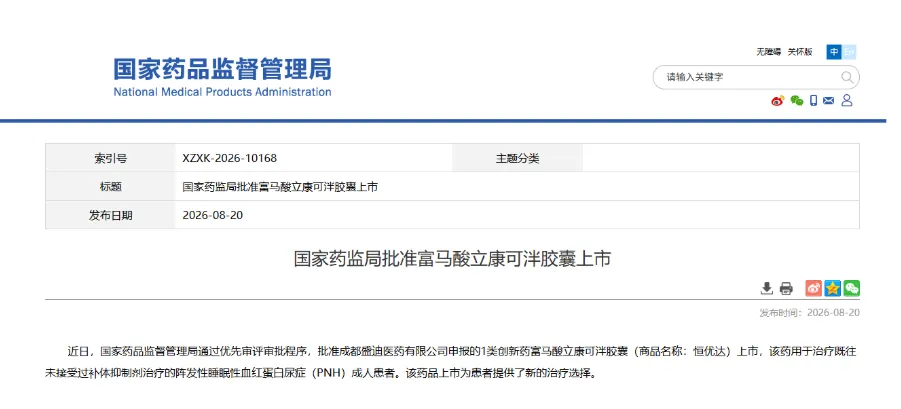
HengYouDa Approved for PNH in China: Fumarate Licancopan Capsules (HengYouDa®) were approved by China’s National Medical Products Administration (NMPA) on August 20, 2026, for the treatment of adult patients with paroxysmal nocturnal hemoglobinuria (PNH) who have not previously received complement inhibitor therapy.
Developed independently by Hengrui Pharmaceuticals as a Class 1 innovative drug, fumarate licancopan is an oral complement Factor B inhibitor that suppresses abnormal activation and amplification of the alternative complement pathway, providing a new treatment option for patients with PNH.
👉 The approval was granted under China’s priority review and approval pathway, marking the entry of a domestically developed Factor B inhibitor into clinical use in China. For PNH, a rare acquired hemolytic disorder, HengYouDa® expands the range of complement-targeted treatment options. Its oral administration and targeted action on the alternative complement pathway may also offer new possibilities for the long-term management of the disease.
What Is Fumarate Licancopan Capsules (HengYouDa®)?
Fumarate Licancopan Capsules (HRS-5965, brand name: HengYouDa®) are a Class 1 innovative drug independently developed by Hengrui Pharmaceuticals and an oral complement Factor B (CFB) inhibitor. The drug primarily targets Factor B in the alternative complement pathway. By inhibiting abnormal activation of the alternative pathway and the complement amplification loop, fumarate licancopan helps reduce complement-mediated red blood cell destruction and control PNH-associated hemolysis.
To help readers quickly understand the key characteristics of fumarate licancopan capsules, the following table summarizes the main publicly available product information:
| Item | Information |
|---|---|
| Generic Name | Fumarate Licancopan Capsules |
| Brand Name | HengYouDa® |
| Development Code | HRS-5965 |
| Drug Type | Class 1 innovative drug: oral small-molecule complement inhibitor |
| Primary Target | Complement Factor B (Factor B, CFB) |
| Mechanism of Action | Inhibits complement Factor B, reducing abnormal activation and amplification of the alternative complement pathway |
| China Approval Date | August 20, 2026 |
| Approved Indication in China | Adult patients with PNH who have not previously received complement inhibitor therapy |
| Route of Administration | Oral |
| Developer | Hengrui Pharmaceuticals |
| Applicant | Chengdu Shengdi Pharmaceutical Co., Ltd. |
| Key Clinical Study | HRS-5965-301 Phase III clinical study |
What Is PNH? Why Has Complement Factor B Become a New Therapeutic Target?
Paroxysmal nocturnal hemoglobinuria (PNH) is a rare acquired hemolytic disorder and is included in China’s First National List of Rare Diseases. In patients with PNH, blood cells derived from abnormal hematopoietic stem cells lack normal protection from complement regulation, making red blood cells more vulnerable to attack by the complement system and resulting in persistent hemolysis.
Under normal conditions, the complement system plays an important role in immune defense by helping recognize and eliminate pathogens. However, in PNH, abnormal red blood cells lack key complement regulatory proteins and are therefore more susceptible to complement-mediated destruction. When the complement system remains abnormally activated, it may lead to the formation of the membrane attack complex (MAC), causing intravascular hemolysis. At the same time, complement fragments deposited on the surface of red blood cells may be recognized and cleared by macrophages in the liver and spleen, resulting in extravascular hemolysis.
😣 Persistent hemolysis can lead to anemia, fatigue, hemoglobinuria, and an increased risk of thrombosis and organ damage. Therefore, PNH treatment aims not only to control hemolysis but also to improve anemia, reduce the need for blood transfusions, and support long-term disease management.
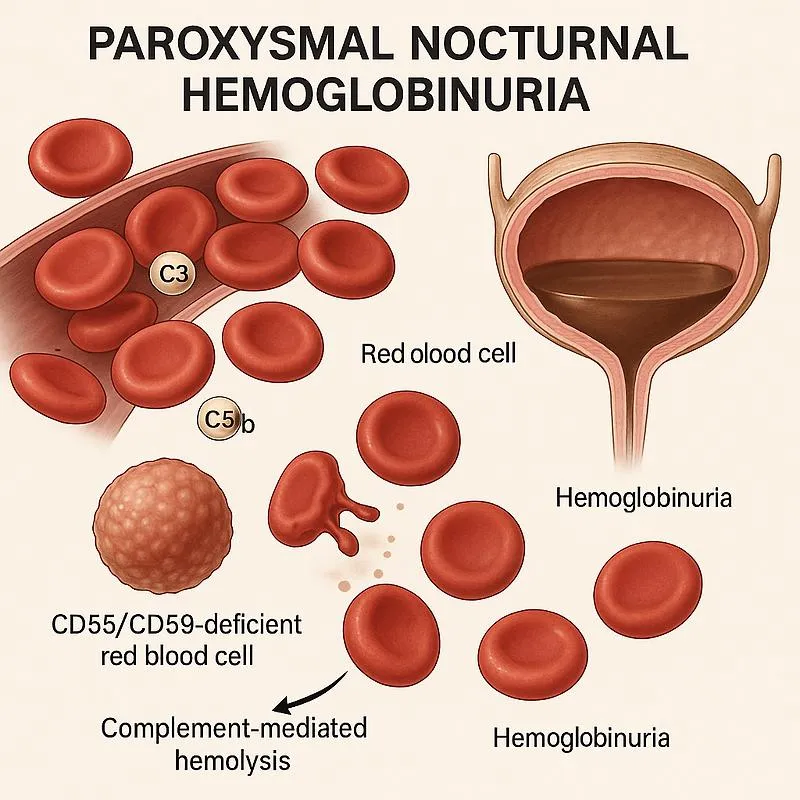
In this process, the alternative complement pathway and its complement amplification loop play an important role. The complement system consists of the classical pathway, lectin pathway, and alternative pathway. Unlike the other pathways, the alternative pathway has a continuous amplification function that can substantially increase complement activation signals.
✨ Complement Factor B (Factor B) is a key protein in the alternative pathway. It participates in the formation of active complement complexes and promotes subsequent complement cascade reactions. When the alternative pathway is abnormally activated, Factor B-mediated complement amplification may further enhance downstream complement activation, intensifying the attack on PNH red blood cells.
Therefore, Factor B has emerged as an important therapeutic target for complement-based treatment of PNH. Unlike C5 inhibitors, which primarily act at the terminal stage of the complement cascade, Factor B-targeted therapies intervene further upstream in the alternative pathway. By inhibiting Factor B activity, they can reduce abnormal complement activation and amplification, thereby decreasing downstream complement-mediated red blood cell destruction.
What Are the Key Advantages of HengYouDa®?
As an oral complement Factor B inhibitor approved for the treatment of adult patients with PNH, HengYouDa® stands out primarily in three areas: its mechanism of action, route of administration, and clinical study results.
How Does Licancopan Control PNH-Associated Hemolysis?
The primary target of Fumarate Licancopan Capsules is complement Factor B (Factor B). By inhibiting Factor B activity, licancopan can suppress activation of the alternative complement pathway and reduce sustained complement amplification.
From a disease-mechanism perspective, this is particularly important. Patients with PNH may experience both intravascular and extravascular hemolysis, and the alternative complement pathway is involved in both processes. By intervening upstream in the complement cascade, licancopan may provide broader control of complement-mediated hemolysis at the mechanistic level.
This represents one of the key mechanistic differences between licancopan and conventional C5 inhibitors. C5 inhibitors primarily block the terminal complement pathway, whereas Factor B inhibitors act upstream by targeting the alternative complement pathway.
For PNH patients who require long-term control of complement-mediated hemolysis, therefore, the Factor B inhibition strategy further expands the therapeutic approaches available for complement-targeted treatment.
Oral Administration: Another Potential Advantage for Long-Term PNH Treatment
PNH is a chronic condition that requires long-term management, making the route of administration an important consideration.
HengYouDa® is administered orally at a dose of 50 mg twice daily. Compared with some complement inhibitors that require subcutaneous or intravenous administration, an oral capsule offers potential advantages in terms of administration convenience and provides eligible patients with another treatment option.

For patients receiving long-term complement inhibition, treatment decisions involve more than mechanism of action and efficacy. Administration convenience, treatment adherence, and long-term disease management may also be important considerations. The availability of an oral Factor B inhibitor therefore further broadens the range of treatment options for PNH.
Phase III Study Demonstrated Significant Improvements in Hemoglobin
The approval of Fumarate Licancopan Capsules was primarily supported by the HRS-5965-301 multicenter, randomized, open-label, active-controlled Phase III clinical study. The study evaluated the efficacy and safety of licancopan compared with the C5 inhibitor eculizumab in complement-inhibitor-naïve patients with PNH.
A total of 76 patients were enrolled, with 40 patients receiving licancopan and 36 receiving eculizumab. Licancopan was administered at 50 mg twice daily.
The study results demonstrated positive effects across several key hematological measures.
- Hemoglobin (Hb) response rate reached 95%.
- During Weeks 18–24, 95.0% (38/40) of patients in the licancopan group achieved an Hb response, defined as an increase in hemoglobin of ≥2 g/dL from baseline in at least 3 of 4 assessments. The corresponding rate in the eculizumab group was 55.6% (20/36).
✨ This result indicates that the vast majority of patients receiving licancopan achieved a clinically meaningful improvement in hemoglobin levels during the study period.
- 70% of patients achieved Hb ≥12 g/dL.
- In addition to assessing increases in hemoglobin from baseline, the study evaluated whether patients could achieve an Hb level of ≥12 g/dL. During Weeks 18–24, 70.0% (28/40) of patients in the licancopan group achieved Hb ≥12 g/dL in at least 3 of 4 assessments and had received no red blood cell transfusions after Week 2, compared with 11.1% (4/36) in the eculizumab group.
- Meanwhile, the mean increase in hemoglobin from baseline during Weeks 18–24 was 5.5 g/dL in the licancopan group, compared with 2.9 g/dL in the eculizumab group.
✨ For PNH, where chronic hemolysis and anemia are major clinical concerns, these findings highlight the potential value of licancopan in improving hematological outcomes.
- 100% of patients achieved transfusion independence after Week 2.
- Reducing transfusion dependence is an important goal of long-term PNH treatment. The study showed that 100% of patients in the licancopan group achieved transfusion independence after Week 2, compared with 86.1% in the eculizumab group, with a statistically significant difference (P=0.0149).
✨ This finding is consistent with the improvement in hemoglobin observed in the licancopan group, suggesting that the clinical evaluation addressed not only complement-related outcomes but also anemia control and practical treatment needs.
- Fatigue symptoms improved
- Chronic hemolysis and anemia can contribute to persistent fatigue, which may substantially affect the daily lives of patients with PNH. In the HRS-5965-301 study, improvement in FACIT-Fatigue scores was greater with licancopan than with eculizumab, with a least-squares mean difference of 4.19 (P=0.0001).
✨ This suggests that the clinical benefits observed with licancopan extended beyond laboratory parameters such as hemoglobin levels to include improvements in patient-reported fatigue.
- Overall safety profile was manageable.
- In the Phase III study, no major adverse vascular events (MAVEs) occurred in either treatment group, and adverse events during treatment were generally manageable.
For PNH, a rare disease requiring long-term management, the introduction of a new mechanism of action and an oral treatment option further expands the existing therapeutic landscape and provides eligible patients with another potential approach to complement-targeted therapy.
What Does the Approval of HengYouDa® Mean?
The approval of Fumarate Licancopan Capsules not only marks the introduction of a new treatment for PNH into clinical practice in China but also reflects the continued progress of Chinese innovative pharmaceutical companies in the independent development of complement-targeted therapies.
- From a mechanistic perspective, Factor B inhibitors move the therapeutic intervention point further upstream within the complement pathway.
- From an administration perspective, the oral formulation provides patients with another treatment option.
- From the clinical study results, licancopan demonstrated positive outcomes across multiple measures, including hemoglobin improvement, transfusion independence, and fatigue.
It is also worth noting that the marketing application for Fumarate Licancopan Capsules for adult patients with PNH who continue to experience anemia despite previous treatment with a C5 complement inhibitor has also been accepted for review. If subsequently approved, the potential eligible patient population could be further expanded, potentially providing a new treatment option for patients who continue to experience anemia despite existing complement inhibitor therapy.
In addition, a Phase III clinical trial of Fumarate Licancopan in primary IgA nephropathy is currently underway. Its potential clinical value in other complement-related diseases therefore remains an area of interest for future research.
DengYue Pharmacy: Connecting Chinese Innovative Medicines with Global Procurement Needs
As the development of innovative medicines in China continues to accelerate, an increasing number of domestically developed drugs are entering clinical practice across areas such as oncology, rare diseases, immune disorders, and other complex chronic conditions. For overseas healthcare institutions, pharmaceutical distributors, and professional procurement clients, China’s innovative medicine supply resources are becoming an increasingly important part of the global pharmaceutical procurement landscape.
DengYue Pharmacy focuses on Chinese pharmaceutical supply and global procurement services, helping overseas customers gain more convenient access to information about medicines available in China and providing product consultation and supply coordination based on their specific procurement needs.
For newly approved innovative medicines such as Fumarate Licancopan Capsules (HengYouDa®), DengYue Pharmacy can provide qualified professional customers with product information and procurement consultation support based on their purchasing requirements.
🧑💼 If you are looking for innovative medicines from China, rare disease medicines, or other specialized pharmaceutical products, you can contact DengYue Pharmacy to learn more about product availability and supply options.
Conclusion
As a Class 1 innovative drug independently developed by Hengrui Pharmaceuticals and an oral complement Factor B inhibitor, Fumarate Licancopan Capsules target the alternative complement pathway and inhibit abnormal complement activation and amplification at an upstream level, providing a new mechanistic treatment option for PNH.
As complement-targeted therapies continue to evolve, PNH treatment is moving beyond simply controlling hemolysis toward more comprehensive long-term disease management. The approval of HengYouDa® further expands the treatment options available for PNH while also highlighting a new Chinese innovative medicine for global healthcare institutions and pharmaceutical procurement markets to consider.
FAQ About HengYouDa Approved for PNH in China
What is HengYouDa® used for?
HengYouDa® (Fumarate Licancopan Capsules) is approved in China for the treatment of adult patients with paroxysmal nocturnal hemoglobinuria (PNH) who have not previously received complement inhibitor therapy.
What is the main cause of PNH?
Paroxysmal nocturnal hemoglobinuria (PNH) is a rare blood disorder that happens when part of your immune system attacks and damages your red blood cells and platelets. Left untreated, PNH can cause hemolytic anemia, chronic kidney disease, or thrombosis (blood clots).
What is the triad of PNH?
Paroxysmal nocturnal hemoglobinuria (PNH), first described in the 18th century, is characterized by the typical clinical triad of hemolytic anemia, bone marrow failure, and propensity to thromboembolism (Rotoli and Luzzatto 1989; Dunn et al. 2000; Rotoli et al. 2006; Hill et al. 2007a).
What is PNH treatment?
Additional treatment strategies are focused on managing the symptoms and complications of PNH. Depending on the anemia symptoms they experience, patients with PNH may receive supportive treatments, such as blood transfusion, iron replacement therapy, growth factors, and erythropoeitin.
What is NMPA approval in China?
NMPA (National Medical Products Administration) is China’s drug and medical device regulator—the direct equivalent of the US FDA and EU EMA. It was renamed from CFDA in 2018. Priority Review targets 130 working days (~6 months) from NDA submission for qualifying drugs; Standard Review typically runs 12-18 months.