
Non-small cell lung cancer (NSCLC) is one of the most common types of lung cancer and is a highly heterogeneous malignant tumor. In the past, lung cancer treatment decisions were mainly based on histological type, disease stage, and the patient’s overall health status. However, advances in molecular biology, genetic testing, and precision medicine have significantly changed the way NSCLC is diagnosed and treated.
Today, determining whether a tumor carries specific gene mutations, gene fusions, or abnormal protein expression has become an important part of treatment planning. Even when two patients are both diagnosed with advanced NSCLC, their treatment approaches may be completely different.
🤔 One patient may have an EGFR mutation and be a candidate for EGFR-targeted therapy, while another may have an ALK rearrangement and be considered for an ALK inhibitor. A patient without an identifiable targetable driver alteration may instead be evaluated for immunotherapy based on PD-L1 expression and other clinical factors.
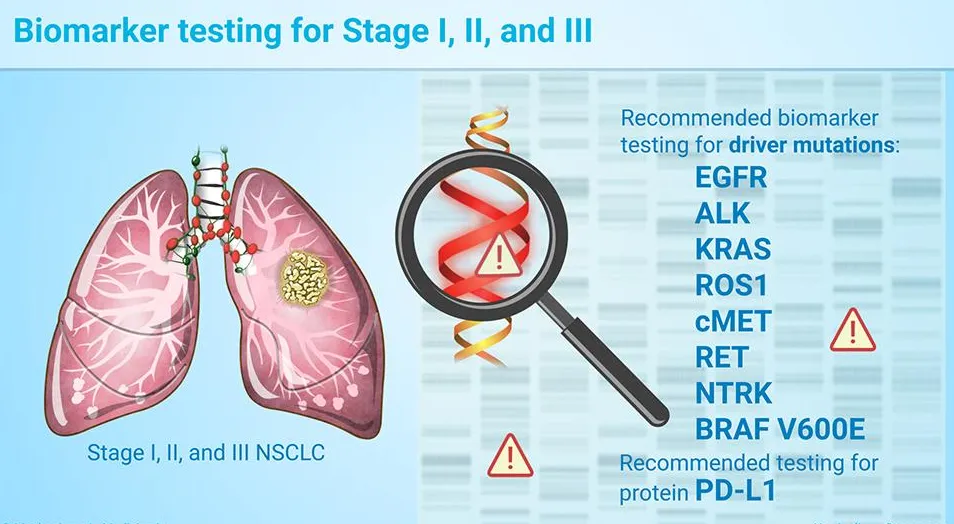
Understanding non-small cell lung cancer: how biomarker testing guides treatment choices is therefore an important part of modern precision oncology. By identifying the molecular characteristics of a tumor, healthcare professionals can better understand which targeted therapies or other systemic treatment approaches may be appropriate for an individual patient.
This article introduces the major NSCLC subtypes, important biomarkers, and commonly used testing methods and explains how biomarker results can influence treatment decisions, including targeted therapy, immunotherapy, and antibody-drug conjugates (ADCs).
What Is Biomarker Testing in NSCLC?
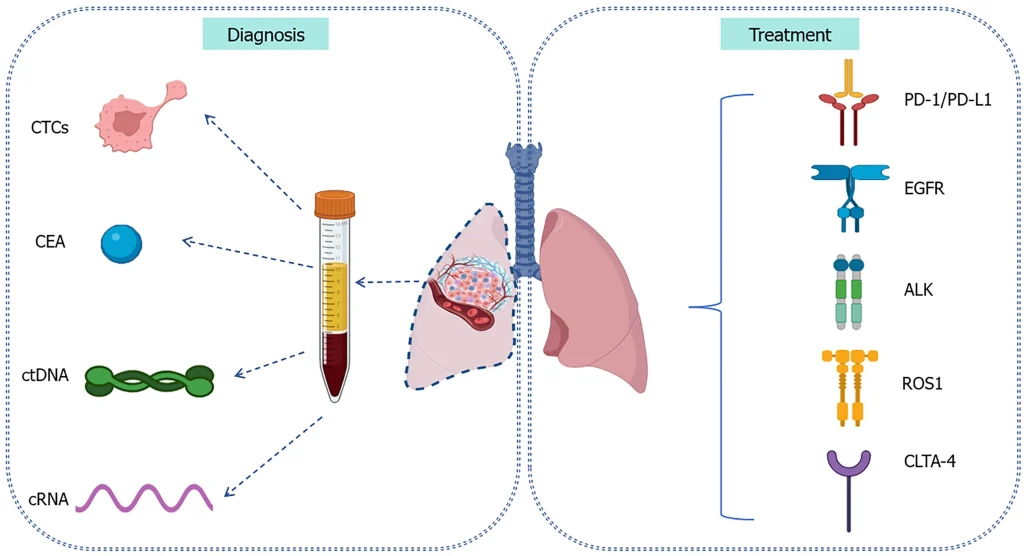
Biomarker testing is a laboratory process used to examine tumor tissue, blood, or other appropriate specimens for biological characteristics associated with cancer development or treatment response.
In NSCLC, biomarker testing generally includes two important categories:
- Molecular testing: Identifies genetic alterations, including gene mutations, insertions, deletions, and gene fusions that may be relevant to targeted therapy.
- Protein expression testing: Evaluates proteins such as programmed death-ligand 1 (PD-L1), which can help clinicians assess the potential role of immune checkpoint inhibitors.
Biomarker testing is different from the initial diagnostic evaluation of lung cancer. Imaging examinations help identify and assess suspicious lesions, while pathological examination helps establish the diagnosis and histological subtype. Molecular and protein biomarker tests provide additional information about the tumor’s biological characteristics.
The appropriate tests depend on factors such as disease stage, histological subtype, clinical circumstances, and available treatment options. Not every patient requires an identical testing panel.
Which Biomarkers Are Tested in Non-Small Cell Lung Cancer?
Several molecular alterations and protein biomarkers have clinical relevance in NSCLC. Their significance depends on the specific alteration, disease setting, and available therapies.
| Biomarker | What the test evaluates | Potential treatment relevance |
|---|---|---|
| EGFR | Specific activating mutations, including exon 19 deletions and L858R | May inform selection of EGFR-targeted therapies |
| ALK | ALK gene rearrangements or fusions | May support consideration of ALK inhibitors |
| ROS1 | ROS1 gene fusions | May inform selection of ROS1-targeted therapies |
| KRAS | Specific mutations, including KRAS G12C | May identify eligibility for certain KRAS-targeted therapies |
| BRAF | Specific alterations, including BRAF V600E | May inform consideration of BRAF/MEK-targeted treatment |
| MET | Alterations such as MET exon 14 skipping | May identify potential eligibility for MET-targeted therapies |
| RET | RET gene fusions | May inform consideration of RET inhibitors |
| NTRK | NTRK gene fusions | May identify potential eligibility for TRK inhibitors |
| HER2/ERBB2 | Relevant mutations and other alterations, depending on the test | May inform selected treatment options, including certain antibody-drug conjugates |
| PD-L1 | PD-L1 protein expression | Helps inform evaluation of immunotherapy options |
The table provides an overview rather than a universal testing checklist. The clinical significance of a finding depends on the exact molecular alteration, disease setting, treatment history, and applicable regulatory approvals.
NSCLC EGFR Testing
EGFR is an important driver gene in NSCLC, particularly in lung adenocarcinoma. Common clinically relevant alterations include EGFR exon 19 deletions and exon 21 L858R mutations.
NSCLC EGFR testing can help determine whether a tumor contains an alteration associated with sensitivity to particular EGFR tyrosine kinase inhibitors (TKIs). The specific mutation matters because not all EGFR alterations have the same biological or therapeutic implications.
Testing may use tumor tissue or, in appropriate circumstances, circulating tumor DNA obtained from blood. If a blood-based test does not identify a relevant alteration, additional tissue testing may still be considered when clinically appropriate.
NSCLC Protein Biomarkers and PD-L1 Testing
Genetic alterations and protein biomarkers provide different types of information. Molecular testing examines DNA or RNA changes, whereas immunohistochemistry (IHC) can be used to evaluate protein expression.
PD-L1 is particularly relevant to the assessment of immunotherapy options in NSCLC. Depending on the treatment and clinical setting, PD-L1 expression may be reported using a scoring method such as the tumor proportion score (TPS).
However, PD-L1 expression does not independently determine every treatment decision. Disease stage, molecular findings, histological subtype, clinical status, and the specific treatment under consideration must also be evaluated.
Why Does Biomarker Testing Method Matter in NSCLC?
Different testing methods detect different biological features. Choosing an appropriate method helps clinicians obtain useful information while accounting for sample availability, test limitations, and the clinical question being investigated.
Tissue Biopsy and Pathological Examination
A tissue biopsy provides material for pathological examination and may also supply a sample for molecular testing. Depending on the procedure and the specimen obtained, the sample can help establish the tumor type and support additional biomarker analysis.
One limitation is that some samples may contain insufficient tumor material for every requested test. Tissue availability, sample quality, and the need to preserve material for other diagnostic procedures can influence the testing strategy.
Liquid Biopsy
A liquid biopsy may analyze circulating tumor DNA (ctDNA) in a blood sample. This approach can provide molecular information without requiring a new invasive tissue procedure.
Liquid biopsy may be useful when tissue is difficult to obtain, when tissue samples are insufficient, or in selected situations involving treatment resistance. Nevertheless, circulating tumor DNA may be present at low levels or may not be detectable in a particular blood sample.
A negative liquid biopsy result does not necessarily exclude a clinically relevant tumor alteration. Depending on the circumstances, clinicians may consider tissue-based testing or additional evaluation.
PCR and Other Molecular Testing Methods
Polymerase chain reaction (PCR) and related molecular methods can detect specific genetic alterations. They may be useful when testing for a defined mutation or a particular group of alterations.
The scope of a test depends on its design. A method designed to detect a limited set of variants may not identify every potentially relevant alteration in a tumor.
Next-Generation Sequencing (NGS)
Next-generation sequencing allows multiple genomic regions to be analyzed simultaneously. Depending on the panel and assay design, NGS may detect a range of mutations, insertions, deletions, and gene fusions.
For advanced NSCLC, broader molecular profiling can help identify actionable alterations that might not be detected by a narrowly targeted test. DNA-based and RNA-based approaches can provide complementary information, particularly for certain fusion events.
NGS is not automatically the best choice in every clinical situation. The appropriate approach depends on the diagnostic question, available tissue, turnaround time, test performance, and clinical urgency.
PD-L1 Immunohistochemistry
PD-L1 IHC evaluates protein expression in tumor specimens. It is distinct from genomic sequencing and does not replace testing for relevant driver alterations.
In clinical practice, PD-L1 results are interpreted alongside other diagnostic information. The appropriate testing and treatment pathway depends on the disease setting and the specific therapies being considered.
Why Is NSCLC Genotyping Important at Diagnosis?
NSCLC genotyping examines a tumor for relevant genetic alterations. Obtaining molecular information at an appropriate point in the diagnostic process can help clinicians assess treatment options before committing to a systemic treatment strategy.
For patients with advanced NSCLC, identifying an actionable driver alteration may influence the choice between targeted therapy and other systemic approaches. A result may also help determine whether additional testing is needed.
The potential value of testing includes:
- Identifying molecular alterations associated with specific targeted therapies.
- Helping distinguish treatment options for tumors that may appear similar under routine pathological examination.
- Providing a molecular baseline that may be useful when evaluating subsequent disease progression.
- Supporting discussions about available treatment options, clinical trials, and the limitations of current evidence.
The timing and scope of testing should be individualized. In some situations, treatment decisions may need to account for clinical urgency while molecular results are pending.
Genotyping is also not a guarantee that a matching treatment will be available or appropriate. Results must be interpreted in the context of the exact alteration, disease stage, prior treatment, and relevant treatment approvals.
Biomarker Testing in Metastatic and Advanced NSCLC
Metastatic NSCLC refers to cancer that has spread beyond its original site to distant parts of the body. In this setting, biomarker testing can play an important role in evaluating systemic treatment options.
For patients with advanced or metastatic nonsquamous NSCLC, broad molecular profiling is often particularly relevant because several potentially actionable alterations may influence treatment selection. Testing for relevant driver alterations and assessing PD-L1 expression provide complementary information.
The evaluation may include:
- Molecular profiling: Assessment of relevant alterations involving genes such as EGFR, ALK, ROS1, KRAS, BRAF, MET, RET, NTRK, and HER2, according to the clinical setting and applicable recommendations.
- PD-L1 testing: Evaluation of protein expression to help inform appropriate immunotherapy decisions.
- Pathological review: Confirmation of histological subtype and assessment of whether the available specimen is suitable for testing.
- Additional testing when necessary: Consideration of further tissue or blood-based analysis when initial results are incomplete or do not resolve the clinical question.
Biomarker Testing in Stage IV NSCLC
Stage IV NSCLC generally indicates distant metastatic disease. In this setting, treatment planning often focuses on systemic therapies, although local treatments may also be appropriate in selected circumstances.
Molecular results can help identify treatment options for tumors with particular driver alterations. If no actionable driver alteration is identified, clinicians may evaluate immunotherapy, chemotherapy, or combination approaches based on PD-L1 expression, histological subtype, disease characteristics, and the patient’s overall condition.
A negative result should be interpreted carefully. Its meaning depends on the test performed, the quality of the sample, and the range of alterations the assay can detect.
Biomarker Testing in Early-Stage NSCLC
Testing considerations in early-stage NSCLC differ from those in metastatic disease. Surgery, radiation therapy, and other local treatment approaches may be central to management, depending on the stage and clinical circumstances.
Molecular information may still influence selected treatment decisions, including the evaluation of certain perioperative or adjuvant therapies. The relevance of individual biomarkers and the need for specific tests depend on the disease setting and current clinical recommendations.
Early-stage and metastatic NSCLC should therefore not be treated as interchangeable testing scenarios. Testing decisions need to reflect the intended treatment pathway.
How Does Biomarker Testing Influence NSCLC Treatment Selection?
Biomarker results help connect diagnostic findings with potential treatment options. In broad terms, the clinical process may involve confirming the diagnosis, establishing disease stage, performing appropriate biomarker testing, and integrating the findings into a treatment plan.
Examples of biomarker-associated treatment approaches include:
- EGFR alterations: May support consideration of an appropriate EGFR-targeted therapy.
- ALK rearrangements: May support consideration of an ALK inhibitor.
- ROS1 fusions: May inform evaluation of ROS1-targeted therapy.
- KRAS G12C: May identify eligibility for certain KRAS-targeted treatments in the relevant setting.
- BRAF V600E: May inform consideration of BRAF/MEK-targeted treatment.
- MET exon 14 skipping: May support evaluation of a MET-targeted therapy.
- RET fusions: May inform consideration of a RET inhibitor.
- NTRK fusions: May identify potential eligibility for a TRK inhibitor.
- PD-L1 expression: May contribute to evaluation of immunotherapy options.
These relationships are not one-to-one treatment rules. The clinical significance of a result depends on the specific alteration, disease stage, prior treatment, coexisting molecular findings, and approved indications in the relevant country or region.
If testing does not identify an actionable driver alteration, other treatment approaches may remain available. Clinicians may consider immunotherapy, chemotherapy, or combinations of treatments based on the full clinical picture.
Biomarker testing therefore contributes to treatment planning, but it does not replace clinical judgment or guarantee a particular outcome.
Major Treatment Approaches for NSCLC
Treatment for NSCLC needs to be individualized according to disease stage, histological type, molecular characteristics, and the patient’s overall health.
Antibody-drug conjugates (ADCs): These therapies use antibodies to recognize specific tumor targets and deliver cytotoxic payloads to cancer cells. ADCs targeting HER2, TROP2, and other molecules are important areas of innovation in NSCLC treatment.ble for every patient with NSCLC.
Surgery: May be appropriate for some patients with early-stage or localized NSCLC. Depending on the risk of recurrence, adjuvant treatment may also be considered.
Radiation therapy: Can be used for local disease control and may also be considered for patients who are not candidates for surgery or for the treatment of selected metastatic lesions.
Chemotherapy: Remains an important systemic treatment for some patients with NSCLC and may be combined with immunotherapy, targeted therapy, or other treatment approaches.
Targeted therapy: Designed to act on specific molecular alterations such as EGFR, ALK, ROS1, KRAS, MET, and RET. Appropriate biomarker testing is generally required before selecting these treatments.
Immunotherapy: Treatments targeting immune checkpoints such as PD-1/PD-L1 play an important role in selected patients, particularly those without an appropriate targetable driver alteration.
Representative Biomarkers and Drugs in NSCLC
The following examples illustrate the relationship between selected biomarkers and treatment classes. They are not a complete list of available medicines or a recommendation for any individual patient.
| Biomarker or target | Representative drug or drugs | Treatment class |
|---|---|---|
| EGFR | Osimertinib | EGFR tyrosine kinase inhibitor |
| ALK | Alectinib | ALK inhibitor |
| ROS1 | Repotrectinib | ROS1-targeted kinase inhibitor |
| KRAS G12C | Sotorasib, adagrasib | KRAS G12C inhibitors |
| BRAF V600E | Dabrafenib plus trametinib | BRAF/MEK inhibitors |
| MET exon 14 skipping | Capmatinib, tepotinib | MET inhibitors |
| RET fusion | Selpercatinib, pralsetinib | RET inhibitors |
| NTRK fusion | Larotrectinib, entrectinib | TRK inhibitors |
| PD-1/PD-L1 pathway | Pembrolizumab and other relevant agents | Immune checkpoint inhibitors |
| HER2/ERBB2 | Trastuzumab deruxtecan in applicable settings | Antibody-drug conjugate |
The clinical relevance of each medicine depends on its specific approved indication, the biomarker definition, disease stage, previous treatment, and local regulatory requirements. Not every drug listed is appropriate for every patient with a corresponding biomarker.
For additional information about pharmaceutical products and professional services, qualified healthcare and pharmaceutical partners can contact DengYueRX through its professional contact page.
The Future of Precision Treatment for NSCLC
As molecular testing technologies and innovative medicines continue to advance, NSCLC treatment is moving toward increasingly individualized approaches. Technologies such as NGS can allow physicians to evaluate multiple potential therapeutic targets simultaneously, while new molecular targets continue to enter clinical research and drug development.
At the same time, resistance to targeted therapy remains an important challenge in NSCLC treatment. Some patients may experience disease progression after receiving targeted therapy for a period of time. In such cases, repeat molecular testing may help identify new resistance mechanisms and provide information for subsequent treatment decisions.
ADCs, bispecific antibodies, immunotherapy, and combinations of different treatment approaches are also expanding the therapeutic landscape of NSCLC. In the future, NSCLC treatment may move beyond selecting a drug based simply on the disease name and instead use comprehensive molecular information to establish a more individualized treatment pathway.
Conclusion
Non-small cell lung cancer has significant molecular and clinical heterogeneity, meaning that treatment strategies can vary substantially between patients. Biomarker testing is an important link between disease diagnosis and precision treatment, helping healthcare teams identify potential therapeutic targets and evaluate targeted therapy, immunotherapy, and other innovative treatment options.
From EGFR, ALK, ROS1, KRAS, MET, and RET to HER2 and PD-L1, an increasing number of molecular characteristics are being incorporated into NSCLC treatment decisions. For patients who require systemic therapy, combining pathological diagnosis, disease staging, and appropriate biomarker testing can help establish a more individualized treatment strategy.
Ultimately, non-small cell lung cancer: how biomarker testing guides treatment choices reflects the broader shift toward precision oncology: understanding the specific biological features of a patient’s tumor can help inform treatment decisions rather than relying on the cancer diagnosis alone.
DengYue Pharmacy continues to monitor developments in global precision lung cancer treatment, targeted therapy, immunotherapy, and ADCs, providing pharmaceutical supply and related services to qualified healthcare institutions, pharmacies, pharmaceutical distributors, and other professional partners.
FAQ About Non-Small Cell Lung Cancer: How Biomarker Testing Guides Treatment Choices
What is biomarkers testing?
Biomarker testing checks a sample of tissue or blood for proteins or genetic mutations that help your provider learn more about your cancer. This information helps them profile your tumor so they can pick treatments that will work best to fight it.
How does biomarker testing affect treatment?
Biomarker testing can identify specific genetic changes in a tumor that doctors can target with certain drugs. These targeted therapies are often more precise and may be more effective for certain patients.
How to test for cancer biomarkers?
Biomarker testing is done using a tissue and/or liquid biopsy. A tissue biopsy requires a procedure to collect a small sample of tumor tissue. Liquid biopsy collects a sample of blood or another body fluid, such as saliva or urine.
What is a biomarker test used for in lung cancer diagnosis?
If you have NSCLC, you and your doctor should discuss if biomarker testing is right for you. Biomarker testing (also called molecular testing, genomic testing, or molecular profiling) looks for mutations and other changes in the DNA of the tumor cells, as well as any changes in RNA or levels of specific proteins.
Who should get biomarker testing?
Anyone who’s been newly diagnosed with cancer should ask about biomarker testing, but it’s especially important for those with a type of cancer that grows or changes quickly. It’s also critical if your cancer hasn’t been responding to treatment, since the test results can help guide a new way forward.