Tezepelumab Injection is a targeted biologic therapy that blocks TSLP to help control airway inflammation. On August 17, 2026, AstraZeneca announced that Tezspire® (generic name: Tezepelumab Injection) was officially launched in China.
Previously, Tezepelumab had received approval from the National Medical Products Administration (NMPA) in March 2026 for the maintenance treatment of severe asthma in adults and adolescents aged 12 years and older, as well as for use in combination with intranasal corticosteroids to treat adult patients with chronic rhinosinusitis with nasal polyps (CRSwNP) whose disease is not adequately controlled with systemic corticosteroids and/or surgery.
Tezspire approved and launched in China making tezepelumab an important new biologic therapy in China’s evolving treatment landscape for respiratory diseases.
So, what is tezepelumab? Unlike conventional therapies that primarily focus on controlling symptoms, tezepelumab targets thymic stromal lymphopoietin (TSLP), a key cytokine that acts upstream of multiple inflammatory pathways. By targeting this important driver of inflammation, tezepelumab offers a new treatment option for certain patients whose disease remains inadequately controlled with existing therapies.
What Is Tezepelumab?
💉 Tezepelumab is a fully human monoclonal antibody jointly developed by AstraZeneca and Amgen. It is an innovative biologic therapy that targets TSLP (thymic stromal lymphopoietin), a key cytokine positioned upstream of multiple inflammatory pathways.
TSLP is produced by epithelial cells in the airways and nasal passages and plays an important role in initiating airway inflammation. When the body is exposed to external triggers such as allergens, viral infections, or air pollutants, epithelial cells can release increased amounts of TSLP, which in turn activates and amplifies multiple immune and inflammatory responses. This persistent inflammatory activity contributes to chronic inflammation of the airways and sinuses and plays an important role in conditions such as asthma and nasal polyps.
✨ Unlike conventional therapies and some targeted treatments that act mainly on individual downstream inflammatory mediators, tezepelumab binds to and neutralizes TSLP, helping to interfere with multiple inflammatory pathways at an early stage. By targeting an upstream driver of inflammation, tezepelumab may address different types of airway inflammation and offers a broader therapeutic approach to respiratory diseases with complex and diverse underlying mechanisms.
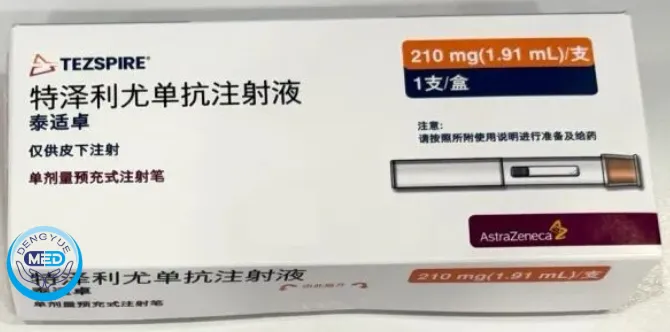
Product Information at a Glance
To provide a clear overview of the key characteristics of tezepelumab injection, the main product information is summarized below:
| Item | Information |
|---|---|
| Generic Name | Tezepelumab Injection |
| International Nonproprietary Name (INN) | Tezepelumab |
| Brand Name | Tezspire® |
| Drug Type | Human monoclonal antibody |
| Primary Target | TSLP (thymic stromal lymphopoietin) |
| Mechanism of Action | Inhibits TSLP activity and targets inflammation upstream of multiple inflammatory pathways |
| First Approved in China | March 2026 |
| Officially Launched in China | August 17, 2026 |
| Approved Indications in China | Severe asthma; chronic rhinosinusitis with nasal polyps (CRSwNP) |
| Route of Administration | Subcutaneous injection |
| Developed by | AstraZeneca and Amgen |
Why Is TSLP an Important Therapeutic Target?
Both asthma and chronic rhinosinusitis with nasal polyps (CRSwNP) are highly heterogeneous diseases, meaning that the underlying inflammatory mechanisms can vary from patient to patient. Traditional therapies and some targeted treatments often focus on specific inflammatory pathways or biomarkers. However, identifying broader therapeutic targets that may be relevant to patients with more complex inflammatory mechanisms remains an important area of research.
TSLP is one of the upstream inflammatory targets that has attracted increasing attention in recent years.
When the airway or nasal epithelium is exposed to various stimuli, TSLP release can increase and subsequently influence multiple inflammatory cells and cytokines, contributing to the initiation and persistence of inflammation. By binding to TSLP and inhibiting its activity, tezepelumab can intervene at an earlier stage of the inflammatory cascade.
This mechanism is also one of the key features that distinguishes tezepelumab from some other biologic therapies. Rather than targeting only a specific downstream inflammatory mediator, tezepelumab aims to modulate inflammation through an upstream signaling pathway, offering a broader approach to controlling airway inflammation.
Precisely Addressing Unmet Clinical Needs: The Clinical Value of Two Major Indications
With its unique upstream anti-inflammatory mechanism targeting TSLP, tezepelumab offers a different therapeutic approach from conventional treatments and therapies targeting individual inflammatory mediators. Its mechanism is particularly relevant to the heterogeneous nature of asthma and chronic rhinosinusitis with nasal polyps (CRSwNP).
For patients with severe airway inflammation, inadequate disease control, and recurrent symptoms, treatment options can remain limited. Tezepelumab has demonstrated clinical benefits in both severe asthma and CRSwNP, providing a new therapeutic option for patients whose disease remains difficult to control. The following sections examine its clinical value in these two indications based on key clinical study data.
(1) Severe Asthma: Reducing Exacerbations and Improving Lung Function and Quality of Life
Asthma is a common chronic respiratory disease.
While most patients with mild to moderate asthma can achieve adequate disease control with standard inhaled corticosteroid therapy, severe asthma remains a major treatment challenge. According to data released by AstraZeneca, more than 80% of patients with severe asthma in China have inadequate disease control, with at least one acute exacerbation occurring within a year. Persistent symptoms such as wheezing, coughing, and chest tightness can significantly disrupt sleep and daily activities.
😣 Recurrent exacerbations may also contribute to declining lung function and increase the risk of hospitalization, placing a substantial physical, psychological, and economic burden on patients.
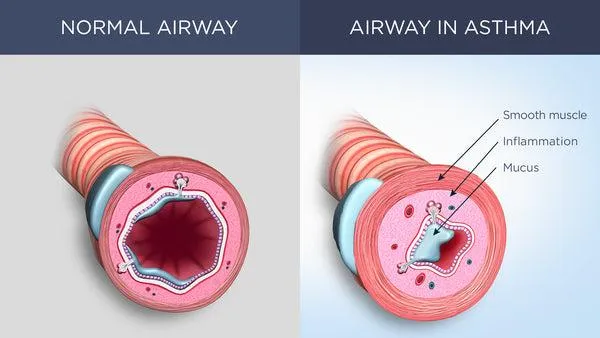
Severe asthma is also characterized by considerable disease heterogeneity. Some patients have predominantly eosinophilic inflammation, while others may experience activation of multiple inflammatory pathways simultaneously.
As a result, conventional therapies targeting a single inflammatory pathway may not adequately address the needs of all patients.
With its upstream mechanism of action, tezepelumab offers a different therapeutic approach to this challenge, supported by clinical evidence from the DIRECTION Phase III multicenter study in Asia.
The study enrolled 400 patients aged 18–80 years with uncontrolled severe asthma from China, South Korea, and the Philippines.
- After 52 weeks of treatment, tezepelumab reduced the annualized asthma exacerbation rate by 74% compared with placebo, with an even greater reduction of approximately 80% among the Chinese patient population.
- In addition, patients experienced improvements in lung function, daytime and nighttime asthma symptoms, and quality of life, while the overall safety and tolerability profile remained favorable. These findings provide important clinical evidence supporting the use of tezepelumab as a long-term maintenance treatment for patients with severe asthma in China.
(2) Chronic Rhinosinusitis with Nasal Polyps (CRSwNP): Moving Beyond Recurrent Surgery and Steroid Dependence
Chronic rhinosinusitis with nasal polyps (CRSwNP) is a chronic inflammatory disease of the upper airways, characterized by persistent inflammation of the nasal and sinus mucosa and the formation of nasal polyps. Patients commonly experience persistent nasal congestion, reduced or lost sense of smell, nasal discharge, and sleep disturbances, all of which can significantly affect daily life.
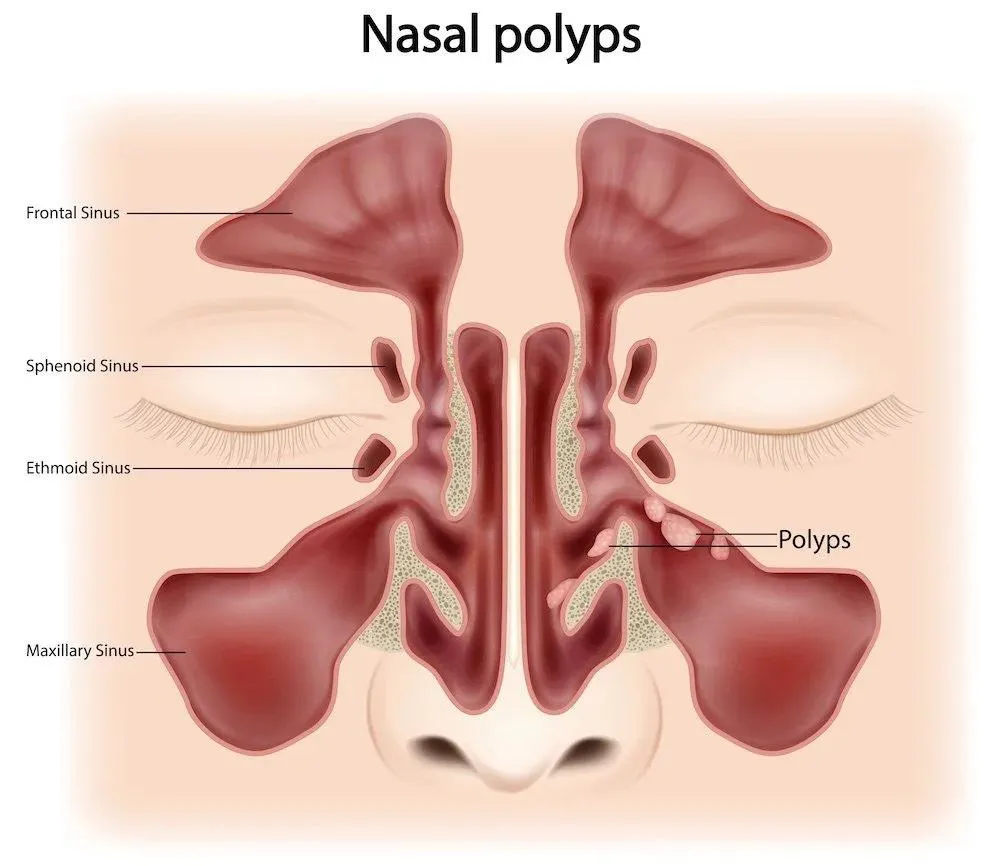
Current standard treatment options include intranasal corticosteroids, systemic corticosteroids, and sinus surgery. However, for patients with moderate to severe disease, surgery can remove polyps and relieve local obstruction but does not address the underlying inflammation, and recurrence remains common. Meanwhile, long-term use of systemic corticosteroids may lead to various adverse effects. As a result, some patients can become trapped in a cycle of recurrence, surgery, and repeated recurrence, highlighting the need for longer-lasting and more consistent treatment options.
✨ Tezepelumab has been approved for adult patients with CRSwNP whose disease remains inadequately controlled despite systemic corticosteroids and/or surgery, in combination with intranasal corticosteroids. This provides a new option for the long-term management of severe CRSwNP, supported by findings from the WAYPOINT Phase III clinical study.
- In the 52-week clinical study, compared with placebo, tezepelumab reduced the nasal polyp score by 2.08 points and the nasal congestion score by 1.04 points, demonstrating significant improvements in key nasal symptoms.
- More importantly, treatment substantially reduced the need for invasive interventions and systemic corticosteroids, with the need for nasal polyp surgery reduced by approximately 98% and the use of systemic corticosteroids reduced by approximately 89%.
🔬 These findings suggest a shift from short-term symptom relief and repeated interventions toward long-term control of the underlying inflammation.
✨ Taken together, clinical findings across the two approved indications highlight the potential value of tezepelumab in controlling inflammation, improving symptoms, and reducing the need for systemic corticosteroids and surgery. Whether used to reduce exacerbations and improve lung function in severe asthma or to support long-term disease control in CRSwNP, tezepelumab provides a new therapeutic option for patients with difficult-to-control airway inflammation.
Why Can Asthma and CRSwNP Be Addressed with Similar Treatment Strategies?
Although severe asthma and CRSwNP affect the lower and upper airways, respectively, they share certain underlying inflammatory mechanisms.
In recent years, the concept of the “united airway” has gained increasing attention. Rather than functioning as completely separate regions, the nose, sinuses, and bronchi are interconnected through complex inflammatory and immune pathways.
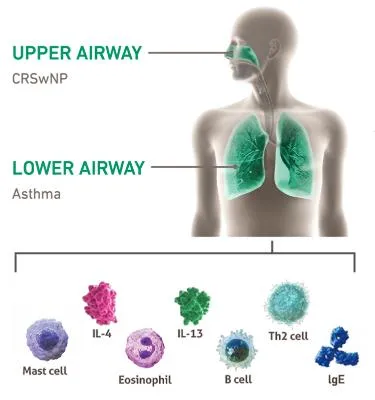
Clinically, CRSwNP and asthma frequently coexist. For patients living with both conditions, treating nasal and lower-airway symptoms separately may not always fully address the overall burden of disease.
Traditionally, treatment has often followed a “disease-by-disease” approach, with separate strategies used to control nasal and lower-airway symptoms. However, this approach may not fully address the inflammatory connection between the upper and lower airways.
✨ As a shared upstream inflammatory target across both airway regions, TSLP provides a potential point of intervention. By inhibiting TSLP, tezepelumab may help control inflammation across the upper and lower airways, offering an integrated therapeutic approach for patients with coexisting asthma and nasal polyps.
What Does the Launch of Tezepelumab in China Mean?
Tezepelumab was approved by China’s National Medical Products Administration (NMPA) in March 2026 and officially launched in China on August 17, 2026. Its availability marks the introduction of this TSLP-targeted innovative biologic therapy into clinical practice in China, providing a new treatment option for eligible patients with severe asthma and chronic rhinosinusitis with nasal polyps (CRSwNP) whose disease remains inadequately controlled with existing therapies.
- For patients with severe asthma, the disease is highly heterogeneous, and multiple inflammatory pathways may be activated simultaneously in some patients. As a result, a single treatment mechanism may not adequately address the needs of every patient. By targeting TSLP, an upstream cytokine involved in multiple inflammatory cascades, tezepelumab offers a different therapeutic approach from some conventional targeted therapies.
- For patients with CRSwNP, its launch also provides a new biologic treatment option for adults whose disease remains inadequately controlled despite systemic corticosteroids and/or surgery.
More broadly, the availability of tezepelumab in China reflects the continued evolution of treatment strategies for respiratory diseases. As our understanding of the underlying inflammatory mechanisms of these diseases continues to advance, treatment goals are gradually shifting from simply relieving symptoms and reducing acute exacerbations toward identifying key inflammatory pathways and targeting them with more precise, mechanism-based therapies. 👉 For diseases characterized by complex inflammatory processes, this approach may further expand the clinical role of biologic therapies.
What Are the Future Research Directions for Tezepelumab?
Beyond its currently approved indications for severe asthma and CRSwNP in China, tezepelumab is also being investigated in other disease areas, including chronic obstructive pulmonary disease (COPD) and eosinophilic esophagitis (EoE). These studies highlight the continued research interest in TSLP, an important cytokine that links epithelial cell responses with downstream immune and inflammatory processes.
More broadly, drug development is increasingly focusing on the early stages of inflammatory responses and the common inflammatory mechanisms that may underlie different diseases. Because TSLP acts upstream of multiple inflammatory pathways, research targeting this cytokine may not only provide further insights into the mechanisms of severe asthma and CRSwNP but could also offer new directions for investigating treatments for other epithelial-driven inflammatory diseases.
However, it is important to distinguish between approved indications and investigational uses. The fact that tezepelumab is being studied in a particular disease does not mean that it has been approved for treating that condition. Whether tezepelumab is appropriate for an individual patient should be determined based on locally approved indications and a healthcare professional’s assessment of the patient’s disease status, previous treatments, and overall potential benefits and risks.
Conclusion
The launch of Tezepelumab injection (Tezspire®) in China in 2026 marks an important development in the field of biologic therapies for respiratory diseases. By targeting TSLP, a key cytokine positioned upstream of multiple inflammatory pathways, tezepelumab provides a new treatment option for patients with severe asthma and chronic rhinosinusitis with nasal polyps (CRSwNP).
As biologic therapies and precision medicine continue to advance, the treatment of chronic inflammatory respiratory diseases is gradually shifting from simply controlling symptoms toward a greater focus on disease mechanisms and individualized treatment strategies. The availability of tezepelumab in China represents an important step in this evolution, giving eligible patients access to another therapeutic option.
With the approval and commercial availability of tezepelumab in China, its clinical use in severe asthma and CRSwNP continues to attract attention. For healthcare institutions, pharmaceutical distributors, and professional procurement clients, reliable product supply, compliant procurement channels, and international logistics that meet the regulatory requirements of the destination market are essential for cross-border pharmaceutical procurement.
As a pharmaceutical wholesaler specializing in innovative and specialty medicines, DengYue Pharmacy is committed to supporting qualified healthcare institutions, pharmaceutical distributors, and professional procurement clients with international pharmaceutical supply and procurement consultation. In accordance with the applicable regulations of the destination country or region, we can assist professional clients in understanding product availability, procurement procedures, and cross-border logistics, helping facilitate a more efficient connection to international pharmaceutical supply resources.
FAQ About Tezspire Approved and Launched in China
Is tezepelumab an immunosuppressant?
Tezspire is not an immunosuppressant. It does interact with the immune system, but only to inhibit the proteins that cause inflammation. Immunosuppressants are typically used to inhibit the immune system more broadly.
What is tezepelumab used for?
Tezepelumab is a monoclonal antibody that interferes with thymic stromal lymphopoietin (TSLP) binding, thereby reducing the production of inflammatory biomarkers and cytokines.
What does TEZSPIRE do for the body?
TEZSPIRE is a prescription medicine used: with other asthma medicines for the maintenance treatment of severe asthma in people 12 years of age and older whose asthma is not controlled with their current asthma medicine.
How effective is tezepelumab?
During the 6-month follow-up under tezepelumab treatment, the mean number of exacerbations was markedly reduced to 1.0 ± 1.6, with 63.3% of patients remaining exacerbation-free. Asthma control continued to improve, with a significant increase in ACT score from 12 ± 4.2 to 19 ± 4.2 points (p < 0.0001) (Fig.
What should I avoid while taking TEZSPIRE?
You should not receive any live vaccines right before or while using Tezspire. Tell your healthcare provider if you have recently received a live vaccine or have any scheduled. Current and Past Health Conditions. Tell your healthcare provider if you have a parasitic (helminth) worm infection.