In recent years, Antibody-Drug Conjugates (ADCs) have emerged as one of the fastest-growing classes of innovative cancer therapies, combining the precision of targeted antibodies with the potent cytotoxic effects of chemotherapy. Among them, TROP2 (Trophoblast Cell Surface Antigen 2)-targeting ADCs have demonstrated promising clinical efficacy across breast cancer, lung cancer, and multiple other solid tumors, making them a major focus of global oncology drug development.
As one of China’s leading homegrown TROP2 ADCs, Sacituzumab Tirumotecan (brand name: Jiatailai®; development codes: sac-TMT/SKB264/MK-2870) has continued to expand its clinical footprint, achieving encouraging progress in the treatment of breast cancer, non-small cell lung cancer (NSCLC), and other malignancies.
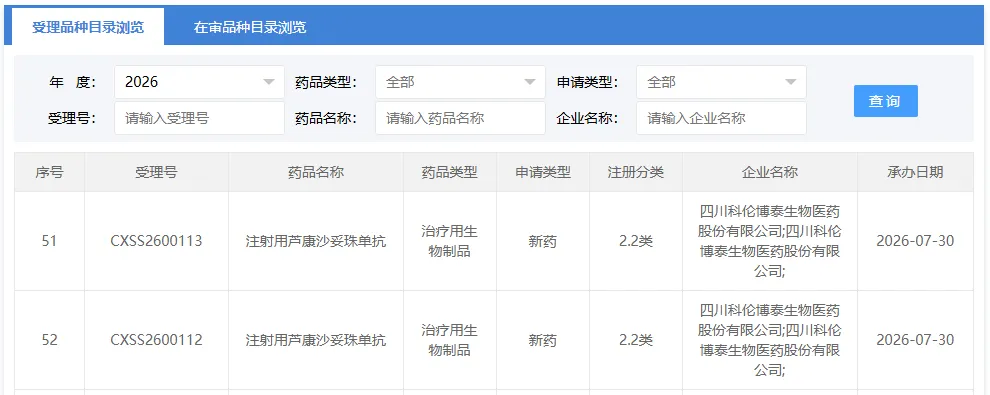
On July 30, 2026, Sacituzumab Tirumotecan advances to frontline therapy with the acceptance of a new indication application by the Center for Drug Evaluation (CDE) of China’s National Medical Products Administration (NMPA), which was also granted Priority Review status. The application seeks approval for the first-line treatment of patients with recurrent or metastatic triple-negative breast cancer (TNBC) who have a PD-L1 CPS <10 or who experienced disease recurrence after prior PD-1/PD-L1 inhibitor therapy. This milestone marks another important step in expanding the clinical role of Sacituzumab Tirumotecan from later-line settings toward earlier lines of treatment, offering a promising new therapeutic option for TNBC patients with significant unmet medical needs.
What Is Sacituzumab Tirumotecan?
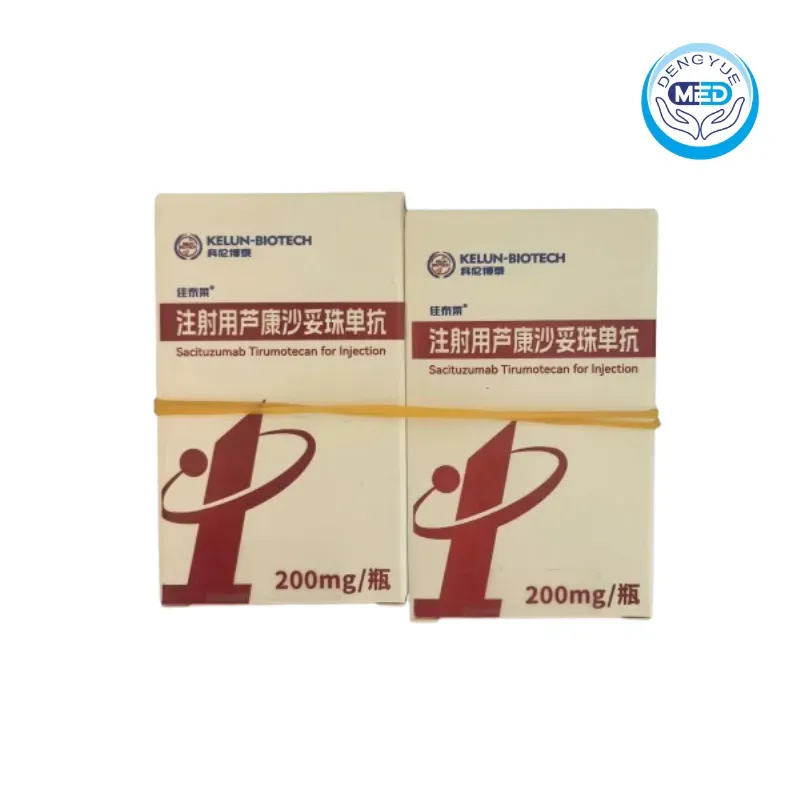
As Sacituzumab Tirumotecan advances to frontline therapy, it is important to understand the drug behind this milestone. Sacituzumab Tirumotecan is a TROP2-targeting antibody-drug conjugate (ADC) independently developed by Kelun-Biotech.
Often referred to as a “biological guided missile,” an ADC consists of three key components: a monoclonal antibody, a linker, and a cytotoxic payload. Sacituzumab Tirumotecan specifically recognizes TROP2 proteins expressed on the surface of tumor cells and delivers a topoisomerase I inhibitor directly to cancer cells via its antibody component. Once released inside the tumor cells, the payload induces DNA damage and promotes tumor cell apoptosis while minimizing damage to normal tissues.
✨ TROP2 is highly expressed in a variety of solid tumors, including triple-negative breast cancer (TNBC), HR-positive/HER2-negative breast cancer, non-small cell lung cancer (NSCLC), and gastric cancer. Because of its close association with tumor invasiveness, recurrence, and metastasis, TROP2 has become one of the most actively explored therapeutic targets in ADC research in recent years.
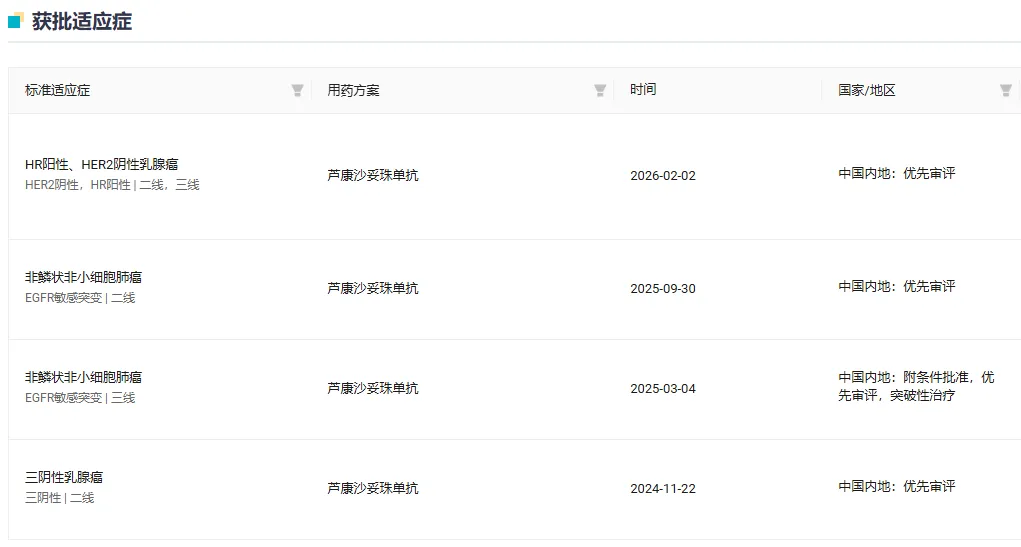
Since its first approval in 2024, Sacituzumab Tirumotecan has received approvals for multiple indications, including triple-negative breast cancer (TNBC), EGFR-mutated non-squamous non-small cell lung cancer (NSCLC), and HR-positive/HER2-negative breast cancer. Meanwhile, multiple global Phase III clinical trials are underway to further evaluate its potential in earlier lines of treatment and across a broader range of solid tumors.
Precisely Targeting Two Major Unmet Needs in First-Line TNBC
Triple-negative breast cancer (TNBC) is considered the most aggressive subtype of breast cancer, characterized by a high risk of recurrence, metastasis, and poor prognosis. Although the widespread adoption of immunotherapy has transformed the first-line treatment landscape for TNBC in recent years, significant unmet clinical needs remain, leaving many patients without optimal therapeutic options.
Current PD-1/PD-L1-based immunotherapy has demonstrated substantial clinical benefit primarily in patients with high PD-L1 expression. However, two major patient populations continue to face limited treatment options:
- Patients with PD-L1 CPS <10, who represent the majority of individuals with TNBC, generally derive limited benefit from PD-1/PD-L1 inhibitor monotherapy, and effective treatment options remain scarce.
- Patients with PD-L1-positive disease who experience recurrence after receiving PD-1/PD-L1 inhibitors in the early-stage setting often develop immunotherapy resistance, and there is currently no well-established standard subsequent treatment for this population.
The newly submitted indication for Sacituzumab Tirumotecan is specifically designed to address these two critical unmet clinical needs. The application seeks approval for the first-line treatment of patients with recurrent or metastatic TNBC who have PD-L1 CPS <10 or who experience disease recurrence after prior PD-1/PD-L1 inhibitor therapy, providing a promising new therapeutic option for patients with limited treatment choices in the frontline setting.
Strong Clinical Evidence: Phase III OptiTROP-Breast03 Trial Supports the New Indication
The clinical evidence supporting Sacituzumab Tirumotecan’s advancement to frontline therapy comes primarily from the pivotal Phase III OptiTROP-Breast03 trial.
OptiTROP-Breast03 is a randomized, open-label, multicenter Phase III clinical trial specifically designed for the target patient population covered by the new indication. The study compares Sacituzumab Tirumotecan head-to-head with the investigator’s choice of standard chemotherapy in patients with unresectable, recurrent, or metastatic TNBC who have not received prior systemic therapy for advanced disease.
The trial was designed with progression-free survival (PFS) and overall survival (OS) as dual primary endpoints, allowing for a comprehensive evaluation of both short-term disease control and long-term survival benefits. Its rigorous study design provides strong clinical evidence to support the regulatory submission.
According to the pre-specified interim analysis released in May 2026, the study successfully met its primary efficacy endpoint. Compared with standard chemotherapy, Sacituzumab Tirumotecan significantly prolonged progression-free survival (PFS), demonstrating both statistically significant and clinically meaningful improvements. Although the overall survival (OS) data are not yet mature, an encouraging trend has already been observed, with further follow-up planned to confirm the long-term survival benefit.
In terms of safety, Sacituzumab Tirumotecan maintained a safety profile consistent with previous studies, with no new safety signals identified. Its manageable safety profile further supports its potential use as a frontline treatment option and provides a solid foundation for regulatory approval of the new indication.
Priority Review Accelerates Patient Access
The new indication application has also been granted a priority review by China’s Center for Drug Evaluation (CDE), making it the sixth marketing application for Sacituzumab Tirumotecan to receive this designation. The accelerated review process is expected to shorten the approval timeline and help bring this innovative therapy to eligible patients more quickly.
Previously, the first-line treatment of PD-L1-negative advanced TNBC with Sacituzumab Tirumotecan was granted Breakthrough Therapy Designation (BTD) by China’s National Medical Products Administration (NMPA), highlighting its potential to address significant unmet clinical needs and its differentiated therapeutic value.
Beyond its promising efficacy and clinical benefits, Sacituzumab Tirumotecan also offers strong patient accessibility. The drug was approved in November 2024 for the treatment of second-line TNBC and was subsequently included in China’s National Reimbursement Drug List (NRDL) in January 2026, becoming the first TROP2-targeting ADC for triple-negative breast cancer to be covered by the NRDL.
Following its inclusion in the reimbursement program, patients’ out-of-pocket costs were substantially reduced. The personal cost per vial decreased by more than RMB 8,000, significantly improving access to this innovative therapy and allowing more patients to benefit from China’s homegrown oncology innovation.
Expanding Across Multiple Tumor Types: From Breast Cancer to a Broader Oncology Pipeline
Since its initial approval in 2024, Sacituzumab Tirumotecan has rapidly expanded its clinical development program across multiple tumor types and treatment settings, making it one of the fastest-growing TROP2 ADCs worldwide.
To date, the drug has received approvals covering multiple cancer indications, including:
- Triple-Negative Breast Cancer (Second-Line Treatment)
Approved in November 2024 and included in China’s National Reimbursement Drug List in January 2026, significantly improving patient access. - EGFR-Mutated Non-Squamous Non-Small Cell Lung Cancer (Second-/Third-Line Treatment)
Approved in 2025, becoming the first TROP2 ADC approved for a lung cancer indication globally. Clinical studies demonstrated an objective response rate (ORR) approximately three times higher than chemotherapy and a median progression-free survival (PFS) approximately twice that of chemotherapy, representing a meaningful improvement in treatment outcomes. - HR-Positive/HER2-Negative Breast Cancer (Second-Line Treatment)
Approved in February 2026, further expanding its role across major breast cancer subtypes.
In addition to the newly submitted frontline TNBC indication, Sacituzumab Tirumotecan is currently being evaluated in five pivotal Phase III clinical trials, covering first-line HR-positive/HER2-negative breast cancer, first-line EGFR-mutated NSCLC, and first-line PD-L1-positive and PD-L1-negative non-small cell lung cancer, among other key indications.
Notably, the OptiTROP-Lung06 study evaluating sacituzumab tibromogecan in combination with pembrolizumab as first-line treatment for PD-L1-negative non-squamous NSCLC reported positive results in July 2026. The study became the first Phase III trial to demonstrate the efficacy of an ADC plus immunotherapy regimen in PD-L1-negative (“cold”) tumors, highlighting its potential to reshape the first-line treatment landscape for advanced lung cancer.
Global Expansion Highlights China’s Growing Innovation in Oncology
Sacituzumab Tirumotecan is not only an innovative oncology therapy developed to benefit patients in China but also a flagship example of China’s growing influence in the global ADC landscape. In May 2022, Kelun-Biotech entered into a landmark strategic collaboration with Merck & Co., Inc. (known as MSD outside the United States and Canada), granting Merck the exclusive rights to develop, manufacture, and commercialize Sacituzumab Tirumotecan outside Greater China. The partnership reflects strong international recognition of the drug’s clinical potential and technological innovation.
Since the collaboration began, Merck has continued to accelerate the global clinical development of Sacituzumab Tirumotecan, positioning it as a key component of its oncology pipeline. To date, 17 global multicenter Phase III clinical trials have been initiated, evaluating the drug across a wide range of malignancies, including breast cancer, non-small cell lung cancer, gynecologic cancers, gastroesophageal adenocarcinoma, and urothelial carcinoma.
Particularly encouraging activity has been observed in endometrial cancer and cervical cancer, where Sacituzumab Tirumotecan has demonstrated promising antitumor activity in ongoing clinical studies. These results further support its broad therapeutic potential across multiple solid tumors and reinforce its position as one of the most promising next-generation TROP2 ADCs under global development.
As Sacituzumab Tirumotecan advances to frontline therapy across multiple cancer indications, its expanding international clinical program is expected to generate additional evidence supporting broader regulatory approvals and future clinical applications worldwide.
Looking Ahead: Sacituzumab Tirumotecan Advances to Frontline Therapy and Opens a New Era of ADC Treatment
The clinical development of Sacituzumab Tirumotecan reflects the rapid evolution of China’s innovative oncology research—from providing a valuable treatment option in later-line settings to expanding into multiple tumor types and now advancing toward frontline therapy.
For patients with triple-negative breast cancer (TNBC), the newly submitted first-line indication has the potential to address one of the most significant unmet medical needs, particularly among patients with PD-L1 CPS <10 and those who experience disease recurrence after prior PD-1/PD-L1 inhibitor therapy. If approved, this indication could further expand treatment options and strengthen the role of TROP2 ADCs in the frontline management of TNBC.
Beyond breast cancer, the development strategy of Sacituzumab Tirumotecan also reflects the growing potential of ADC plus immunotherapy (ADC + IO) combinations. Positive results from studies such as OptiTROP-Lung06 suggest that this therapeutic approach may offer new opportunities for patients with PD-L1-negative tumors, a population that has historically derived limited benefit from immunotherapy alone. These findings may further broaden the role of ADCs in the treatment of advanced solid tumors.
Compared with other TROP2-targeting ADCs, Sacituzumab Tirumotecan has demonstrated several differentiating characteristics, including a manageable safety profile, a lower reported incidence of interstitial lung disease (ILD) in available studies, an expanding portfolio of indications, and improved patient accessibility through reimbursement in China. Together, these factors have strengthened its competitiveness within the rapidly evolving ADC landscape.
With additional indications under regulatory review and global Phase III clinical trials continuing to report new data, Sacituzumab Tirumotecan advances to frontline therapy as an increasingly important milestone in oncology drug development. The therapy is expected to further expand treatment options for patients with breast cancer, lung cancer, and other solid tumors, while contributing to the continued evolution of precision oncology worldwide.
DengYue Pharmacy: Keeping Pace with Global Advances in Innovative Oncology Therapies
🧑💼 As a professional pharmaceutical supply chain and innovative medicine sourcing platform, DengYue Pharmacy closely follows the latest developments in ADC therapies, targeted oncology drugs, and other cutting-edge pharmaceutical innovations worldwide.
We continuously monitor regulatory approvals, new indication updates, clinical trial progress, product availability, and global supply channels for innovative medicines such as Sacituzumab Tirumotecan, providing timely and reliable information to healthcare institutions, pharmaceutical partners, and international clients.
If you would like to learn more about Sacituzumab Tirumotecan, including its latest indication approvals, product availability, procurement channels, bulk purchasing opportunities, or international supply solutions, DengYue Pharmacy is committed to providing professional consultation and tailored pharmaceutical sourcing services to support your clinical and business needs.
FAQ About Sacituzumab Tirumotecan Advances to Frontline Therapy
What is sacituzumab tirumotecan?
Sacituzumab Tirumotecan (sac-TMT/MK-2870/SKB264) is a promising new ADC undergoing clinical trials. Favorable results have been published with the use of Sacituzumab Tirumotecan in diverse breast cancer subtypes. Patients with TNBC have derived the most promising clinical outcomes to date.
Is sacituzumab tirumotecan FDA approved?
FDA has granted sacituzumab tirumotecan (sac-TMT), a trophoblast cell-surface antigen 2 directed antibody-drug conjugate, a priority voucher via the agency’s Commissioner’s National Priority Voucher (CNPV) Pilot Program.
Is sacituzumab tirumotecan a chemotherapy drug?
Sacituzumab tirumotecan is a type of targeted cancer treatment known as an antibody–drug conjugate. These medicines combine two parts: A targeting antibody that recognizes a specific marker on cancer cells. A chemotherapy drug attached to the antibody.
What is first-line therapy?
The first treatment given for a disease. It is often part of a standard set of treatments, such as surgery followed by chemotherapy and radiation.
What is 1st line vs 2nd line therapy?
A first-line therapy is simply the first cancer treatment you receive. If your cancer progresses, or if the toxicities (side effects) of treatment become intolerable, a doctor may suggest a second-line treatment. The next treatment after that would be third-line, and so on.