The 10 breakthrough drugs to watch in H2 2026 in China span a wide range of therapeutic areas, including oncology, rare diseases, cardiovascular diseases, metabolic disorders, and immune-inflammatory conditions. Several of these products have already entered the marketing authorization review or priority review process and could become important additions to China’s innovative drug market.
In 2026, China’s innovative pharmaceutical market continues to show strong momentum. From rare diseases and cancer to cardiovascular and metabolic conditions, a growing number of medicines featuring novel targets, innovative mechanisms, and new drug-delivery approaches are making their way into the Chinese market.
As the second half of the year gets underway, several highly anticipated innovative medicines have already received approval from Chinese regulators, while others remain under marketing application review. These products are expected to remain among the key developments to watch in the Chinese pharmaceutical market in the coming months.
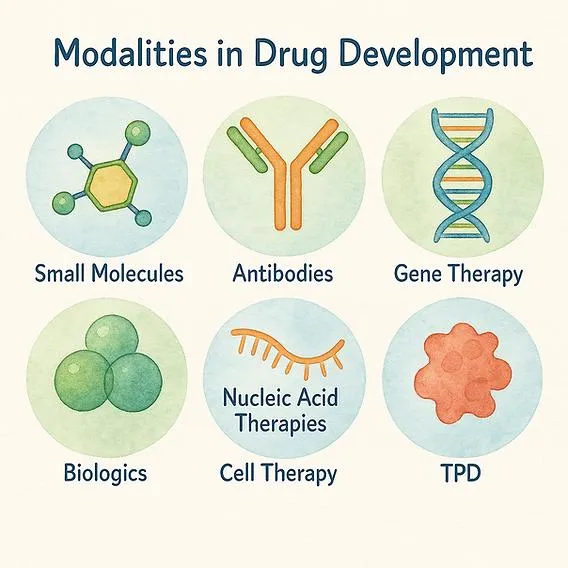
It is important to note that acceptance of a marketing application, inclusion in the priority review process, and regulatory approval are different stages of the drug approval process. Therefore, this article presents these products as key medicines to watch in China during H2 2026, rather than suggesting that all of them are certain to receive approval. Final regulatory decisions should be based on announcements from China’s National Medical Products Administration (NMPA).
10 Innovative Drugs to Watch in H2 2026
| Drug | Enterprise | Main Therapeutic Area | Primary Indication | Drug Type / Core Mechanism | China’s Progress as of August 2026 |
|---|---|---|---|---|---|
| SSGJ‑613 / Amvilitamab | 3SBio | Inflammation / Metabolism | Acute Gouty Arthritis | Anti‑IL‑1β Monoclonal Antibody | Approved in August 2026 |
| Etripamil | Milestone Pharmaceuticals / Everest Medicines | Cardiovascular | PSVT (Paroxysmal Supraventricular Tachycardia) | L‑type Calcium Channel Blocker, Nasal Spray | NDA under review |
| Oveporexton | Takeda | Neurology / Rare Disease | Type 1 Narcolepsy | OX2R Agonist | Approved in July 2026 |
| SHR‑1918 | Hengrui Medicine | Metabolism / Cardiovascular | HoFH (Homozygous Familial Hypercholesterolemia) | ANGPTL3 Monoclonal Antibody | NDA accepted and granted priority review |
| Velitortamab / GR1803 | Zhixiang Jintai | Hematologic Oncology | R/R Multiple Myeloma | BCMA/CD3 Bispecific Antibody | Conditional marketing application under review |
| Iberdomide | BMS | Hematologic Oncology | Multiple Myeloma | CELMoD | NDA under review in China; US accelerated approval granted |
| Onasemnogene abeparvovec | Novartis | Rare Disease | 5q‑associated SMA | AAV‑mediated Gene Therapy | NDA accepted in China |
| Tinengotinib | Tragen Pharmaceuticals | Oncology | FGFR2‑aberrant Cholangiocarcinoma | Multi‑kinase Inhibitor | NDA accepted |
| Felzartamab | Biogen | Hematologic Oncology / Immunology | Multiple Myeloma and Others | CD38 Monoclonal Antibody | China’s marketing progress worthy of attention |
| Fanregratinib | HUTCHMED | Oncology | FGFR2‑positive Intrahepatic Cholangiocarcinoma | FGFR1/2/3 Inhibitor | NDA accepted and granted priority review |
1. SSGJ-613: Anti-IL-1β Therapy Brings a New Treatment Option for Acute Gout
| Item | Information |
|---|---|
| Drug | SSGJ-613 / Anflivximab |
| Company | Sansheng Guojian |
| Indication | Acute gouty arthritis in adults |
| Drug Type | Recombinant humanized anti-IL-1β monoclonal antibody |
| Administration | Subcutaneous injection |
| China Status | Approved by the NMPA in August 2026 |
| Key Feature | Targets the IL-1β inflammatory pathway |
Acute gout attacks are often associated with significant joint pain and inflammation, and IL-1β is an important mediator involved in this inflammatory response. By targeting IL-1β, SSGJ-613 is designed to help control acute gout attacks at the level of the underlying inflammatory pathway.
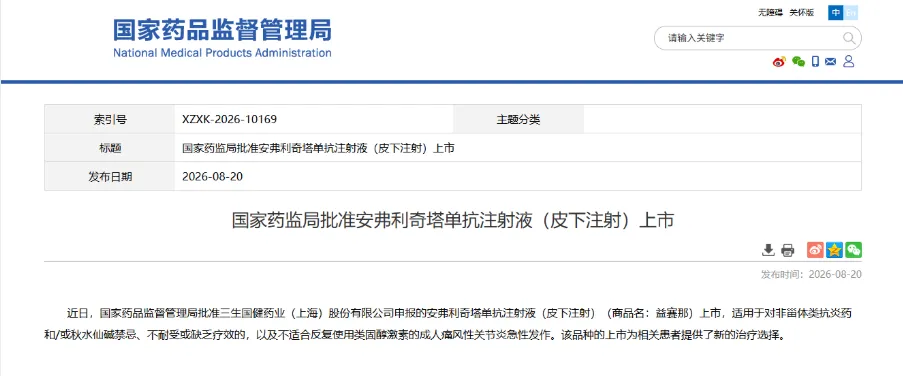
SSGJ-613 is a humanized anti-IL-1β monoclonal antibody independently developed by Sansheng Guojian. Its marketing application was previously accepted for review, and as of August 2026, the product has received NMPA approval in China under the brand name Yisaina®.
Publicly available Phase III study results showed positive efficacy in relieving acute pain, while also suggesting a potential advantage in helping prevent recurrent acute gout attacks. Its overall safety and tolerability profile was also considered acceptable.
✨ As targeted therapies for inflammatory pathways continue to develop, the approval of Anflivximab represents another development worth watching in the treatment of acute gout. For some patients who need additional treatment options, IL-1β-targeted therapy may offer a new approach to disease management.
2. Etripamil: A Nasal Spray That Could Change the Management of Acute PSVT Episodes
| Item | Information |
|---|---|
| Drug | Etripamil |
| Company | Milestone Pharmaceuticals / Everest Medicines |
| Indication | Paroxysmal Supraventricular Tachycardia (PSVT) |
| Drug Type | L-type calcium channel blocker |
| Dosage Form | Nasal spray |
| Key Feature | Rapid onset and patient-administered intranasal treatment |
| China Status | Marketing application under review |
One of the defining characteristics of paroxysmal supraventricular tachycardia (PSVT) is that episodes can occur suddenly. For patients who have already been diagnosed, how to rapidly manage symptoms during an acute episode remains an important aspect of clinical care.
Etripamil is administered as a nasal spray. Compared with traditional approaches that may require treatment in a healthcare setting, one of its key innovations is its potential to offer a more convenient out-of-hospital treatment option.
Results from the Chinese Phase III JX02002 study showed that 40.5% of patients in the etripamil group converted to sinus rhythm within 30 minutes, compared with 15.9% in the placebo group.
The product’s marketing application in China is currently still under regulatory review. In 2026, Everest Medicines further acquired the rights to develop, commercialize, and localize the product in Greater China.
✨ From an innovation perspective, Etripamil is not only a new cardiovascular medicine but also reflects a broader trend toward more convenient and patient-friendly treatment approaches for acute conditions.
3. Oveporexton: One of the Innovative Therapies Targeting the Core Mechanism of Narcolepsy Type 1
| Item | Information |
|---|---|
| Drug | Oveporexton / Aopule‑ton (former name: Aobole‑tong) |
| Enterprise | Takeda Pharmaceuticals |
| Indication | Narcolepsy Type 1 in patients aged 16 years and older |
| Drug Type | Selective OX2R agonist |
| Core Mechanism | Activates orexin receptor 2 |
| China Status | Approved in July 2026 |
Oveporexton received marketing approval in China in July 2026 under the official name Aopule‑ton.
Narcolepsy Type 1 is a rare chronic neurological disorder. Patients may suffer from excessive daytime sleepiness, cataplexy, and nocturnal sleep disturbance.
This disease is strongly linked to dysfunction of the orexin system. Oveporexton is an oral orexin receptor 2 (OX2R) agonist. Unlike traditional therapies that mainly control symptoms, its development rationale focuses on the key pathological mechanism underlying the disease.
Findings from two pivotal Phase III studies demonstrated positive outcomes across multiple endpoints, including excessive daytime sleepiness, cataplexy, alertness, daily functioning and quality of life.
✨ This drug achieved the world‑first submission and world‑first approval in China. From NDA submission in January 2026 to approval in July 2026, it serves as a representative case of efficient Chinese drug review and the global‑synchronized R&D model for innovative medicines
4. SHR‑1918: ANGPTL3‑Targeted Agent Enters the Field of Rare Lipid Disorders
| Item | Information |
|---|---|
| Drug | SHR‑1918 |
| Enterprise | Hengrui Medicine |
| Indication | Homozygous Familial Hypercholesterolemia (HoFH) |
| Target | ANGPTL3 |
| Drug Type | Fully‑human Monoclonal Antibody |
| Route of Administration | Subcutaneous Injection |
| China Status | NDA accepted and granted priority review |
Homozygous Familial Hypercholesterolemia (HoFH) is a severe inherited lipid‑metabolism disorder. Patients typically present with extremely high LDL‑C levels and elevated cardiovascular risk, creating sustained clinical demand for innovative lipid‑lowering treatment options.
SHR‑1918 is an innovative lipid‑lowering agent targeting ANGPTL3. According to publicly available clinical data, subcutaneous administration once every four weeks yielded significant reductions in patients’ LDL‑C levels in relevant clinical trials.
✨ ANGPTL3 has emerged as one of the key targets for global lipid‑lowering drug R&D. The potential launch of SHR‑1918 reflects that Chinese innovative pharmaceutical enterprises are accelerating their footprint in innovative therapeutics for metabolic diseases and chronic conditions.
5. Weilitomab: A BCMA/CD3 Bispecific Antibody Continues to Advance Innovation in Multiple Myeloma Treatment
| Item | Information |
|---|---|
| Drug | Weilitomab / GR1803 |
| Company | Zhixiang Jintai |
| Indication | Relapsed or refractory multiple myeloma |
| Drug Type | BCMA/CD3 bispecific antibody |
| Core Mechanism | Redirects T cells to recognize and attack BCMA-positive myeloma cells |
| China Status | Conditional marketing application under review |
| Special Progress | Included in the priority review process |
Multiple myeloma has become one of the most active areas of innovative drug development in hematologic oncology, with BCMA emerging as one of the most closely watched therapeutic targets.
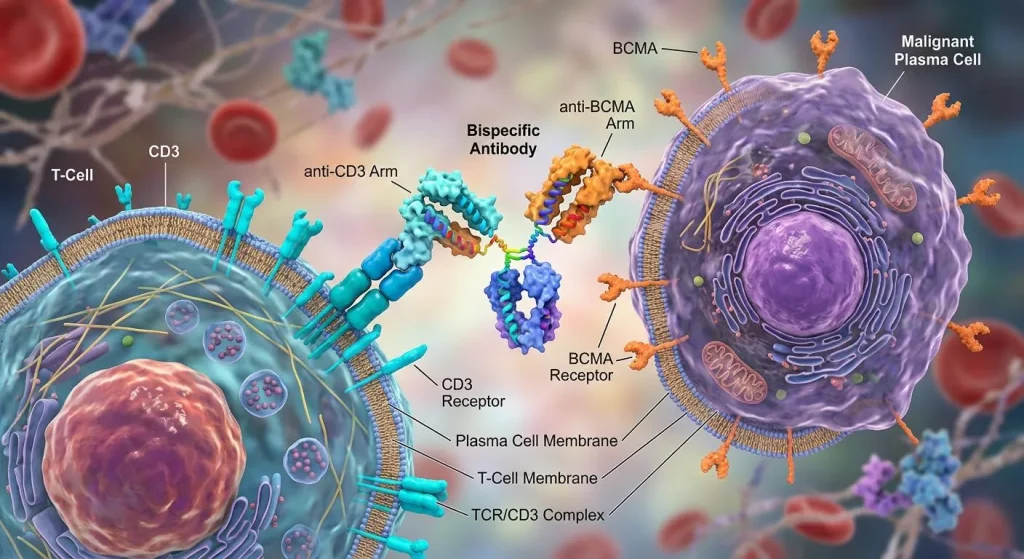
Weilitomab works by simultaneously targeting BCMA and CD3, helping redirect T cells toward BCMA-positive myeloma cells and enhance their immune-mediated attack.
In publicly reported clinical studies, the drug demonstrated a high objective response rate in patients with relapsed or refractory multiple myeloma, with some patients achieving deep responses.
✨ As CAR-T cell therapies, antibody-drug conjugates, and bispecific antibodies continue to enter the multiple myeloma treatment landscape, therapeutic options are becoming increasingly diverse. Potential approval of Weilitomab could further expand the range of treatment options available for patients with difficult-to-treat disease.
6. Iberdomide: CELMoD Enters a New Stage of Clinical Application
| Item | Information |
|---|---|
| Drug | Iberdomide |
| Company | Bristol Myers Squibb (BMS) |
| Indication | Multiple myeloma |
| Drug Type | CELMoD |
| Core Mechanism | Cereblon E3 ubiquitin ligase modulation |
| China Status | Marketing application under review |
| U.S. Progress | Received FDA accelerated approval in August 2026 |
Iberdomide belongs to the CELMoD (Cereblon E3 Ligase Modulator) class of novel medicines and represents an important product in BMS’s development of this emerging therapeutic approach.
For general readers, CELMoDs can be viewed as a new generation of medicines developed from the traditional immunomodulatory drug approach, with the potential to improve treatment outcomes when used as part of combination regimens for multiple myeloma.
In a pivotal Phase III study, an Iberdomide-based combination demonstrated positive results in measures including minimal residual disease (MRD) negativity.
✨ From a broader development perspective, multiple myeloma treatment is increasingly moving from individual-drug therapy toward more sophisticated combination strategies. The potential approval of Iberdomide in China could therefore introduce another option for combination treatment and further strengthen the evolving multiple myeloma treatment landscape.
7. Onasemnogene abeparvovec: SMA Gene Therapy Continues to Expand in the Chinese Market
| Item | Information |
|---|---|
| Drug | Onasemnogene abeparvovec |
| Brand Name | Zolgensma |
| Company | Novartis |
| Indication | 5q spinal muscular atrophy (SMA) |
| Drug Type | AAV-based gene therapy |
| Core Mechanism | Delivers a functional SMN1 gene |
| China Status | Marketing application accepted |
Spinal muscular atrophy (SMA) is a serious inherited rare disease closely associated with abnormalities in the SMN1 gene.
Onasemnogene abeparvovec is one of the representative products in the field of gene therapy. Its core therapeutic approach is to deliver a functional gene to help patients produce the SMN protein needed for motor neuron function.
Unlike conventional treatments that require ongoing administration, gene therapy explores a treatment model with the potential for long-term therapeutic effects. For inherited rare diseases such as SMA, continued advances in this field could have significant clinical implications.
✨ As gene therapy continues to develop in China, products such as Onasemnogene abeparvovec could provide additional treatment options for patients with SMA. At the same time, long-term follow-up, treatment costs, and patient access remain important considerations for the broader adoption of gene therapies.
8. Tinengotinib: Addressing Treatment Needs After FGFR Inhibitor Therapy in Cholangiocarcinoma
| Item | Information |
|---|---|
| Drug | Tinengotinib |
| Company | TransThera Sciences |
| Indication | Advanced cholangiocarcinoma with FGFR2 alterations |
| Drug Type | Multikinase inhibitor |
| Key Targets | FGFR1–3, JAK1/2, VEGFR, Aurora A/B, and others |
| China Status | Marketing application accepted |
| Regulatory Progress | Priority review / Breakthrough Therapy-related designation |
Cholangiocarcinoma is a type of cancer for which treatment options remain relatively limited. With the development of molecular testing, an increasing number of patients can be identified with potential therapeutic targets such as FGFR2.
Tinengotinib is a multikinase inhibitor being developed in part for patients whose disease has progressed after previous FGFR inhibitor treatment.
Publicly available clinical data have demonstrated antitumor activity in relevant patient populations.
| Clinical Measure | Result |
|---|---|
| ORR | 28.0% |
| DCR | 82.0% |
| Median PFS | 6.1 months |
| Median OS | 20.7 months |
| Median DoR | 8.5 months |
One of the key aspects of Tinengotinib is that the development of precision oncology is moving beyond simply identifying a molecular target. Increasing attention is being placed on what treatment options may remain available when patients develop disease progression after targeted therapy.
✨ For patients with FGFR2-altered cholangiocarcinoma, this represents an important area of ongoing innovation and could further expand the treatment landscape if the product receives regulatory approval in China.
9. Felzartamab: Expanding the Potential of CD38-Targeted Therapy
| Item | Information |
|---|---|
| Drug | Felzartamab |
| Development Code | TJ202 / MOR202 |
| Company | Biogen |
| Key Target | CD38 |
| Primary Areas | Multiple myeloma and immune-mediated diseases |
| Drug Type | Human monoclonal antibody |
| China Rights | Integrated under Biogen in 2026 |
CD38 has become an important therapeutic target in the treatment of multiple myeloma. Felzartamab is a monoclonal antibody targeting CD38. In addition to its development in multiple myeloma, the drug is also being explored for potential applications in immune-mediated diseases and other indications.
Importantly, drug development is increasingly focused not only on antitumor activity but also on the patient treatment experience, including infusion-related reactions, administration time, and tolerability, particularly among older patients.
✨ If Felzartamab successfully enters the Chinese market, it could further contribute to competition and innovation in CD38-targeted therapies and provide another potential treatment option for patients.
10. Fanregratinib: A Promising Targeted Therapy for FGFR2-Positive Intrahepatic Cholangiocarcinoma
| Item | Information |
|---|---|
| Drug | Fanregratinib |
| Development Code | HMPL-453 |
| Company | Hutchmed |
| Indication | FGFR2 fusion/rearrangement-positive intrahepatic cholangiocarcinoma |
| Drug Type | Selective FGFR1/2/3 inhibitor |
| China Status | Marketing application accepted |
| Regulatory Progress | Included in priority review |
Treatment for intrahepatic cholangiocarcinoma is increasingly moving toward precision medicine. For some patients, molecular testing may identify FGFR2 fusions or rearrangements, which can help determine whether FGFR-targeted therapy should be considered.
Fanregratinib is a targeted therapy developed to inhibit the FGFR pathway. Publicly available Phase II data have demonstrated meaningful disease control and antitumor activity in the relevant patient population.
Key Phase II results include:
| Clinical Measure | Result |
|---|---|
| ORR | 42.5% |
| DCR | 83.9% |
| Median DoR | 6.9 months |
| Median PFS | 6.9 months |
| Median OS | 16.6 months |
| Median Time to Response | 1.4 months |
Hutchmed announced in December 2025 that the product’s marketing application in China had been accepted and included in the priority review process. Key Phase II data released in 2026 further supported its development potential in patients with FGFR2 fusion/rearrangement-positive intrahepatic cholangiocarcinoma.
✨ For the broader field of precision oncology, Fanregratinib also highlights how molecular testing and targeted treatment are becoming increasingly interconnected, potentially enabling more personalized treatment strategies for patients with specific genomic alterations.
What Changes Are Taking Place in China’s Innovative Drug Market in 2026?
The 10 innovative medicines highlighted in this article show that China’s innovative drug development is continuing to expand into areas such as rare diseases, precision medicine, novel technologies, and improved patient treatment experiences.
1. Innovative Treatments for Rare Diseases Continue to Attract Attention
Among the medicines highlighted in this article are Oveporexton, Novartis’ gene therapy for spinal muscular atrophy, and SHR-1918, which targets conditions including type 1 narcolepsy, spinal muscular atrophy, and homozygous familial hypercholesterolemia (HoFH).

👉 Although these diseases affect relatively small patient populations, they often involve well-defined disease mechanisms and significant unmet medical needs. As a result, developing innovative treatments for rare diseases and specific patient populations has become an important focus for both global pharmaceutical companies and Chinese drug developers.
At the same time, improvements in rare disease diagnosis, evolving drug approval policies, and growing clinical demand are increasing interest in the development and commercialization potential of rare disease medicines.
2. Innovative Treatment Options for Multiple Myeloma Continue to Expand
Based on the products highlighted in this article, multiple myeloma remains one of the more competitive areas of innovative drug development.
| Technology / Approach | Representative Drug | Key Feature |
|---|---|---|
| Bispecific antibody | Weilitomab | Simultaneously targets BCMA and CD3 to help immune cells recognize and attack tumor cells |
| Novel immunomodulatory drug | Iberdomide | Uses a protein degradation-related mechanism to exert antitumor activity |
| Monoclonal antibody | Felzartamab | Targets CD38 and is being further explored in multiple myeloma and immune-mediated diseases |
This reflects the increasingly diverse treatment landscape for multiple myeloma, potentially providing patients with more therapeutic options and combination strategies.
3. Precision Oncology Is Becoming More Specialized
Precision medicine has become an important direction in oncology drug development. Tinengotinib and Fanregratinib, for example, highlight this trend in the treatment of cholangiocarcinoma.
Both medicines are associated with abnormalities in the FGFR pathway, with particular attention to cholangiocarcinoma patients who have molecular alterations such as FGFR2 fusions or rearrangements.
In the future, cancer treatment may increasingly follow a more personalized pathway: Disease diagnosis → Molecular testing → Identification of biomarkers → Selection of targeted therapy → Ongoing assessment of treatment response. This means that treatment decisions may depend not only on which type of cancer a patient has but also on the patient’s specific molecular characteristics.
4. Innovation Is Not Limited to New Targets—Drug Delivery Matters Too
In addition to new targets and novel mechanisms, drug delivery and treatment convenience are becoming increasingly important aspects of innovative drug development.
Etripamil is a good example. Compared with traditional approaches that may require acute treatment in a healthcare setting, its nasal spray formulation is designed to provide a more convenient administration option outside the hospital or clinic when appropriate.
This demonstrates that the value of an innovative medicine does not necessarily depend on targeting an entirely new biological pathway.
Overall, the 10 medicines highlighted in this article show that China’s innovative drug market in 2026 is not simply about how many new medicines are approaching market entry. More importantly, innovation is expanding toward more precise, personalized, convenient, and diverse treatment options across a growing range of therapeutic areas.
For the global pharmaceutical market, this also means that China’s innovative drug sector deserves continued attention. As more products move through regulatory review, approval, and commercialization, China’s role in the global pharmaceutical supply chain may continue to grow.
Conclusion
🔬 The 10 breakthrough drugs to watch in H2 2026 offer more than a snapshot of individual medicines. Together, they highlight the rapid evolution of China’s innovative drug market, where domestic pharmaceutical innovation is increasingly developing alongside global therapies.
From monoclonal antibodies and bispecific antibodies to targeted small-molecule therapies and gene therapies, these products demonstrate how Chinese innovative drugs are expanding across rare diseases, oncology, cardiovascular diseases, metabolic disorders, and immune-related conditions.
For the global pharmaceutical industry, China is becoming an increasingly important market for innovative drug development, regulatory approval, and commercialization. As more products move from clinical development to regulatory review and commercialization, international healthcare institutions, pharmaceutical buyers, and specialized pharmacies will have increasing reasons to monitor China new drug approvals and developments in the Chinese pharmaceutical market.
For overseas healthcare institutions, pharmaceutical procurement organizations, and professional pharmacies, staying informed about China’s new drug approvals, Chinese innovative drugs, and China’s pharmaceutical market can help identify emerging products and potential supply opportunities.
DengYuePharmacy continues to follow developments in China’s innovative pharmaceutical market, providing pharmaceutical information, market insights, and professional procurement support for international customers. For customers interested in specialty drug procurement, innovative medicine supply, or access to Chinese pharmaceutical products, explore product information and compliant supply channels and select appropriate services in accordance with local regulations and professional medical advice.
FAQ About 10 Breakthrough Drugs to Watch in H2 2026
What are the most promising drugs to watch in 2026?
Spotlight On: The drugs that will shape 2026
1. Oral Wegovy—Novo Nordisk/orforglipron—Eli Lilly.
2. CagriSema—Novo Nordisk.
3. Retatrutide—Eli Lilly.
4. MET-0971 — Pfizer.
5. Enlicitide decanoate—Merck & Co.
6. Pelacarsen—Novartis.
7. Keytruda Qlex—Merck & Co.
8. Ivonescimab—Akeso/Summit Therapeutics.
What are some promising medical breakthroughs expected in 2026?
In 2026, expect more progress in:
1. Ultra-precise testing, like liquid biopsies that detect diseases early.
2. Customized treatments based on your unique DNA.
3. Genetic risk scores that show how likely you are to develop certain conditions.
4. The future of care is medicine made just for you.
What drugs will become generic in 2026?
Blockbuster drug patent expirations in 2026 and what they mean
As patents expire, generics and biosimilars can reshape drug pricing.
1. Xolair® (omalizumab)
2. Pomalyst® (pomalidomide)
3. Opsumit® (macitentan)
4. Januvia® (sitagliptin) / Janumet® (sitagliptin/metformin)
5. Simponi® (golimumab)
What is the newest medical breakthrough?
CRISPR-Based Gene Therapies: From the Lab to Approval.
What is the next big thing in healthcare?
The future of healthcare is data-driven, AI-enabled, and fundamentally patient-centered. Advances in AI, cloud computing, genomics, and virtual care are converging to create a smarter health system—one that can anticipate risk, personalize treatment, and intervene earlier to prevent costly hospitalizations.