2026 marks a pivotal turning point for the global biopharmaceutical industry, signaling the transition from years of market contraction to a new phase of sustainable recovery. Following the capital slowdown, pipeline rationalization, and regulatory uncertainties experienced between 2021 and 2024, the industry is entering a renewed growth cycle driven by technological innovation, the return of global investment, supply chain restructuring, and increasingly optimized regulatory frameworks.
As a company specializing in global innovative drug distribution, cross-border pharmaceutical collaboration, and commercialization support, DengYue Pharmacy continuously monitors worldwide clinical advancements, capital market developments, evolving regulatory policies, and strategic initiatives undertaken by leading biopharmaceutical companies. Based on the accelerating pace of innovative drug approvals and technology commercialization in 2026, this article explores the Seven Key Global Biopharmaceutical Trends and Emerging Opportunities in 2026 that are reshaping the industry. It aims to provide pharmaceutical business development teams, API manufacturers, cross-border distributors, and other industry stakeholders with valuable insights for strategic planning, investment decisions, and long-term business growth.
Unlike previous years, when progress was largely driven by isolated technological breakthroughs, the biopharmaceutical industry in 2026 is undergoing a comprehensive transformation across the entire value chain. From early-stage research and process development to clinical development, commercial launch, global licensing, and supply chain optimization, every stage is shifting away from rapid expansion toward a more disciplined model that prioritizes clinical value, execution efficiency, regulatory compliance, and sustainable commercial returns. This industry-wide transition also serves as the core framework guiding DengYue Pharmacy’s pipeline evaluation, portfolio strategy, and global pharmaceutical supply chain optimization.
AI-Driven Drug R&D Moves Beyond the Hype to Deliver End-to-End Industry Value
🛜 In 2026, artificial intelligence officially moves beyond the industry’s hype cycle and enters a new era of real-world clinical implementation and commercial value creation. According to Deloitte’s 2026 Global Life Sciences Outlook, 78% of pharmaceutical executives identify AI as the primary driver of industry transformation. However, only 14% of companies have successfully achieved enterprise-wide implementation across the entire drug development process, highlighting the enormous growth potential that remains.
This year, AI applications have expanded far beyond conventional target discovery. They now play a critical role throughout the pharmaceutical value chain, including clinical trial design, patient recruitment, intelligent data analysis, risk prediction, due diligence, and commercialization strategy optimization. These capabilities significantly shorten development timelines, reduce trial-and-error costs, improve R&D productivity, and increase both the success rate of innovative medicines and the efficiency of bringing new therapies to market.

Leading global biopharmaceutical companies have already demonstrated the tangible value of AI in transforming pharmaceutical innovation.
- Recursion Pharmaceuticals has launched its ClinTech intelligent clinical development platform, leveraging AI to optimize trial design, patient recruitment, and operational efficiency throughout the clinical process. The company is expected to report pivotal Phase I clinical data from multiple pipeline programs in 2026.
- Insilico Medicine, one of the world’s leading AI-driven drug discovery companies, successfully completed its Hong Kong IPO in 2026. The proceeds will support further development of its AI platform and the expansion of automated laboratories. Its lead candidate, Rentosertib, is scheduled to enter Phase IIb/III clinical trials for idiopathic pulmonary fibrosis (IPF) this year, while multiple Investigational New Drug (IND) applications are also planned for submission to the U.S. FDA.
For the cross-border pharmaceutical distribution industry, the rapid adoption of AI is accelerating the development of innovative drug pipelines and shortening commercialization timelines for high-value therapies. As one of the Seven Key Global Biopharmaceutical Trends and Emerging Opportunities in 2026, AI is creating sustained growth opportunities across pharmaceutical ingredients, technology transfer, product licensing, regional distribution, and global commercialization partnerships.
Global Biomanufacturing Reshapes the Pharmaceutical Supply Chain
In 2026, geopolitical priorities and growing concerns over pharmaceutical security are fundamentally reshaping the global biomanufacturing landscape. Driven by U.S. policies aimed at strengthening domestic pharmaceutical production, drug manufacturers can avoid substantial import tariffs by committing to improved medicine accessibility and responsible pricing. This policy framework has significantly accelerated investment in domestic manufacturing capacity. By the end of 2025, global pharmaceutical companies had pledged more than US$480 billion in investments for biomanufacturing facilities and R&D centers across the United States, with most major projects scheduled to become operational throughout 2026. These developments are set to redefine the global distribution of pharmaceutical manufacturing capacity.
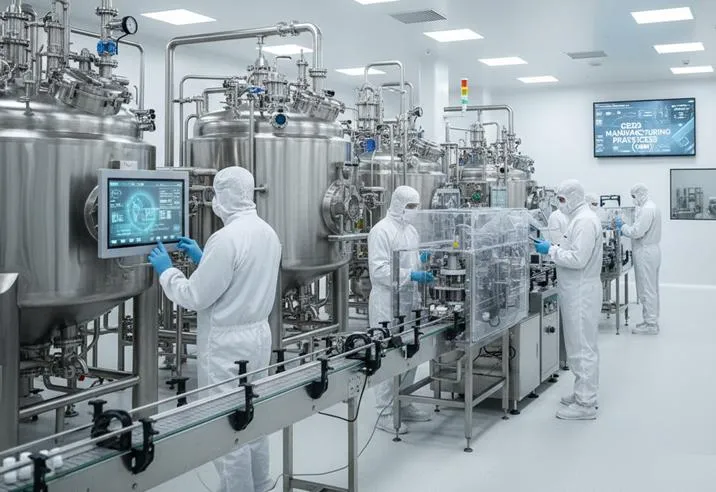
The traditional model of globally dispersed contract manufacturing is gradually giving way to a more resilient structure centered on regional self-sufficiency, diversified manufacturing footprints, and complementary global supply chains. Multinational pharmaceutical companies continue to scale back inefficient offshore production while expanding high-end domestic GMP manufacturing capabilities, all while maintaining high-quality international supply partners to balance cost efficiency with supply chain resilience.
This new wave of industrial transformation is accelerating technological upgrades in both active pharmaceutical ingredients (APIs) and finished dosage manufacturing across regional markets, while significantly strengthening the global competitiveness of emerging pharmaceutical supply chains. Leveraging a diversified international sourcing network, DengYue Pharmacy provides customers with stable, compliant, and multi-channel pharmaceutical supply solutions and cross-border distribution services, helping partners minimize dependence on any single manufacturing location and enhance long-term supply chain security.
Oncology Innovation Continues to Accelerate as Breakthrough Therapies Enter a Wave of Global Regulatory Approvals
Oncology remains the driving force behind global biopharmaceutical innovation and commercialization in 2026.
Leading pharmaceutical companies are pursuing a dual-track strategy.
- On one hand, they continue to refine established treatment modalities such as targeted therapies and immunotherapies, extending the lifecycle of mature products through new indication expansions.
- On the other hand, they are investing heavily in breakthrough treatments for hard-to-treat solid tumors, drug-resistant cancers, cancer vaccines, next-generation bispecific antibodies, and antibody-drug conjugates (ADCs), addressing significant unmet clinical needs while advancing the future of cancer care.
The second half of 2026 is expected to mark a major global regulatory approval window for innovative oncology therapies across leading pharmaceutical markets. A wide range of new treatments targeting challenging diseases—including multiple myeloma and advanced cholangiocarcinoma—are anticipated to receive regulatory approvals. These include next-generation BCMA/CD3 bispecific antibodies, CELMoD (Cereblon E3 Ligase Modulator) therapies, FGFR inhibitors, and other cutting-edge oncology medicines that represent the latest advances in precision cancer treatment.
The launch of these therapies will rapidly expand treatment options for patients with difficult-to-treat cancers while further intensifying competition and pricing pressure within the global oncology market. To address this evolving landscape, DengYue Pharmacy continues to identify innovative oncology products with high clinical value, limited competitive saturation, and strong unmet medical demand. Through its comprehensive cross-border sourcing, pharmaceutical distribution, and commercialization support capabilities, the company helps accelerate patient access to next-generation cancer therapies across international markets.
Capital Markets Rebound as M&A and Cross-Border Licensing Accelerate
As industry fundamentals continue to strengthen, the global biopharmaceutical capital market is experiencing a broad-based recovery in 2026. Mergers and acquisitions (M&A), private financing, initial public offerings (IPOs), and cross-border licensing transactions are all gaining significant momentum. Facing an impending wave of patent expirations, large pharmaceutical companies are increasingly turning to acquisitions, in-licensing, and strategic pipeline collaborations to replenish their R&D portfolios. Meanwhile, biotech companies with differentiated technology platforms and late-stage clinical assets have become the most sought-after targets for investment and acquisition.
💰 One of the defining highlights of 2026 is the rapid expansion of cross-border licensing activity across emerging pharmaceutical markets. During the first half of the year alone, emerging biopharmaceutical companies completed 81 cross-border licensing transactions with a combined value of nearly US$110 billion, representing approximately 80% of the total transaction value recorded throughout 2025. These figures underscore the growing role of emerging pharmaceutical markets as major sources of global innovation pipelines. At the same time, two-way cross-border licensing, international technology partnerships, and exclusive regional commercialization agreements are expanding at an unprecedented pace, further accelerating the globalization of innovative medicines.
Keeping pace with the global flow of pharmaceutical innovation, DengYue Pharmacy provides end-to-end support for international partners through innovative drug sourcing, overseas licensing and commercialization partnerships, long-term API supply solutions, and regional distribution services. Its integrated capabilities help pharmaceutical companies efficiently transform innovative assets into commercially successful products across global markets.
Regulatory Transformation Accelerates the Standardization of Cell and Gene Therapies for Rare Diseases
The cell and gene therapy (CGT) sector reached a major regulatory milestone in 2026, marking the beginning of a new era of standardized development and accelerated commercialization for personalized therapies targeting rare diseases. The successful treatment of the first patient with a personalized CRISPR-based gene-editing therapy in 2025 demonstrated the clinical potential of single-patient precision gene correction and prompted the U.S. FDA to rethink regulatory pathways for ultra-rare genetic disorders.
In response, the FDA introduced a new Platform Technology Designation (PM) pathway in 2026, specifically designed for ultra-rare genetic diseases where conventional randomized controlled trials are often impractical or impossible. The new framework is expected to significantly shorten regulatory review timelines and accelerate patient access to individualized gene therapies, paving the way for broader adoption of precision medicine.
At the same time, regulatory oversight of the CGT industry is becoming increasingly stringent. Following multiple safety concerns associated with Sarepta Therapeutics’ gene therapy for Duchenne muscular dystrophy (DMD), regulatory authorities worldwide have strengthened requirements for manufacturing quality control, clinical safety monitoring, and post-marketing risk management. As a result, the technical and compliance standards for developing and commercializing cell and gene therapies continue to rise across the industry.
Against this backdrop of stronger regulatory standards and continued technological advancement, demand is expanding rapidly for orphan drugs, gene therapy-related medical products, advanced pharmaceutical formulations, and ultra-low-temperature cold chain logistics. With Novartis’ gene therapy for spinal muscular atrophy (SMA) expected to secure approvals in additional international markets throughout 2026, the global rare disease therapeutics market is poised for another phase of growth. This trend also creates new opportunities for DengYue Pharmacy to expand its cross-border specialty pharmaceutical distribution and temperature-controlled cold chain logistics services, supporting broader global access to advanced rare disease therapies.
Precision Technologies Reach Commercial Maturity as Multi-Omics and Spatial Sequencing Transform Drug Innovation
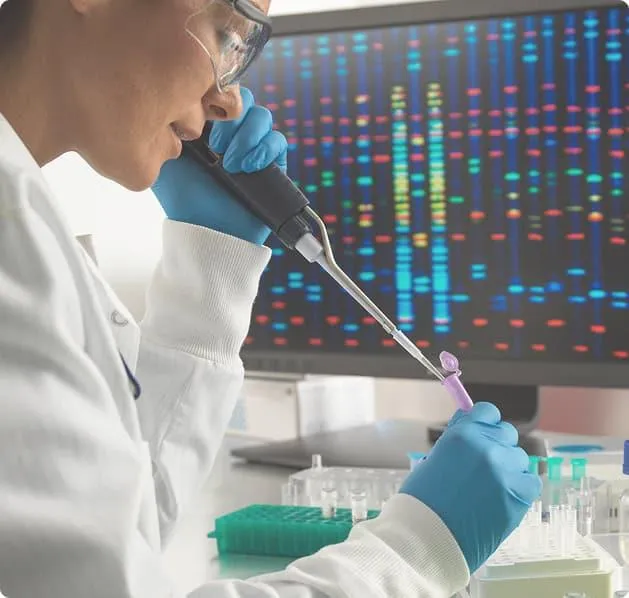
Multi-omics and spatial sequencing technologies have become the foundational drivers of precision medicine innovation in 2026. Next-generation sequencing (NGS), integrated multi-omics analysis, and spatial transcriptomics are now widely adopted across the pharmaceutical industry, evolving into standardized tools for therapeutic target discovery, disease mechanism research, biomarker identification, and companion diagnostic development.
A major milestone this year is the commercial launch of Illumina’s next-generation spatial omics platform, which combines ultra-high spatial resolution with an expanded field of view to provide unprecedented insights into the tumor microenvironment and tissue heterogeneity. These capabilities are enabling researchers to better understand disease biology while accelerating the development of targeted therapies and next-generation immuno-oncology medicines.
The maturation of omics technologies is fundamentally transforming traditional drug discovery from an experience-driven process into a data-driven, highly precise, and scientifically validated development model. As a result, pharmaceutical companies can improve target selection, optimize clinical development strategies, and significantly increase the probability of late-stage clinical success.
At the same time, the co-development model combining innovative therapeutics with companion diagnostics (CDx) continues to gain momentum, driving expansion across the broader precision medicine ecosystem. For pharmaceutical service providers, advances in multi-omics technologies also provide a stronger scientific foundation for identifying high-potential therapeutic areas, evaluating innovative drug candidates, and connecting global partners with cutting-edge commercialization opportunities. Leveraging these industry trends, DengYue Pharmacy continues to strengthen its expertise in identifying high-value innovative products and supporting their global commercialization through efficient cross-border pharmaceutical distribution and strategic market access services.
A More Stable Regulatory Environment Accelerates Global Drug Approvals and Innovation
After several years of regulatory uncertainty, the global pharmaceutical regulatory environment has become increasingly stable, transparent, and efficient in 2026. The U.S. Food and Drug Administration (FDA) continues to modernize its regulatory framework by accelerating innovative drug reviews, strengthening collaboration with industry, and embracing digital regulatory technologies. Through new pilot programs for priority review vouchers and expedited approval pathways, innovative medicines that support domestic manufacturing, address public health priorities, and demonstrate significant clinical value can benefit from faster regulatory review, substantially shortening the time to market.
At the same time, the FDA is expanding the use of artificial intelligence and big data-driven review tools, making regulatory assessments more standardized, efficient, and predictable. Similar reforms are taking place across other major regulatory agencies worldwide, where expedited approval pathways for innovative medicines have become increasingly well established. As a result, the pace of global drug approvals continues to accelerate, with many leading pharmaceutical companies advancing blockbuster therapies through simultaneous regulatory submissions across multiple international markets in 2026.
A more predictable and harmonized regulatory landscape is reducing policy uncertainty surrounding innovative drug commercialization and cross-border pharmaceutical collaboration. Faster approval timelines and improved international regulatory coordination are also enhancing the efficiency of global pharmaceutical distribution, enabling innovative therapies to reach patients more quickly.
For DengYue Pharmacy, this increasingly stable regulatory environment provides a strong foundation for expanding its global pharmaceutical supply chain, accelerating innovative drug sourcing, and strengthening its cross-border distribution network. By leveraging a more transparent and efficient regulatory ecosystem, the company is well positioned to support international partners in bringing high-value innovative medicines to markets around the world.
Conclusion
Taken together, these seven defining trends are shaping a new growth cycle for the global biopharmaceutical industry in 2026. From AI-driven transformation of drug discovery and development, the restructuring of global biomanufacturing and supply chains, and continuous breakthroughs in oncology innovation, to the recovery of capital markets, the standardization of cell and gene therapy (CGT), the commercialization of precision medicine technologies, and increasingly stable global regulatory frameworks, the Seven Key Global Biopharmaceutical Trends and Emerging Opportunities in 2026 are redefining how innovative medicines are developed, manufactured, approved, and commercialized worldwide.
As a trusted partner specializing in global pharmaceutical distribution and cross-border healthcare solutions, Chinese DengYue Modern Pharmacy remains committed to aligning its strategy with emerging industry trends. Focusing on high-value therapeutic areas—including innovative oncology medicines, orphan drugs for rare diseases, and advanced biologics—the company leverages its global supply chain network, compliant distribution system, and extensive commercialization expertise to provide comprehensive one-stop solutions for innovative drug sourcing, API supply, regional partnerships, cross-border distribution, and market commercialization for pharmaceutical companies, procurement organizations, and distributors worldwide.
Looking ahead, DengYue Pharmacy will continue to monitor global biopharmaceutical developments, strengthen its international supply chain capabilities, and expand cross-border pharmaceutical partnerships. By working closely with industry stakeholders around the world, the company is committed to helping partners seize the new growth opportunities emerging across the global biopharmaceutical industry in 2026 and beyond.
FAQ About Seven Key Global Biopharmaceutical Trends and Emerging Opportunities in 2026
What are the trends in biopharma in 2026?
Four trends are shaping biopharma leadership in 2026:
(1) the elevation of policy and geopolitics to CEO-level priorities;
(2) China’s rapid biopharma expansion and competitors in the U.S., Europe and elsewhere are responding;
(3) accelerating deal activity and IPOs driven by a patent cliff;
(4) how AI evolving.
What is the global pharmaceutical industry in 2026?
What is the size of the global pharmaceutical industry in 2026? The global pharmaceutical industry is projected to reach approximately USD 1,722.05 billion in 2026, reflecting steady growth driven by biologics and advanced therapies.
What is the biopharmaceutical market in 2026 2033?
Biopharmaceutical Market Summary
The global biopharmaceutical market size was valued at USD 484.4 billion in 2025 and is projected to grow from USD 523.5 billion in 2026 to USD 816.3 billion by 2033, at a CAGR of 6.5% from 2026 to 2033.
What are the pharmacy trends in 2026?
Pharmacy trends in 2026 reflect a convergence of utilization growth, regulatory change and innovation rather than isolated cost spikes. For employers, this means pharmacy is no longer a set-it-and-forget-it component of benefits strategies.
What is the future of biopharma?
For the biopharma sector then, the challenge is to maintain high quality standards, slash drug development lead times and extract further manufacturing efficiencies, all in a bid to bring down manufacturing costs and provide more affordable treatment options for patients across the globe.