New breakthrough in long-acting RSV monoclonal antibodies: XinDuoTuo® and YingMuLe® approved on the same day.
On September 3, 2026, China’s National Medical Products Administration (NMPA) approved two long-acting monoclonal antibodies for the prevention of respiratory syncytial virus (RSV) through its priority review and approval process. The two products are Retavibart Injection (trade name: XinDuoTuo®), developed by Zhuhai Trinomab Biotechnology Co., Ltd., and Culevibart Injection (trade name: YingMuLe®), developed by Ruiyang (Shandong) Biopharmaceutical Co., Ltd.
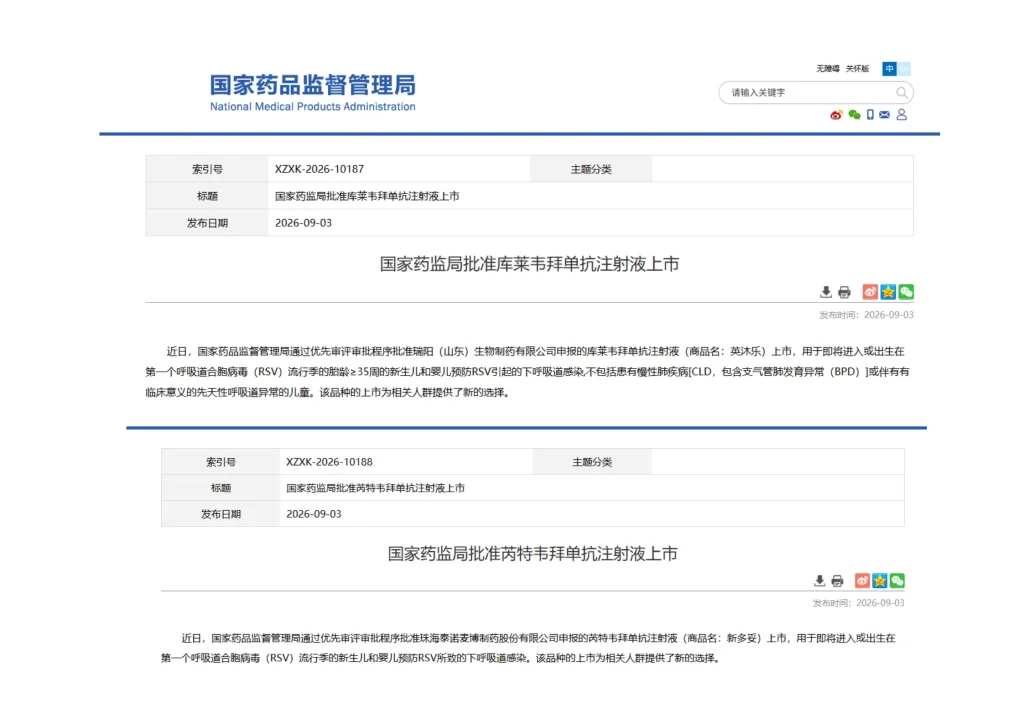
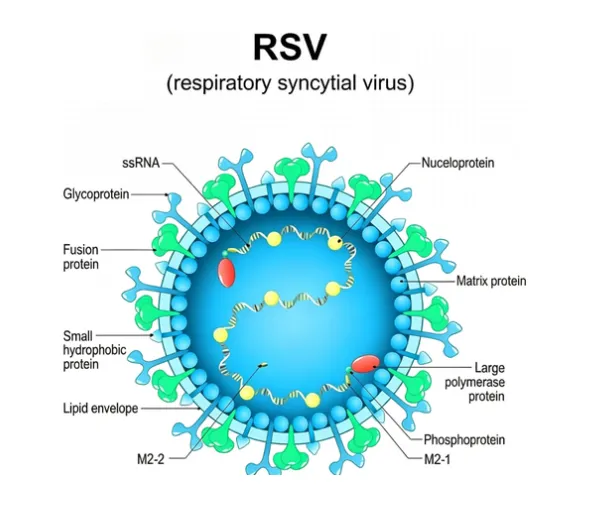
Respiratory syncytial virus (RSV) is an important cause of lower respiratory tract infections in infants and young children. Compared with preventive approaches that require repeated dosing, long-acting monoclonal antibodies can provide prolonged passive immune protection after a single dose, making them an increasingly important development area in global RSV prevention.
✨ The simultaneous approval of two long-acting RSV monoclonal antibodies developed in China not only expands the available options for RSV prevention in infants and young children in China but also demonstrates the continued progress of China’s innovative biopharmaceutical sector in long-acting antibody development.
For DengYue RX, which focuses on Chinese innovative medicines, specialty medicines, and global pharmaceutical supply, the launch of these two new products is also an important development to watch.
Why Is RSV a Major Concern?
Respiratory syncytial virus (RSV) is a common respiratory virus and an important cause of lower respiratory tract infections in infants and young children. Most children experience an RSV infection during early childhood, while some infants and young children may develop more serious conditions such as bronchiolitis or pneumonia, requiring medical attention or hospitalization.
🚼 For very young infants, the risk of severe lower respiratory tract disease deserves particular attention because their immune and respiratory systems are still developing. As a result, preventing RSV infection in infants and young children has become an important focus in global pediatric infectious disease research.
Unlike traditional vaccines, which stimulate the body to produce its own antibodies through active immunization, RSV preventive monoclonal antibodies provide pre-formed neutralizing antibodies directly through passive immunization. This approach can provide protection soon after administration, making long-acting RSV monoclonal antibodies an increasingly important option for RSV prevention in infants and young children.
As a result, long-acting RSV monoclonal antibodies are emerging as an important product category in the global RSV prevention landscape.
Two China-Developed Long-Acting RSV Monoclonal Antibodies Approved on the Same Day
Although XinDuoTuo® and YingMuLe® belong to the same RSV prevention category, the two products differ in several aspects, including their molecular design, target structures, and approved populations.
| Category | XinDuoTuo® | YingMuLe® |
|---|---|---|
| Generic Name | Retavibart Injection | Culevibart Injection |
| Trade Name | XinDuoTuo® | YingMuLe® |
| Development Code | TNM001 | RB0026 |
| Developer | Zhuhai Trinomab Biotechnology Co., Ltd. | Ruiyang (Shandong) Biopharmaceutical Co., Ltd. |
| Drug Type | Fully human, long-acting anti-RSV neutralizing monoclonal antibody | Fully human, long-acting RSV monoclonal antibody |
| Target Structure | Conserved epitope of the RSV prefusion F protein (Pre-F) | RSV F protein |
| Immune Approach | Passive immunization | Passive immunization |
| Administration | Intramuscular injection | Intramuscular injection |
| Approved Population | Newborns and infants entering or born during their first RSV season | Newborns and infants with a gestational age of ≥35 weeks entering or born during their first RSV season |
| Primary Purpose | Prevention of RSV-associated lower respiratory tract infection | Prevention of RSV-associated lower respiratory tract infection |
| Key Features | Long-acting, single-dose administration, with longer-term protection data publicly reported | Long-acting, single-dose administration, with optimized half-life to extend the duration of action |
✨ It is important to note that although both products are long-acting RSV monoclonal antibodies, their clinical trials differed in terms of study populations, study designs, and endpoints. Therefore, protection efficacy data from different clinical studies should not be directly compared to determine which product is more effective.
Retavibart Injection (XinDuoTuo®): A Long‑Acting Antibody Targeting Pre‑F Protein
Retavibart Injection is the generic name for XinDuoTuo®, development code: TNM001, independently developed by Trinomab Biotech. It is a fully‑human long‑acting anti‑RSV neutralizing antibody, which specifically targets conserved epitopes on the RSV pre‑fusion F protein (Pre‑F). By binding to key viral structures, it blocks RSV from invading host cells and delivers infection‑preventing effects.
One of XinDuoTuo®’s core strengths is long‑lasting protection with single‑dose administration. 🔬 The Phase III TNM001‑301 trial assessed the RSV‑preventive effect of one injection among healthy full‑term and late‑preterm infants. Published findings showed that within 150 days following a single intramuscular injection, the rate of medically attended RSV lower respiratory tract infection was reduced by 66.2%, and the associated hospitalization rate dropped by 82.3%.
👉 Additional data disclosed by Trinomab Biotech demonstrated that for severe RSV‑infection prevention in non‑high‑risk infants, XinDuoTuo® achieved 93.9% efficacy against medically attended cases and 90.1% efficacy against hospitalizations.
Approved by the NMPA, XinDuoTuo® is indicated for neonates and infants entering or born during their first RSV season, bringing a new prophylactic option against RSV‑triggered lower respiratory‑tract infections for this patient group.
Culevibart Injection (YingMuLe®): An Alternative Domestic Long‑Acting RSV Prophylactic Solution
Culevibart Injection is the generic name for YingMuLe®, development code: RB‑0026, developed by Ruiyang (Shandong) Biopharmaceutical Co., Ltd. Culevibart is a fully‑human long‑acting RSV monoclonal antibody. It binds to the RSV F protein. Engineered for optimized half‑life, it extends the in vivo duration of action and removes the requirement for repeated dosing.
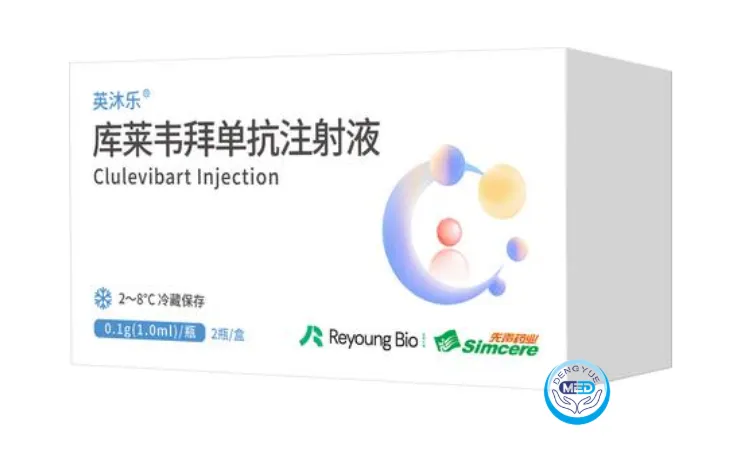
Per NMPA authorization, YingMuLe® is indicated for neonates and infants with gestational age ≥35 weeks who are entering or born during their first RSV season for prevention of RSV‑induced lower respiratory‑tract infections. 👉 In comparison with XinDuoTuo®, YingMuLe® has stricter population limitations within its approved indication—this constitutes a key clinical difference between the two domestic long‑acting RSV monoclonal antibodies.
🔬 Public datasets confirm RB‑0026 completed Phase III development. Ruiyang Biotech is also conducting a Phase IIIb trial in children aged 1‑2 years to further explore its prophylactic potential in older pediatric populations.
In August 2026, Ruiyang Biotech signed a strategic cooperation agreement with Simcere Pharmaceutical. Simcere obtained exclusive commercialization rights for culevibart across Greater China, marking the official launch of commercial preparation for this asset. 💰
Why Are the Two Domestic Long-Acting RSV Monoclonal Antibodies Worth Watching?
The biggest similarity between these two products is that they are addressing the same important clinical need: providing longer-lasting and more convenient preventive protection for infants and young children at high risk of RSV infection.
Traditional RSV prevention strategies have certain limitations in terms of dosing frequency, eligible populations, and the medical resources required for administration. Long-acting monoclonal antibodies, however, extend the antibody half-life through optimized antibody structures, making a single dose capable of providing protection over an extended period a reality.
From an industry perspective, XinDuoTuo® and Ying MuLe® approved on the same day are also highly significant.
In the past, China’s RSV prevention market relied largely on imported products. With Xin DuoTuo® and YingMuLe® entering the market, domestic innovative medicines are now taking a more active role in competition within this specialized field.
✨ This could gradually shift the RSV prevention market from a situation with limited product choices toward a more diversified supply landscape. For patients and healthcare institutions, the entry of more products into the market may also provide greater options in terms of drug accessibility, supply stability, and real-world use scenarios.
Domestic Innovative Medicines Are Reshaping China’s Specialty Drug Supply Landscape
In recent years, the pace of innovative drug development in China has accelerated significantly. From targeted cancer therapies, bispecific antibodies, and antibody-drug conjugates (ADCs) to rare disease medicines and long-acting antibodies, Chinese pharmaceutical companies are entering an increasing number of innovative drug fields that were once largely dominated by multinational pharmaceutical companies.
Long-acting RSV monoclonal antibodies are a representative example of this trend. The launch of Retavibart Injection and Culevibart Injection represents more than the approval of two new medicines. It also demonstrates that Chinese biopharmaceutical companies are developing increasingly comprehensive capabilities across the entire innovation process, from antibody discovery and molecular design to clinical development and commercialization.
As more domestically developed innovative medicines enter the market, new demands are also emerging on the supply side: how can these innovative products reach healthcare institutions, professional pharmaceutical channels, and patients with genuine medical needs in different countries and regions in a more efficient and compliant manner?
This is one of the key reasons why DengYue RX continues to closely monitor China’s innovative medicines and specialty drug supply landscape.
DengYue RX: Connecting Chinese Innovation with Global Pharmaceutical Demand
As a professional platform focused on pharmaceutical supply and cross-border pharmaceutical services, DengYue RX follows the development of China’s innovative drug market and is committed to providing international customers with more transparent, stable, and professional pharmaceutical procurement and supply support.
For innovative biologics, including long-acting RSV monoclonal antibodies, pharmaceutical supply involves far more than simply completing a purchase. It may also involve multiple steps, including product information verification, supply channels, pharmaceutical compliance, import and export requirements, and special transportation and storage conditions.
Biological products and medicines requiring specific storage conditions, in particular, place higher demands on supply chain stability and professional expertise.
Therefore, for international customers seeking to understand or source innovative medicines from China, working with a partner that has professional pharmaceutical supply capabilities and cross-border service experience can help reduce information gaps and supply chain communication costs.
DengYue RX will continue to monitor the latest developments in China’s innovative medicines, including oncology medicines, rare disease treatments, targeted therapies, biologics, and other clinically valuable innovative drugs, while providing global customers with more professional information and supply support for pharmaceutical products from China.
Conclusion
The same-day approval of two domestic long-acting RSV monoclonal antibodies marks a noteworthy development in China’s innovative pharmaceutical sector in 2026.
Although Retavibart and Culevibart differ in target design, eligible populations, and clinical development, both products are contributing to the evolution of RSV prevention in China—from a market primarily driven by imported products toward a new stage featuring greater participation from domestically developed innovative medicines.
🎯 For RSV prevention in infants and young children, long-acting monoclonal antibodies are providing a more convenient option for passive immunization. For China’s innovative pharmaceutical industry, the launch of these two products further demonstrates that Chinese pharmaceutical companies are increasingly entering important global fields of innovative biologics.

As more domestically developed innovative medicines receive regulatory approval and expand into international markets, improving global access to innovative medicines and establishing stable, compliant pharmaceutical supply chains will become increasingly important components of China’s pharmaceutical internationalization.
DengYue RX will continue to monitor the latest developments in China’s innovative medicines and specialty pharmaceutical products, providing global customers with professional pharmaceutical information and supply services.
📲 If you would like to learn more about specific medicines, contact us. DengYue RX can provide professional information and supply consultation to help you better understand product details, supply channels, and relevant procurement requirements.
FAQ About XinDuoTuo® and YingMuLe® Approved on the Same Day
What age is scariest for RSV?
RSV season—when outbreaks tend to occur—is from fall to the end of spring. People at increased risk of severe or sometimes life-threatening RSV infections include: Infants, especially premature infants or babies who are 6 months or younger.
What is the very first symptom of RSV?
People who become infected with RSV show symptoms within four to six days after the virus enters the body. Initial signs of RSV are similar to mild cold symptoms, including sneezing, runny nose, fever, cough, and decrease in appetite. Very young infants may be irritable, fatigued, and have breathing difficulties.
What is the difference between XinDuoTuo® and YingMuLe®?
The two products differ in their molecular design, target structures, and approved populations. Xin Duo Tuo® targets a conserved epitope of the RSV prefusion F protein, while Ying Mu Le® targets the RSV F protein and has a specifically defined indication for infants with a gestational age of ≥35 weeks.
Who can receive XinDuoTuo® or YingMuLe®?
Both products are intended for eligible newborns and infants entering or born during their first RSV season. However, their approved populations are not identical, so use should follow the specific product labeling and a healthcare professional’s assessment.
Are XinDuoTuo® and YingMuLe® vaccines?
No. Both are monoclonal antibody products rather than vaccines. They provide passive immunity by directly supplying antibodies instead of stimulating the body to produce its own antibodies.