
Non-small cell lung cancer (NSCLC) is one of the most common types of lung cancer and is a highly heterogeneous malignant tumor. In the past, lung cancer treatment decisions were mainly based on histological type, disease stage, and the patient’s overall health status. However, advances in molecular biology, genetic testing, and precision medicine have significantly changed the way NSCLC is diagnosed and treated.
Today, determining whether a tumor carries specific gene mutations, gene fusions, or abnormal protein expression has become an important part of treatment planning. Even when two patients are both diagnosed with advanced NSCLC, their treatment approaches may be completely different.
🤔 One patient may have an EGFR mutation and be a candidate for EGFR-targeted therapy, while another may have an ALK rearrangement and be considered for an ALK inhibitor. A patient without an identifiable targetable driver alteration may instead be evaluated for immunotherapy based on PD-L1 expression and other clinical factors.
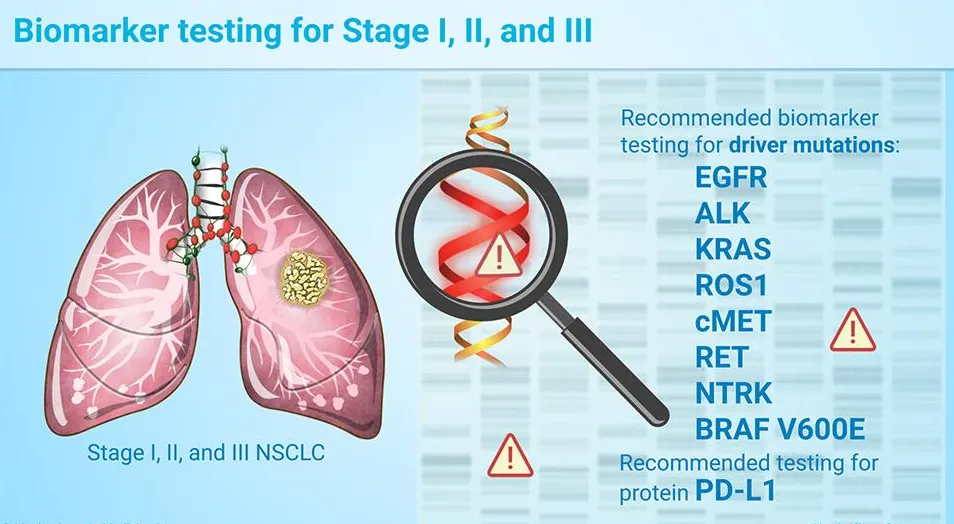
Understanding non-small cell lung cancer: how biomarker testing guides treatment choices is therefore an important part of modern precision oncology. By identifying the molecular characteristics of a tumor, healthcare professionals can better understand which targeted therapies or other systemic treatment approaches may be appropriate for an individual patient.
This article introduces the major NSCLC subtypes, important biomarkers, and commonly used testing methods and explains how biomarker results can influence treatment decisions, including targeted therapy, immunotherapy, and antibody-drug conjugates (ADCs).
What Is Non-Small Cell Lung Cancer?
Non-small cell lung cancer is not a single disease but rather a group of malignant tumors originating from different types of cells in the lungs. Based on histological characteristics, NSCLC mainly includes lung adenocarcinoma and lung squamous cell carcinoma.
Tumors may remain localized within the lungs or, as the disease progresses, invade surrounding tissues and spread through the lymphatic system or bloodstream to lymph nodes, bones, the liver, brain, or other organs. Therefore, accurately determining the tumor type and disease stage is an important foundation for treatment planning.
Early-stage NSCLC may not cause obvious symptoms, and some patients are diagnosed after abnormalities are discovered during routine health examinations or chest imaging. As the disease progresses, symptoms may include:
- Persistent or worsening cough
- Shortness of breath or chest pain
- Coughing up blood
- Hoarseness
- Recurrent respiratory infections
- Unexplained weight loss, loss of appetite, or fatigue
These symptoms are not specific to NSCLC. Therefore, a definitive diagnosis generally requires a combination of imaging, pathological evaluation, and other examinations.
What Are the Main Subtypes of NSCLC?
The histological type of NSCLC plays an important role in diagnosis and treatment selection. Lung adenocarcinoma and lung squamous cell carcinoma are the two major subtypes.
Lung Adenocarcinoma
👉 Lung adenocarcinoma is a common histological subtype of NSCLC and usually develops in the peripheral regions of the lungs. Compared with some other types of lung cancer, patients with lung adenocarcinoma are more likely to have clinically relevant molecular alterations, including EGFR, ALK, ROS1, KRAS, BRAF, MET, RET, NTRK, and HER2.
As a result, lung adenocarcinoma has become one of the most active areas of precision medicine and targeted therapy research. For patients with advanced lung adenocarcinoma, physicians generally need to evaluate both pathological findings and molecular test results to determine whether a targetable driver alteration is present.
Lung Squamous Cell Carcinoma
👉 Lung squamous cell carcinoma is another major subtype of NSCLC and is often associated with the larger airways. Its molecular characteristics differ in some respects from those of lung adenocarcinoma. However, PD-L1 expression, disease stage, the patient’s overall health, and other clinical factors can still influence treatment decisions.
With advances in pathology and molecular diagnostics, NSCLC classification is no longer limited to traditional histology. Physicians increasingly combine histological characteristics with molecular features to obtain a more comprehensive understanding of the disease.
Why Are Biomarkers Important in NSCLC Treatment?
Biomarkers are measurable indicators that reflect certain biological characteristics of a tumor. They can include gene mutations, gene fusions, and the expression of specific proteins. In NSCLC, some biomarkers can help determine whether a tumor contains a specific therapeutic target, allowing physicians to consider treatments designed to act on that abnormality.
Important biomarkers in NSCLC include EGFR, ALK, ROS1, KRAS G12C, BRAF V600E, MET exon 14 skipping, RET fusion, NTRK fusion, HER2, and PD-L1.
- EGFR is one of the most important driver genes in NSCLC. Common alterations include exon 19 deletions and L858R mutations. For patients with specific EGFR mutations, EGFR tyrosine kinase inhibitors (TKIs) can be an important treatment option.
- ALK rearrangements and ROS1 fusions are also molecular alterations with clear clinical relevance, and multiple targeted therapies have been developed for these abnormalities.
- KRAS G12C has become an important target in precision lung cancer treatment in recent years. Selected patients may be considered for KRAS-targeted therapy depending on disease stage and previous treatment.
- BRAF V600E, MET exon 14 skipping, RET fusions, and NTRK fusions may also provide opportunities for targeted treatment in selected patients.
- HER2/ERBB2 alterations have attracted increasing attention, particularly as innovative therapies such as ADCs continue to develop.
In addition to genetic alterations, PD-L1 is an important biomarker in NSCLC immunotherapy. PD-L1 expression levels can help physicians evaluate the potential role of immune checkpoint inhibitors in selected patients. However, PD-L1 expression alone does not determine the treatment strategy for every patient. Disease stage, histological type, molecular characteristics, and other clinical factors must also be considered.
How Is Biomarker Testing Performed in NSCLC?
After a suspicious lung lesion is identified, physicians typically use imaging examinations such as chest CT to assess the lesion and obtain tissue or cell samples through procedures such as bronchoscopy or biopsy.
Pathological examination can confirm the tumor type, while further molecular testing can identify potential therapeutic targets.
Common testing methods include
- Pathological examination: Used to confirm whether the tumor is NSCLC and determine its specific histological subtype.
- Immunohistochemistry (IHC): Used to evaluate the expression of certain proteins, including PD-L1.
- PCR and other molecular tests: Used to detect specific gene mutations or fusions.
- Next-generation sequencing (NGS): Allows multiple genes and molecular alterations to be analyzed simultaneously and can be particularly useful for identifying potentially targetable abnormalities.
For patients with advanced NSCLC who require systemic treatment, comprehensive molecular testing can provide the medical team with a more complete picture of the tumor’s molecular characteristics.
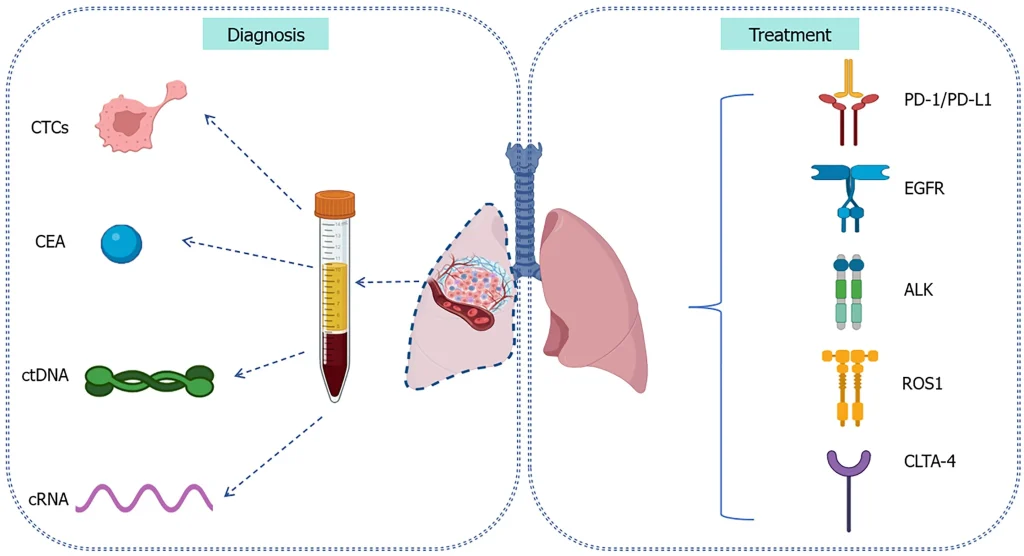
How Does Biomarker Testing Influence Treatment Selection?
The relationship between molecular testing and treatment is at the center of non-small cell lung cancer: how biomarker testing guides treatment choices. In clinical practice, the process can be broadly summarized as:
Confirm NSCLC → Determine histological subtype → Establish disease stage → Perform biomarker testing → Identify actionable molecular alterations → Select an appropriate treatment strategy
For example:
- EGFR mutation → EGFR-targeted therapy may be considered
- ALK rearrangement → An ALK inhibitor may be considered
- ROS1 fusion → A ROS1 inhibitor may be considered
- KRAS G12C → KRAS-targeted therapy may be considered
- RET fusion → A RET inhibitor may be considered
- MET exon 14 skipping → A MET inhibitor may be considered
- NTRK fusion → A TRK inhibitor may be considered
- PD-L1 expression → May help guide evaluation of immunotherapy strategies
If no targetable driver alteration is identified, physicians may consider immunotherapy, chemotherapy, or combination treatment based on PD-L1 expression, histological type, disease stage, and the patient’s overall health.
Therefore, biomarker testing is not simply a way to label a tumor. It can directly influence the patient’s subsequent treatment pathway. For some patients with advanced NSCLC, obtaining comprehensive molecular information before initiating systemic treatment can help the medical team evaluate treatment options more precisely.
Major Treatment Approaches for NSCLC
Treatment for NSCLC needs to be individualized according to disease stage, histological type, molecular characteristics, and the patient’s overall health.
- Surgery: May be appropriate for some patients with early-stage or localized NSCLC. Depending on the risk of recurrence, adjuvant treatment may also be considered.
- Radiation therapy: Can be used for local disease control and may also be considered for patients who are not candidates for surgery or for the treatment of selected metastatic lesions.
- Chemotherapy: Remains an important systemic treatment for some patients with NSCLC and may be combined with immunotherapy, targeted therapy, or other treatment approaches.
- Targeted therapy: Designed to act on specific molecular alterations such as EGFR, ALK, ROS1, KRAS, MET, and RET. Appropriate biomarker testing is generally required before selecting these treatments.
- Immunotherapy: Treatments targeting immune checkpoints such as PD-1/PD-L1 play an important role in selected patients, particularly those without an appropriate targetable driver alteration.
- Antibody-drug conjugates (ADCs): These therapies use antibodies to recognize specific tumor targets and deliver cytotoxic payloads to cancer cells. ADCs targeting HER2, TROP2, and other molecules are important areas of innovation in NSCLC treatment.
Representative Biomarkers and Drugs in NSCLC
From the perspective of how biomarker testing guides treatment choices in non-small cell lung cancer, some important biomarkers and representative therapies can be summarized as follows:
| Biomarker / Therapeutic Target | Representative Drug | Treatment Type |
|---|---|---|
| EGFR | Osimertinib | EGFR TKI |
| ALK | Alectinib | ALK inhibitor |
| ROS1 | Repotrectinib | ROS1 inhibitor |
| KRAS G12C | Sotorasib/Adagrasib | KRAS inhibitor |
| BRAF V600E | Dabrafenib + Trametinib | BRAF/MEK inhibitors |
| MET exon 14 skipping | Capmatinib/Tepotinib | MET inhibitor |
| RET fusion | Selpercatinib/Pralsetinib | RET inhibitor |
| NTRK fusion | Larotrectinib/Entrectinib | TRK inhibitor |
| PD-1/PD-L1 | Pembrolizumab and others | Immune checkpoint inhibitor |
| HER2 | Trastuzumab deruxtecan | ADC |
👉 Please consult a healthcare professional regarding these medications:
This table helps illustrate the basic logic of precision treatment in NSCLC: identify the biological characteristics of the tumor first, then look for treatment options that may match the corresponding biomarker or therapeutic target.
These drugs are provided only as representative examples of precision treatment approaches in NSCLC. The presence of a particular biomarker does not mean that every patient with that biomarker is suitable for the same drug. Treatment selection should take into account disease stage, previous treatment, the patient’s overall health, and the approved indications of medicines in the relevant country or region.
The Future of Precision Treatment for NSCLC
As molecular testing technologies and innovative medicines continue to advance, NSCLC treatment is moving toward increasingly individualized approaches. Technologies such as NGS can allow physicians to evaluate multiple potential therapeutic targets simultaneously, while new molecular targets continue to enter clinical research and drug development.
At the same time, resistance to targeted therapy remains an important challenge in NSCLC treatment. Some patients may experience disease progression after receiving targeted therapy for a period of time. In such cases, repeat molecular testing may help identify new resistance mechanisms and provide information for subsequent treatment decisions.
ADCs, bispecific antibodies, immunotherapy, and combinations of different treatment approaches are also expanding the therapeutic landscape of NSCLC. In the future, NSCLC treatment may move beyond selecting a drug based simply on the disease name and instead use comprehensive molecular information to establish a more individualized treatment pathway.
Conclusion
Non-small cell lung cancer has significant molecular and clinical heterogeneity, meaning that treatment strategies can vary substantially between patients. Biomarker testing is an important link between disease diagnosis and precision treatment, helping healthcare teams identify potential therapeutic targets and evaluate targeted therapy, immunotherapy, and other innovative treatment options.
From EGFR, ALK, ROS1, KRAS, MET, and RET to HER2 and PD-L1, an increasing number of molecular characteristics are being incorporated into NSCLC treatment decisions. For patients who require systemic therapy, combining pathological diagnosis, disease staging, and appropriate biomarker testing can help establish a more individualized treatment strategy.
Ultimately, non-small cell lung cancer: how biomarker testing guides treatment choices reflects the broader shift toward precision oncology: understanding the specific biological features of a patient’s tumor can help inform treatment decisions rather than relying on the cancer diagnosis alone.
DengYue Pharmacy continues to monitor developments in global precision lung cancer treatment, targeted therapy, immunotherapy, and ADCs, providing pharmaceutical supply and related services to qualified healthcare institutions, pharmacies, pharmaceutical distributors, and other professional partners.
FAQ About Non-Small Cell Lung Cancer: How Biomarker Testing Guides Treatment Choices
What is biomarkers testing?
Biomarker testing checks a sample of tissue or blood for proteins or genetic mutations that help your provider learn more about your cancer. This information helps them profile your tumor so they can pick treatments that will work best to fight it.
How does biomarker testing affect treatment?
Biomarker testing can identify specific genetic changes in a tumor that doctors can target with certain drugs. These targeted therapies are often more precise and may be more effective for certain patients.
How to test for cancer biomarkers?
Biomarker testing is done using a tissue and/or liquid biopsy. A tissue biopsy requires a procedure to collect a small sample of tumor tissue. Liquid biopsy collects a sample of blood or another body fluid, such as saliva or urine.
What is a biomarker test used for in lung cancer diagnosis?
If you have NSCLC, you and your doctor should discuss if biomarker testing is right for you. Biomarker testing (also called molecular testing, genomic testing, or molecular profiling) looks for mutations and other changes in the DNA of the tumor cells, as well as any changes in RNA or levels of specific proteins.
Who should get biomarker testing?
Anyone who’s been newly diagnosed with cancer should ask about biomarker testing, but it’s especially important for those with a type of cancer that grows or changes quickly. It’s also critical if your cancer hasn’t been responding to treatment, since the test results can help guide a new way forward.