Over the past several decades, modern drug research and development has made remarkable progress across biomedicine, chemistry, and clinical research. However, bringing a new medicine from early-stage research to market remains a highly complex and uncertain process. Researchers must not only identify potential therapeutic targets from vast amounts of biological information but also design and screen numerous candidate compounds before systematically evaluating their safety and efficacy through pharmacological, toxicological, and clinical studies. Long development timelines, substantial investment, and high failure rates have made improving drug development efficiency a persistent priority for the global pharmaceutical industry.
🤖 As artificial intelligence, machine learning, deep learning, and generative AI technologies continue to advance, AI is increasingly becoming part of the core drug development process. From disease mechanism research and target identification to molecular design, candidate drug screening, clinical research, and development data analysis, AI is transforming the traditional approach to pharmaceutical R&D. How AI is changing drug discovery and development is no longer simply a question about the future of technology; it is becoming a real and ongoing transformation within the pharmaceutical industry.
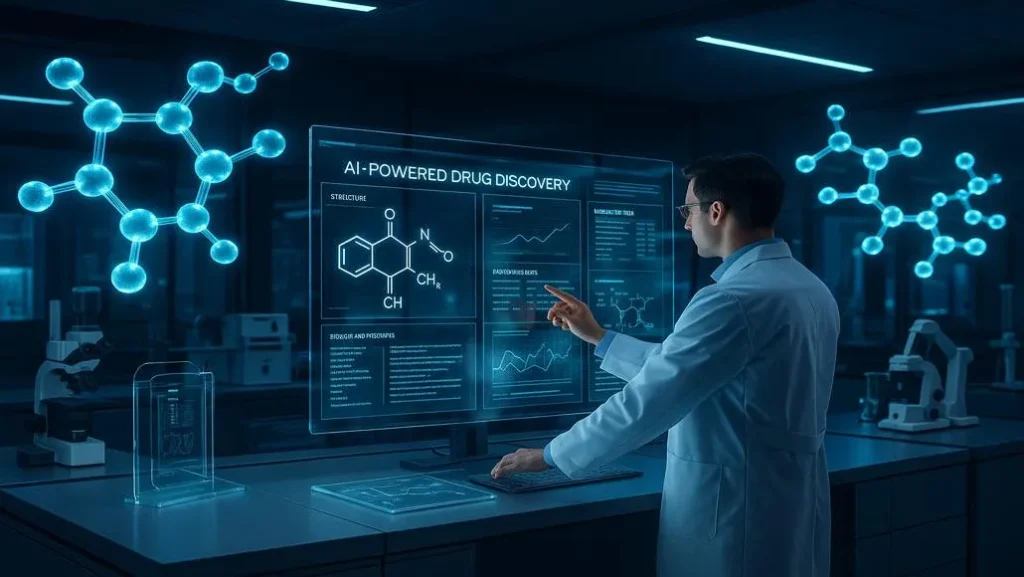
More importantly, the impact of AI extends far beyond simply making drug development faster. As the efficiency of drug discovery and development improves, the number of innovative drug candidates, R&D models, and the commercial value of pharmaceutical innovation may also evolve. These changes could eventually extend beyond the laboratory into drug commercialization and global access to medicines. For China’s rapidly developing innovative pharmaceutical sector, this trend could create new opportunities to accelerate innovation and connect Chinese pharmaceutical advances with global markets.
AI Is Transforming Traditional Drug Discovery
Traditional drug discovery has largely relied on researchers analyzing vast amounts of biological data and chemical compounds, followed by repeated experiments to identify candidate medicines with potential therapeutic value. Throughout this process, researchers must navigate enormous volumes of data and highly complex biological relationships. Even when a candidate molecule demonstrates promising activity in early-stage research, it may ultimately be discontinued due to issues related to pharmacokinetics, safety, toxicity, or clinical efficacy during later stages of development.
The application of artificial intelligence is providing new approaches to this traditionally complex process. Through machine learning, deep learning, and generative AI, researchers can integrate and analyze genomic, proteomic, disease-related, and compound data to identify potential disease mechanisms and therapeutic targets from vast datasets.
Compared with relying solely on manual screening, AI can process increasingly complex information in a shorter period of time and help researchers narrow down the range of potential candidates more efficiently.
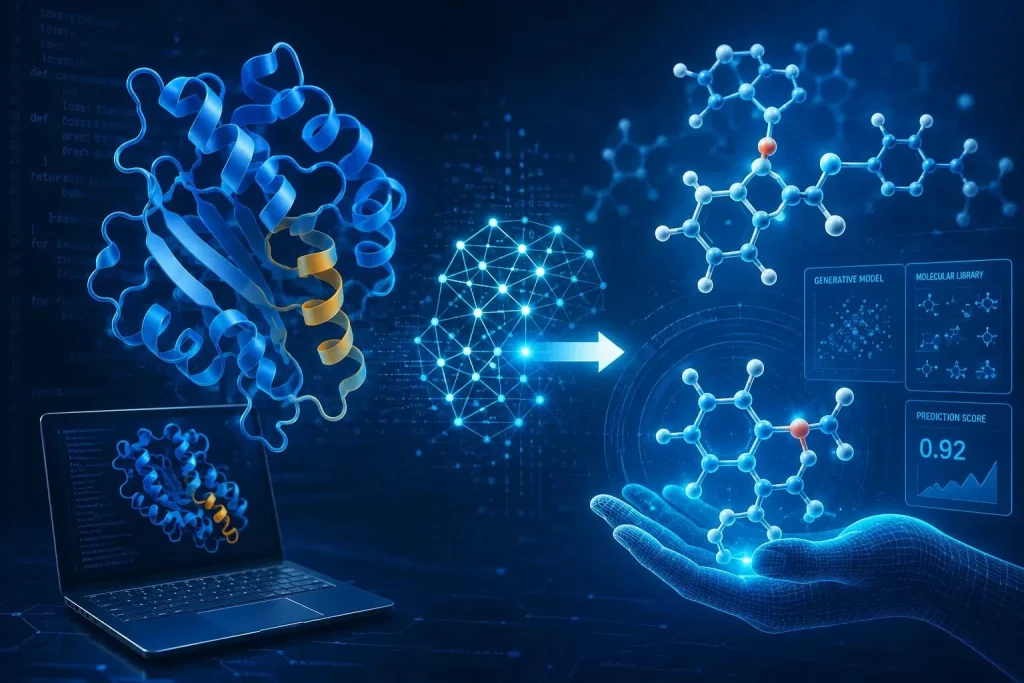
AI is also showing significant potential in molecular design. Based on specific biological activity requirements, molecular structures, and other drug development parameters, computational models can generate or propose candidate molecules with potential therapeutic value, helping reduce some of the repetitive work involved in early-stage discovery. These candidates still need to undergo rigorous laboratory testing and validation, but AI can help researchers identify promising directions more efficiently and prioritize projects with greater development potential.
Ultimately, AI is not changing whether scientists need to conduct experiments; rather, it is changing how researchers search for and screen potential drug candidates.
✨ In the past, narrowing down the search space often required extensive experimentation. Today, computational models and data analysis can help perform part of this screening at an earlier stage, allowing research teams to focus their time, resources, and experimental efforts on the candidates most likely to warrant further investigation.
AI Applications Are Expanding Across the Drug Development Process
If drug discovery represents one of the most important entry points for artificial intelligence in the pharmaceutical industry, drug development offers an even broader range of potential applications.
Once a candidate drug enters the clinical stage, researchers need to process and interpret large volumes of patient information, disease characteristics, treatment responses, and safety data, all of which can be highly complex and difficult to analyze efficiently using traditional approaches.
AI can support the processing and analysis of these datasets throughout clinical research. For example, it can help researchers identify patient populations that meet specific study criteria, analyze differences in patient characteristics, and identify factors that may influence treatment outcomes. This can be particularly valuable in highly heterogeneous diseases such as cancer, where patients may have different genetic alterations, molecular profiles, disease characteristics, and responses to treatment. 👉 Identifying clinically meaningful patterns from large and complex datasets can therefore play an important role in precision medicine and innovative drug development.
At the same time, AI can be applied to areas such as drug safety prediction, pharmacokinetic research, and clinical trial data analysis. Although these technologies cannot replace rigorous laboratory validation, clinical evidence, or professional judgment, they can help research teams process complex information more efficiently and provide additional data-driven insights to support drug development decisions.
From this perspective, the impact of AI is not simply a technological upgrade in one stage of R&D. Instead, it is contributing to a broader transformation in the way medicines are discovered and developed. In the future, pharmaceutical R&D may increasingly rely on collaboration between AI, computational models, and traditional experimental science, with data analysis and experimental validation continuously informing one another. This integrated approach could help research teams improve efficiency while making more informed decisions throughout the drug development process.
Why Is AI in Pharma Becoming a Global Hot Topic?
‼️ The pharmaceutical industry has long faced a fundamental challenge: developing innovative medicines requires substantial time and investment, yet only a limited proportion of drug candidates ultimately reach the market successfully. A safety concern, insufficient efficacy, or technical challenge at any stage of development can cause a promising project that has already received significant investment to be discontinued.
As a result, any technology that can help researchers identify promising drug candidates earlier, reduce repetitive experimental work, or improve the efficiency of data analysis has the potential to create significant value across the pharmaceutical industry.
One of the key reasons AI has attracted growing attention from pharmaceutical companies is its potential to improve the efficiency of traditional drug discovery and development. By rapidly analyzing large datasets and predicting the potential characteristics of different candidate molecules, AI can help research teams conduct early-stage screening more efficiently. While AI cannot eliminate the inherent risks of drug development or guarantee that a candidate will ultimately succeed, its ability to identify potential issues earlier and help researchers assess which projects may warrant further investment could reduce certain forms of resource waste throughout the R&D process.
At the same time, AI may also influence how the pharmaceutical industry evaluates the commercial potential of innovative drug programs. As AI-discovered or AI-assisted drug candidates increasingly progress toward clinical development, technological capabilities may become an important factor for biotechnology companies seeking partnerships with larger pharmaceutical companies. Future licensing deals, co-development agreements, and cross-border collaborations may increasingly take into account the capabilities of AI platforms, the quality of drug candidates, the strength of supporting data, and their potential for further development.
✨ Therefore, the significance of AI in pharma goes far beyond the question of whether AI can design a new medicine. Its broader importance lies in its potential to reshape how drugs are discovered and developed, how innovative pharmaceutical assets are created and evaluated, and how pharmaceutical companies collaborate across markets. AI is increasingly becoming not just a research tool but a potential driver of change across the global pharmaceutical innovation ecosystem.
China’s AI-Powered Pharma Innovation Is Accelerating
China has developed a distinctive foundation for the growth of AI-driven pharmaceutical innovation. Over the past several decades, the country has established a relatively comprehensive ecosystem spanning drug research and development, clinical studies, pharmaceutical manufacturing, and commercialization, while the number of innovative pharmaceutical and biotechnology companies continues to grow. An increasing number of Chinese biotech companies and pharmaceutical firms are advancing innovative drug programs with the potential to compete and collaborate in international markets.
The integration of AI with this established pharmaceutical ecosystem is creating new opportunities for innovative drug development in China.
- On the one hand, AI can help research teams process and analyze complex biomedical datasets, improving efficiency in areas such as early-stage target identification, molecular design, and candidate drug screening.
- On the other hand, China’s extensive clinical research capabilities and rapidly evolving innovative pharmaceutical sector provide a broad range of real-world applications for AI technologies, creating opportunities for these tools to be integrated more deeply into the drug development process.
For China’s pharmaceutical industry, AI may therefore represent more than a technology for improving R&D efficiency. It could also become an important driver of innovation and transformation across the pharmaceutical sector. As AI becomes increasingly integrated with conventional drug discovery and development capabilities, more promising candidates may progress from early research into clinical development, potentially creating innovative drug programs with greater value for international partnerships and commercialization.
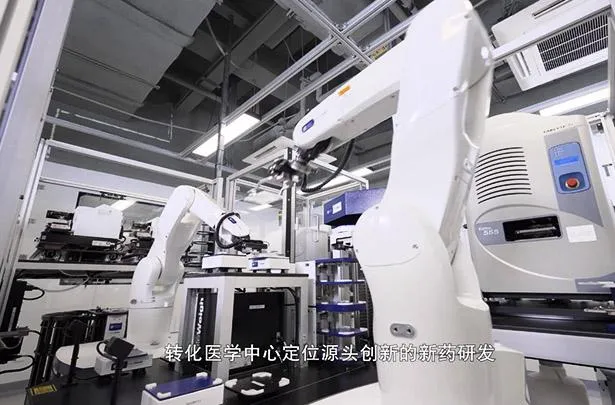
At the same time, Chinese innovative medicines are becoming increasingly involved in international licensing, co-development, and cross-border pharmaceutical collaborations. As more Chinese innovative drugs enter global markets, a new question is becoming increasingly important: How can China’s pharmaceutical innovation connect more efficiently with global markets and reach a broader range of international demand?
🤔 This question marks an important transition from drug innovation to global access, and it also highlights why the future of pharmaceutical development will depend not only on how efficiently new medicines can be discovered but also on how effectively innovation can be connected with markets around the world.
From “Discovering New Medicines” to “Bringing Medicines to Global Markets”
The value of a medicine does not automatically materialize once a candidate molecule has been successfully designed in the laboratory. Even after an innovative medicine has completed clinical development and received regulatory approval, it still needs to enter manufacturing, commercialization, procurement, and supply networks before it can ultimately reach healthcare providers and patients.
The complete pharmaceutical innovation journey can therefore be understood as: Drug Discovery → Drug Development → Clinical Research → Regulatory Approval → Commercialization → Global Access
AI is currently having its greatest impact on the earlier stages of innovation and R&D efficiency. However, as the number of innovative drug programs continues to grow, the later stages of the pharmaceutical value chain will also need to become more efficient and better connected. For Chinese innovative medicines with global market potential, the journey from successful development to international markets involves practical considerations such as regional demand, procurement systems, supply capabilities, and cross-border pharmaceutical distribution.
This is why global access is becoming an increasingly important dimension of the AI-driven pharmaceutical landscape.
If AI continues to accelerate the pace of drug discovery and development while pharmaceutical supply networks fail to evolve at the same pace, a gap may emerge between pharmaceutical innovation and real-world market demand. In other words, improving the speed of innovation alone may not be enough. Innovation efficiency and global access need to advance together in order to fully realize the value created by new technologies.
The Future of Pharmaceutical Supply Networks: Connecting Innovation with Global Demand
As the global pharmaceutical innovation ecosystem becomes increasingly complex, traditional pharmaceutical supply networks are also likely to evolve. In the past, supply chains have primarily focused on product procurement, warehousing, transportation, and distribution. Looking ahead, however, global pharmaceutical networks may place greater emphasis on information connectivity, resource matching, and coordination across international markets.
For international buyers, access to pharmaceutical products is not simply a matter of finding a product catalog. They increasingly need clear and reliable product information, dependable sources of supply, and professional channels that can help connect them with pharmaceutical resources in China. At the same time, for Chinese pharmaceutical companies and suppliers, expanding into global markets means developing more effective connections with diverse procurement needs across different countries and regions.
As a result, pharmaceutical supply networks may gradually move beyond the traditional model of simply moving products from one location to another and instead place greater emphasis on connecting innovation, supply, and market demand.
This transformation is closely linked to the development of AI-driven drug discovery and development. As AI improves the efficiency of pharmaceutical innovation, the number of innovative drug candidates with potential global relevance may continue to increase. In turn, the ability to efficiently connect these pharmaceutical resources with international demand could become an increasingly important part of the global pharmaceutical ecosystem.
Ultimately, the future of pharmaceutical supply may not be defined solely by how efficiently medicines can be distributed but also by how effectively innovation can be connected with the markets and patients who need it.
DengYue Pharmacy: Connecting China’s Pharmaceutical Supply with Global Demand
As Chinese innovative medicines and pharmaceutical products increasingly enter international markets, efficient connections between global buyers and pharmaceutical supply in China are becoming more important than ever.
DengYue Pharmacy focuses on building this connection. Through its online pharmaceutical supply and procurement platform, DengYue Pharmacy aims to help customers around the world more conveniently explore and connect with pharmaceutical resources from China, enabling international buyers to identify the products they need more efficiently and establish connections with China’s pharmaceutical supply network.
Rather than focusing solely on individual logistics or supply services, this role as a connector reflects the broader direction of the global pharmaceutical industry. As AI continues to accelerate drug discovery and pharmaceutical innovation, the global market will also require more efficient connections between information, pharmaceutical resources, and market demand, helping innovative products move beyond the R&D stage and toward real-world applications.
For DengYue Pharmacy, connecting China’s pharmaceutical supply with global markets is about more than facilitating pharmaceutical transactions. It represents a broader effort to connect China’s evolving pharmaceutical innovation ecosystem with international demand, creating a more efficient pathway between pharmaceutical resources in China and healthcare markets around the world.
Conclusion
Artificial intelligence is transforming drug development, but it is unlikely to simply replace traditional scientific research. Instead, the future of pharmaceutical R&D will more likely involve closer collaboration between AI, researchers, experimental technologies, and clinical research, creating new and more efficient approaches to drug discovery and development.
From target identification and molecular design to candidate screening and clinical data analysis, AI is enabling the pharmaceutical industry to process vast amounts of information that would have been difficult to analyze efficiently through conventional methods. At the same time, the continued growth of China’s innovative pharmaceutical sector is providing a broad range of applications for AI, helping Chinese pharmaceutical innovation become an increasingly important part of the global pharmaceutical landscape.
However, pharmaceutical innovation only creates its full value when it moves beyond R&D and reaches the market. As AI continues to improve the efficiency of drug discovery and development, the global pharmaceutical industry will need to consider not only how to discover the next innovative medicine faster, but also how to connect these innovations with different markets more efficiently and ultimately meet real-world healthcare needs.
The future competitiveness of the pharmaceutical industry may therefore depend on two complementary capabilities: using AI and other emerging technologies to improve drug discovery and development, while building more efficient, reliable, and globally connected pharmaceutical networks.
✨ AI may make pharmaceutical innovation faster, but the ability to connect innovation with global markets will determine how far that innovation can go.
From AI-driven drug discovery and innovative drug development to global access to medicines, technology is reshaping more than the processes taking place in the laboratory. It is also encouraging the global pharmaceutical industry to rethink the relationship between innovation, commercialization, and market access. For China’s pharmaceutical sector, this transformation may create new opportunities for innovative medicines to expand their global reach and connect with healthcare demand around the world.
FAQ About How AI Is Changing Drug Discovery and Development
How is AI being used in drug discovery and development?
Human biology is extraordinarily complex, making drug discovery exceptionally challenging—yet AI is now reshaping the process end to end. AI could help make some of the most difficult steps in drug discovery faster and smarter, including identifying disease targets, generating new compounds, and predicting safety.
Why is AI struggling to discover new drugs?
Finding the right data is a challenge.
ne of the biggest challenges in fully incorporating AI in drug discovery is the need for large-scale, high-quality datasets to train AI models. Unlike fields where data is abundant, biological data is often expensive and time-consuming to generate.
Why do 90% of new drugs fail?
“Most drugs will fail in a Phase 2b trial because of lack of efficacy, and part of it is because maybe we didn’t choose the right target for the disease, or perhaps we didn’t have the right biomarker [measureable substance] to be able to determine whether the drug worked, or maybe we didn’t select the right patients.”
Does AI have a future in medicine?
AI could significantly reduce inefficiency in healthcare, improve patient flow and experience, and enhance caregiver experience and patient safety through the care pathway; for example, AI could be applied to the remote monitoring of patients.
How long does drug discovery and development take?
Key Takeaways. Developing a new drug takes an average of 10 years and $2.6 billion, involving multiple stages from target discovery to post-approval monitoring, each with their own unique challenges, costs, and timelines.