On August 11, 2026, Enhertu® (generic name: trastuzumab deruxtecan, T-DXd) in combination with Pertuzumab was approved in China for the first-line treatment of adults with unresectable or metastatic HER2-positive breast cancer.
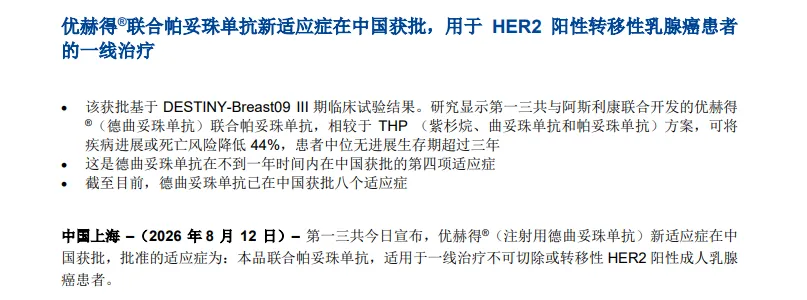
The approval was based on results from the global Phase III DESTINY-Breast09 trial. Compared with the THP regimen, which has long been an important first-line treatment option for HER2-positive advanced or metastatic breast cancer, trastuzumab deruxtecan plus pertuzumab significantly prolonged progression-free survival (PFS) and reduced the risk of disease progression or death by 44%.
Enhertu plus pertuzumab approved in China represents more than an expansion of Enhertu®’s indications. It also marks the further advancement of HER2-targeted antibody-drug conjugate (ADC)-based therapy into the first-line treatment setting for HER2-positive metastatic breast cancer, offering a new treatment option for eligible patients.
HER2-Positive Metastatic Breast Cancer: Why Is First-Line Treatment So Important?
🤔 HER2, or human epidermal growth factor receptor 2, is a receptor protein involved in signaling pathways that regulate cell growth, proliferation, and survival. When breast cancer cells show HER2 protein overexpression or HER2 gene amplification, the disease is generally classified as HER2-positive breast cancer.
HER2-positive breast cancer can be highly aggressive. However, with the development of HER2-targeted therapies, treatment options have expanded beyond traditional chemotherapy to include monoclonal antibodies, antibody-drug conjugates (ADCs), and other precision treatment approaches.
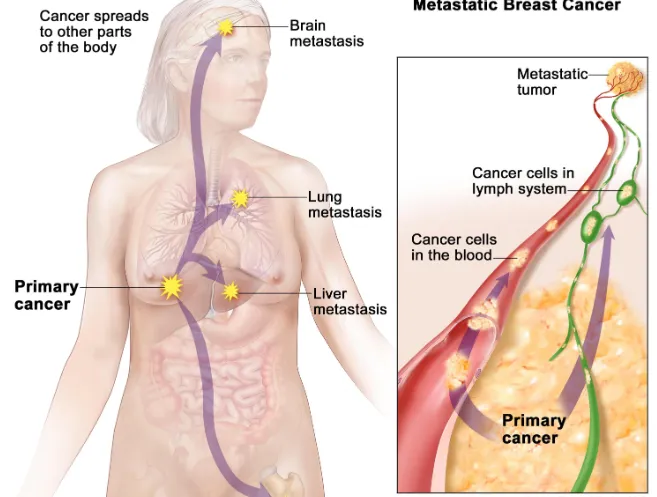
When breast cancer spreads to distant organs or can no longer be treated with surgery, it is considered unresectable or metastatic breast cancer. At this stage, the main goals of treatment generally include:
- Controlling tumor progression as effectively as possible;
- Prolonging survival;
- Maintaining quality of life whenever possible;
- Providing long-term treatment management based on disease progression and previous therapies.
For patients with HER2-positive metastatic breast cancer, first-line treatment is particularly important. For many years, the THP regimen, consisting of a taxane combined with trastuzumab and pertuzumab, has been an important standard treatment option in this setting. In China, pertuzumab is also approved in combination with trastuzumab and docetaxel for patients with HER2-positive metastatic or unresectable locally recurrent breast cancer.
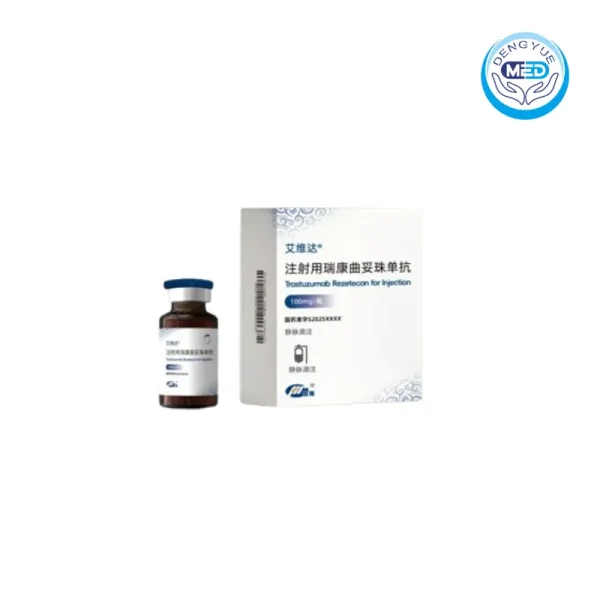
AiWeiDa® | Trastuzumab Rezetecan for Injection | Lung Cancer | DengYueRX
Trastuzumab Rezetecan for Injection is a novel HER2-targeted ADC drug for non-small cell lung cancer. It combines the high targeting specificity of monoclonal antibody and powerful cytotoxicity of small-molecule payload, achieving precise killing of HER2-abnormal lung cancer cells.
The key significance of the DESTINY-Breast09 study is that it further explored whether a next-generation HER2-targeted ADC could provide better disease control than the established THP regimen when used in the first-line treatment setting.
This clinical development also provides important context for the recent Enhertu plus pertuzumab approved in China for first-line treatment of HER2-positive metastatic breast cancer.
What Is Enhertu® (Trastuzumab Deruxtecan for Injection)?
Enhertu® (Trastuzumab Deruxtecan, T-DXd) is a HER2-targeted antibody-drug conjugate (ADC) developed by Daiichi Sankyo and jointly developed and commercialized with AstraZeneca. Trastuzumab deruxtecan incorporates Daiichi Sankyo’s proprietary DXd ADC technology and is one of the leading HER2-targeted ADCs in clinical oncology.
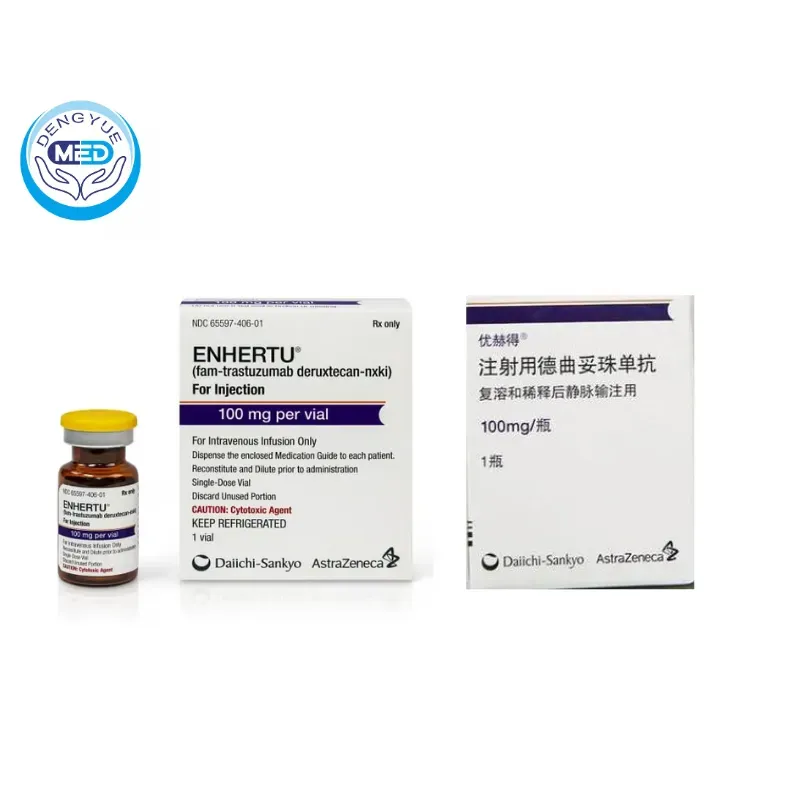
Key Product Information
| Item | Key Information |
|---|---|
| Brand name | Enhertu® |
| Generic name | Trastuzumab deruxtecan (T-DXd) |
| Drug type | ADC (antibody-drug conjugate) |
| Target | HER2 |
| Core structure | HER2-targeting antibody + cleavable tetrapeptide linker + DXd payload |
| Primary mechanism | Targets HER2 and delivers the topoisomerase I inhibitor DXd into tumor cells |
| Administration | Intravenous infusion |
| Breast cancer treatment areas | HER2-positive, HER2-low, and HER2-ultralow breast cancer, among other settings |
| Current indication discussed in this article | In combination with pertuzumab for the first-line treatment of adults with unresectable or metastatic HER2-positive breast cancer |
| Developer | Daiichi Sankyo |
| Commercial partnership | Jointly developed and commercialized by Daiichi Sankyo and AstraZeneca |
How Does Enhertu® Work?
The key feature of Enhertu® is its ability to combine HER2-targeted recognition with targeted delivery of a cytotoxic payload. Its structure consists primarily of three components: HER2-targeting antibody → cleavable tetrapeptide linker → DXd payload
The HER2-targeting antibody recognizes and binds to HER2 on the surface of tumor cells. After binding to HER2, the drug-antibody complex is internalized into the tumor cell. The linker is then cleaved, releasing DXd, a topoisomerase I inhibitor. DXd interferes with DNA replication and repair, ultimately promoting tumor cell death.
🎯 This combination of targeted recognition and payload delivery is one of the defining characteristics of ADCs and distinguishes them from conventional monoclonal antibody therapies.
Trastuzumab deruxtecan has been approved across multiple cancer treatment settings. In China, its approved indications include HER2-positive breast cancer, HER2-low/ultralow breast cancer, HER2-positive gastric cancer, and HER2-mutant non-small cell lung cancer, among other settings. In 2026, China also approved its use in a sequential regimen with THP for neoadjuvant treatment of adults with high-risk stage II or stage III HER2-positive breast cancer.
The recent approval of Enhertu® in combination with pertuzumab for the first-line treatment of unresectable or metastatic HER2-positive breast cancer further expands trastuzumab deruxtecan into an earlier treatment setting and represents an important development in the treatment landscape for HER2-positive metastatic breast cancer.
What Is Pertuzumab?
Pertuzumab is a humanized monoclonal antibody targeting HER2. Its brand name in China is Perjeta®, and it is an important component of HER2-targeted therapy for breast cancer.
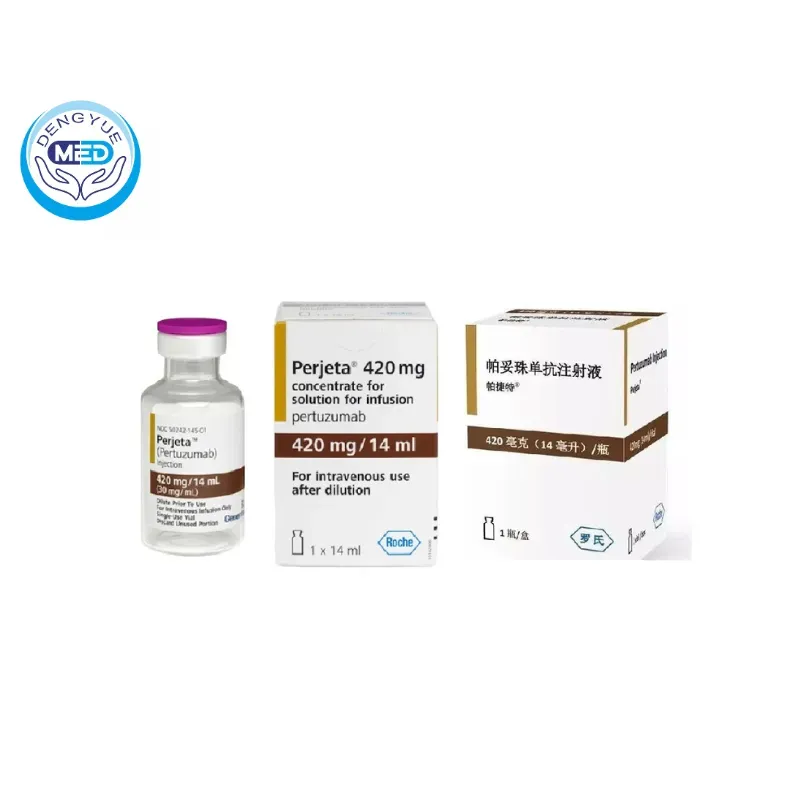
Key Product Information
| Item | Key Information |
|---|---|
| Brand name | Perjeta® |
| Generic name | Pertuzumab |
| Drug type | Monoclonal antibody (mAb) |
| Target | HER2 |
| Primary mechanism | Inhibits HER2 dimerization with other members of the HER family |
| Administration | Intravenous infusion |
| Main treatment area | HER2-positive breast cancer |
| Related indications | HER2-positive early, locally recurrent, unresectable, or metastatic breast cancer, among other settings |
| Chinese brand name | 帕捷特® |
| Developer | Roche |
How Does Pertuzumab Work?
HER2 can form dimers with other receptors in the HER family, activating downstream signaling pathways that promote tumor cell growth, proliferation, and survival. Pertuzumab binds to a specific region of HER2 and blocks its dimerization with other HER family receptors, thereby inhibiting downstream HER2-related signaling.
Pertuzumab and trastuzumab bind to different regions of HER2 and have distinct mechanisms of action. As a result, they can provide complementary blockade of HER2 signaling. For more than a decade, the combination of pertuzumab, trastuzumab, and a taxane, known as the THP regimen, has been an important first-line treatment option for HER2-positive metastatic breast cancer.
The recent development represents an important evolution in this treatment strategy. Rather than combining pertuzumab only with trastuzumab and chemotherapy, pertuzumab is now combined with trastuzumab deruxtecan (Enhertu®), a next-generation HER2-targeted ADC, providing a new approach to first-line treatment for patients with HER2-positive metastatic breast cancer.
Together, the two drugs offer complementary mechanisms: pertuzumab blocks HER2 signaling, while trastuzumab deruxtecan targets HER2-positive tumor cells and delivers the DXd cytotoxic payload. This combination forms the therapeutic basis for the newly approved first-line treatment strategy.
DESTINY-Breast09: Enhertu® Plus Pertuzumab Delivers Longer Progression-Free Survival
DESTINY-Breast09 is a global, multicenter, randomized, open-label Phase III clinical trial that enrolled 1,157 patients with HER2-positive advanced or metastatic breast cancer.
Patients were randomly assigned to three treatment groups:
- Trastuzumab deruxtecan (Enhertu®) + pertuzumab
- Trastuzumab deruxtecan monotherapy
- Taxane + trastuzumab + pertuzumab (THP)
The primary endpoint included progression-free survival (PFS) as assessed by blinded independent central review (BICR).
The results showed that, compared with the THP regimen, trastuzumab deruxtecan plus pertuzumab reduced the risk of disease progression or death by 44% (HR 0.56). The median PFS reached 40.7 months in the combination group, compared with 26.9 months with THP.
In other words, the combination extended median PFS by approximately 14 months, suggesting the potential for more durable disease control in patients with HER2-positive advanced or metastatic breast cancer.
Key Efficacy Results
| Clinical Measure | Trastuzumab deruxtecan + Pertuzumab | THP |
|---|---|---|
| Median PFS | 40.7 months | 26.9 months |
| Risk of disease progression or death | Reduced by 44% | — |
| Objective response rate (ORR) | 85.1% | 78.6% |
| Complete response (CR) | 15.1% | 8.5% |
| Median duration of response (DOR) | 39.2 months | 26.4 months |
Investigator-assessed results also demonstrated a clear PFS advantage. Median PFS was 40.7 months with trastuzumab deruxtecan plus pertuzumab, compared with 20.7 months with THP.
👉 At the time of the interim analysis, overall survival (OS) data were not yet mature. Therefore, the long-term survival benefit of the combination will require further follow-up and confirmation.
Overall, the DESTINY-Breast09 study demonstrated that Enhertu® plus pertuzumab achieved a clinically meaningful PFS advantage over the THP regimen in the first-line treatment of HER2-positive advanced or metastatic breast cancer. With a median PFS of 40.7 months and a 44% reduction in the risk of disease progression or death, the results support the potential of this HER2-targeted ADC-based combination to provide more durable disease control and offer a new first-line treatment option for eligible patients with HER2-positive metastatic breast cancer.
What Does This Approval Mean? First-Line Treatment for HER2-Positive Metastatic Breast Cancer Moves Further Forward
The approval of Enhertu® (trastuzumab deruxtecan) plus pertuzumab in China represents more than the addition of another drug combination. More importantly, it signals a potential shift in the first-line treatment strategy for HER2-positive metastatic breast cancer.
For more than a decade, the combination of a taxane with trastuzumab and pertuzumab, known as the THP regimen, has been an important first-line treatment option for patients with HER2-positive advanced or metastatic breast cancer. The DESTINY-Breast09 trial directly compared a trastuzumab deruxtecan-based regimen with THP and demonstrated a significant PFS benefit with trastuzumab deruxtecan plus pertuzumab.
1. From Conventional HER2-Targeted Therapy to ADC-Based Combination Treatment
The traditional THP treatment approach consists of: Taxane chemotherapy + trastuzumab + pertuzumab
The newly approved regimen introduces trastuzumab deruxtecan, a HER2-targeted antibody-drug conjugate (ADC), into the first-line setting: Trastuzumab deruxtecan (HER2 ADC) + pertuzumab (HER2-targeted monoclonal antibody)
The two medicines have complementary mechanisms of action. Trastuzumab deruxtecan uses a HER2-targeting antibody to deliver the DXd payload into tumor cells, while pertuzumab binds to HER2 and inhibits HER2-related signaling.
✨ Together, they expand the first-line treatment strategy from the traditional “chemotherapy + dual HER2-targeted antibodies” model toward an “ADC + HER2-targeted antibody” approach.
2. ADC Therapy Is Moving Into Earlier Lines of Treatment
Trastuzumab deruxtecan has already demonstrated clinical value across multiple treatment settings for HER2-positive breast cancer. Its approval for the first-line treatment of adults with unresectable or metastatic HER2-positive breast cancer further moves ADC therapy into an earlier stage of treatment.
This reflects a broader trend in ADC development. ADCs are no longer being explored solely as later-line options after disease progression. Increasingly, they are being investigated—and, in some settings, introduced—in earlier lines of treatment.
Previous vs. New Treatment Strategy
| Previous Treatment Approach | → | New Treatment Strategy |
|---|---|---|
| First-line: THP | → | First-line: Trastuzumab deruxtecan + pertuzumab |
| Disease progression | → | Aim for more durable disease control |
| Subsequent treatment, including ADC-based therapies | → | Further treatment based on disease progression and individual patient factors |
✨This change does not mean that every patient with HER2-positive metastatic breast cancer should receive the same treatment regimen. Treatment decisions should be individualized based on factors such as HER2 testing results, previous treatment history, disease burden, sites of metastasis, overall health status, and potential treatment-related risks, under the guidance of qualified healthcare professionals.
3. Improved PFS May Offer New Potential for Durable Disease Control
One of the most important findings from DESTINY-Breast09 was not simply the high tumor response rate but the evidence of more durable disease control with the combination.
In the study, median PFS was 40.7 months with trastuzumab deruxtecan plus pertuzumab, compared with 26.9 months with THP. The combination also reduced the risk of disease progression or death by 44%.
The significance of this approval can therefore be summarized as: Earlier treatment line + ADC-based first-line therapy + longer PFS
✨ This development also reflects the broader evolution of HER2-targeted treatment—from focusing primarily on tumor response toward achieving more durable disease control and longer-term treatment benefit.
Overall, the approval of Enhertu® plus pertuzumab represents an important development in the first-line treatment landscape for HER2-positive metastatic breast cancer.
🏥 For eligible patients, the approval provides an additional first-line treatment option. For the broader HER2-targeted treatment field, it also demonstrates how ADC therapy is moving from later-line treatment toward earlier clinical use.
As treatment strategies continue to evolve, the management of HER2-positive metastatic breast cancer is becoming increasingly focused on durable disease control, treatment sequencing, biomarker status, and individualized patient care. The development of Enhertu® plus pertuzumab represents another important step in this evolution and highlights the growing role of ADCs in modern precision oncology.
DengYue Pharmacy: Supporting Innovative Medicine Supply and Global Procurement
As HER2-targeted therapies and antibody-drug conjugates (ADCs) continue to evolve, the availability and supply of innovative oncology medicines are becoming increasingly important.
DengYue Pharmacy specializes in the procurement and supply of innovative medicines, specialty pharmaceuticals, and related healthcare products. We provide qualified healthcare institutions, pharmaceutical distributors, and other compliant customers with support in medicine procurement, supply chain coordination, and cross-border logistics.
For prescription medicines and oncology therapies such as Enhertu® and pertuzumab, procurement, use, and treatment decisions should comply with local regulations, approved product information, and the guidance of qualified healthcare professionals.
Conclusion
The treatment landscape for HER2-positive metastatic breast cancer has evolved from conventional HER2-targeted therapy toward increasingly diverse and precise treatment strategies.
The approval of Enhertu® (trastuzumab deruxtecan) plus pertuzumab in China marks an important step in moving trastuzumab deruxtecan-based treatment into the first-line setting for unresectable or metastatic HER2-positive adult breast cancer.
In the future, as more ADCs and new anti-HER2 drugs enter clinical trials, the focus of HER2-positive breast cancer treatment will shift from simply “which drugs are available” to selecting more appropriate treatment regimens based on patients’ HER2 status, disease stage, prior treatments, and individual characteristics.
FAQ About Enhertu Plus Pertuzumab Approved in China
Is ENHERTU plus pertuzumab FDA-approved?
On Dec. 15, the U.S. Food and Drug Administration (FDA) approved trastuzumab deruxtecan (Enhertu; T-DXd) plus pertuzumab (Perjeta). The regimen, based on the DESTINY-Breast09 clinical trial, displaced the long-standing taxane-based CLEOPATRA regimen for many patients.
Is ENHERTU approved in China?
ENHERTU (5.4 mg/kg) followed by THP is approved in China as a neoadjuvant treatment for adult patients with HER2-positive (IHC 3+ or ISH+) stage 2 (high risk) or stage 3 breast cancer based on the results from the DESTINY-Breast11 trial.
Where is ENHERTU approved?
Enhertu (5.4 mg/kg) in combination with pertuzumab is approved in Israel, Saudi Arabia, Switzerland, the United Arab Emirates, and the U.S. as a first-line treatment for adult patients with unresectable or metastatic HER2-positive (IHC 3+ or ISH+) breast cancer, as determined by an FDA-approved test.
Is ENHERTU a chemo or immunotherapy?
Is Enhertu chemotherapy or immunotherapy? Enhertu is targeted therapy—it’s a biosimilar of Herceptin that is attached to a chemotherapy medication. Herceptin is technically considered an immune-targeted therapy, but Enhertu is not.
Does HER2-positive come back?
HER2-positive breast cancer is like triple-negative breast cancer in that if it does recur, it’s usually in the first five years after treatment. About 50% of estrogen receptor-positive breast cancer recurrences happen in the first five years. The other 50% of recurrences are after five years.