
Home - Immunology - YuanRuiDa® | Inaticabtagene Autoleucel Injection | Relapsed or Refractory B-cell Acute Lymphoblastic Leukemia | DengYueRX
Description
Indication & Scope
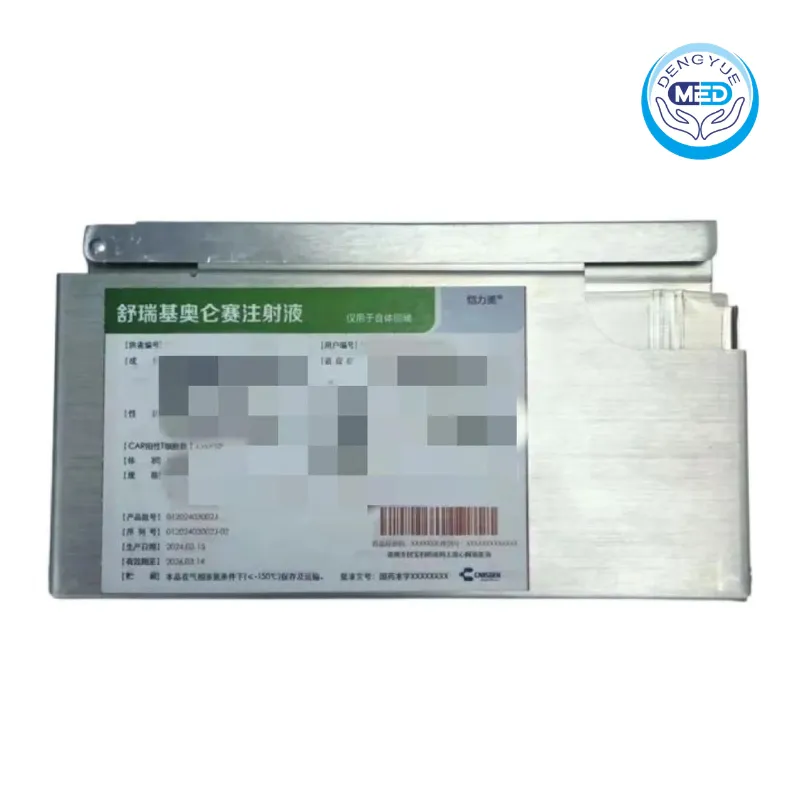
Inaticabtagene Autoleucel is indicated for adult patients with relapsed or refractory B-cell acute lymphoblastic leukemia and large B-cell lymphoma.
- Mechanism: It is a CD19-targeted CAR-T therapy, guiding autologous T cells to eliminate CD19-positive tumor cells.
- Drug class: Autologous CAR-T cell immunotherapy.
- Clinical use: Used to treat adults with relapsed or refractory B-cell acute lymphoblastic leukemia and large B-cell lymphoma.
| Generic Name | Inaticabtagene Autoleucel |
| Brand Name | YuanRuida |
| Ingredient | Inaticabtagene Autoleucel |
| Dosage Form | Injection |
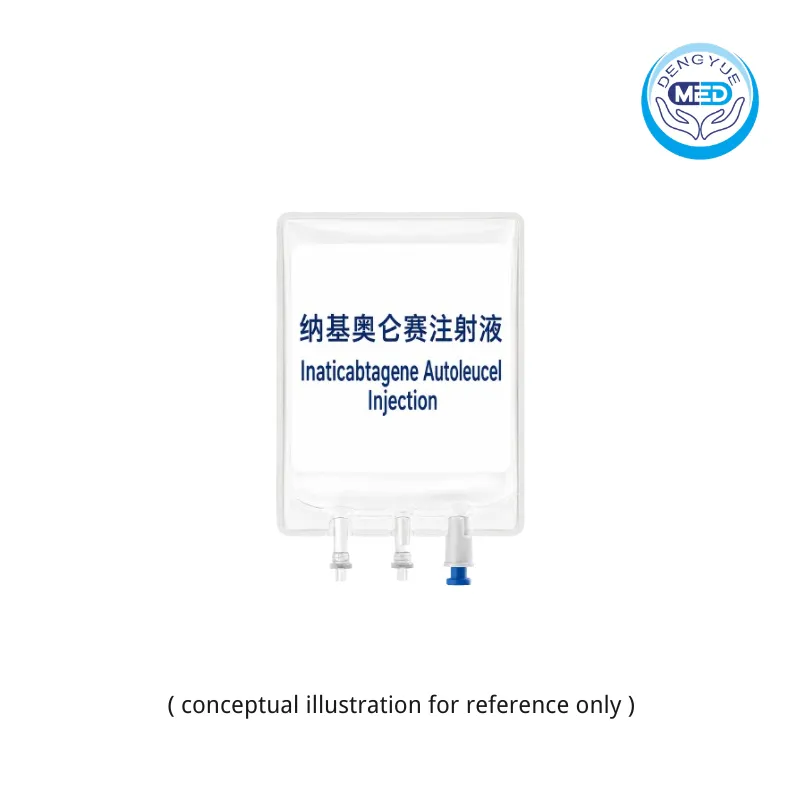
| Package | 20ml/Bag |
| Conditions Treated | Applied for adult patients with relapsed or refractory large B-cell lymphoma (LBCL) and B-cell acute lymphoblastic leukemia (B-ALL) failing prior systemic treatments. |
| Taboos | Contraindicated in patients with known hypersensitivity to inaticabtagene autoleucel or any of its excipients; also contraindicated in patients with active severe infections or uncontrolled autoimmune diseases. |
| Place of origin | China |
| Prescription type | Prescription-only |
| Storage Conditions | Cryopreserved in vapor phase of liquid nitrogen (≤ -150℃); do not re-freeze after thawing, keep away from light, and complete infusion promptly after thawing. |
| Manufacturer | HeYuan Biotechnology, Ltd |
| Registration Authority | National Medical Products Administration (NMPA), China |
| Approval number | S20250063 |
| Date of Revision | 2023 |
| Shelf Life | 6 months |
How to use ?
Recommended Dose: 0.5×10⁸ viable CAR-T cells, with a range of 0.25×10⁸–0.5×10⁸ viable CAR-T cells (±20%, i.e., 0.2×10⁸–0.6×10⁸ viable CAR-T cells). The infusion volume is determined based on the number of viable CAR-T cells and the recommended dose.

Time:
1. Lymphodepleting chemotherapy is usually administered 2–5 days before infusion.
2. The infusion is given as a single administration, typically completed within 30–60 minutes.
3. Post-infusion monitoring is required for at least 14 days in a qualified medical center.

Instructions for use:
1. This is an autologous cell therapy product, prepared from the patient’s own T cells.
2. Lymphodepleting chemotherapy (e.g., cyclophosphamide + fludarabine) must be completed before infusion to optimize efficacy.
3. Thaw the product immediately before use in a sterile environment; do not refreeze after thawing.
4. Administer as a slow intravenous infusion, and monitor the patient closely during and after infusion.
5. Manage adverse events (e.g., CRS, ICANS) per institutional guidelines; tocilizumab and supportive care should be readily available.

Interaction:
1. No formal drug interaction studies have been conducted with this CAR-T product.
2. Avoid live vaccines before and after treatment, as the patient’s immune function is impaired.
3. Concurrent use of immunosuppressants (except those used for lymphodepletion) may reduce the expansion and efficacy of CAR-T cells.
4. Use caution with drugs that affect platelet function or coagulation, as thrombocytopenia is a common post-infusion adverse event.

Side effects: Immune effect cell-related neurotoxic syndrome, decreased platelet count, anemia, decreased neutrophil count, infectious pneumonia, anal abscess, cobacterial disease, pseudomonas sepsis, soft tissue infection, bone marrow suppression, decreased white blood cell count.
Important Notice
This product should be administered only by qualified healthcare professionals in accordance with the approved prescribing information and local clinical guidelines. Dosage and administration may vary depending on patient condition, indicatiaon, and regional regulatory requirements.
Packaging & Shipping
Packaging
Original manufacturer’s packaging with secure export carton. Customized export packaging is available upon request.
Shipping Methods
Express Courier (EMS, DHL, FedEx, UPS), Air Freight, and Sea Freight. Cold-chain transportation is available for products requiring temperature-controlled logistics.
Export Support
Certificate of Analysis
GMP Certificate
Commercial Invoice
Packing List & CPP
Cold Chain Logistics
Customs Documentation
Scientific and regulatory sources
FAQ
What category of medicine is Inaticabtagene Autoleuceland?
It is a CAR-T cell immunotherapy. Doctors extract the patient’s own T cells, genetically modify them outside the body with CAR genes targeting tumor antigens, and infuse the engineered cells back to precisely recognize and destroy cancer cells.
What disease is Inaticabtagene Autoleuceland mainly approved to treat?
It is indicated for relapsed or refractory B-cell hematological malignancies, such as recurrent diffuse large B-cell lymphoma.
How long is the full treatment cycle of Inaticabtagene Autoleucel?
The whole treatment generally takes about 3 to 4 weeks. It includes 1 day for leukapheresis, around 2–3 weeks for cell manufacturing in the laboratory, several days of lymphodepleting chemotherapy, and at least one week of close hospital monitoring after CAR-T infusion to manage potential toxic reactions.
What are the two most common severe side effects of Inaticabtagene Autoleucel treatment?
Cytokine Release Syndrome (CRS) and Immune Effector Cell-Associated Neurotoxicity Syndrome
YuanRuiDa® | Inaticabtagene Autoleucel Injection | Relapsed or Refractory B-cell Acute Lymphoblastic Leukemia | DengYueRX
INN: Inaticabtagene Autoleucel
Indications: Relapsed or refractory B-cell acute lymphoblastic leukemia and large B-cell lymphoma.
Dosage Form: Injection
Strength: 20ml/Bag (Contains no less than 0.25×10^8 CAR-T live cells.)