
Home - Prescription Medicines - Kerendia®Finerenone Tablets | Chronic Kidney Disease | DengyueRX
Description
Indication & Scope
- Mechanism
A nonsteroidal selective mineralocorticoid receptor antagonist that inhibits receptor overactivation, eases fibrosis and inflammation, and protects kidneys and heart. - Drug class
Nonsteroidal MRA, oral film-coated nephrocardioprotective tablet.
Clinical use
Phase III trials prove its reliable safety and renal-cardiovascular benefits. Taken once daily; start at 10 mg, adjust to 20 mg based on potassium and renal tolerance. It is the first approved nonsteroidal MRA for diabetic kidney disease.
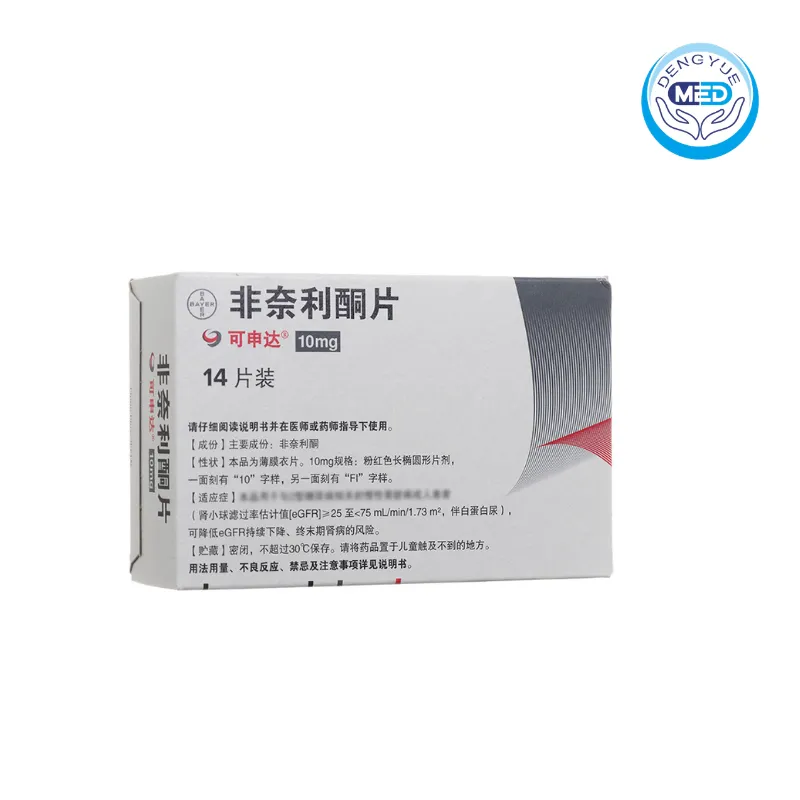
| Generic Name | Finerenone Tablets |
| Brand Name | Kerendia® |
| Ingredient | Finerenone |
| Dosage Form | Film-coated tablet |
| Package | 10mg/tablet; 20mg/tablet |
| Conditions Treated | Treated Reduce risks of renal function decline, end-stage kidney disease, cardiovascular death, myocardial infarction and heart failure hospitalization in adult patients with type 2 diabetes mellitus complicated with chronic kidney disease, used as adjunctive therapy under standard glucose and blood pressure management |
| Taboos | Contraindicated in patients with hypersensitivity to finerenone or any excipients, patients with severe hyperkalemia, patients with acute kidney injury |
| Place of origin | Germany |
| Priscription Type | Prescription drug (Rx) |
| Storage Conditions | Store below 30℃, sealed and away from moisture |
| Manufacturer | Bayer AG |
| Registration Authority | National Medical Products Administration (NMPA) |
| Approval number | JX20210039 |
| Date of Revision | May 12, 2023 |
| Shelf Life | 36 months |
How to use ?
Recommended Dose: Start 10 mg oral once daily, increase to 20 mg once daily based on serum potassium and renal function, taken with or without food.

Time: Long-term daily continuous administration, regular monitoring of kidney function and blood potassium required.

Interaction: Avoid strong CYP3A4 inhibitors; closely check potassium with potassium-sparing diuretics or potassium supplements, can be combined with routine hypoglycemic and antihypertensive drugs.
Side effects: Common mild reactions include hyperkalemia, hypotension, hyponatremia and fatigue; severe adverse events are rare.
Important Notice
This product shall only be used for post-exposure rabies prophylaxis by professional medical staff. It must be applied combined with rabies vaccine and injected via wound infiltration plus intramuscular routes as specified. Do not administer intravenously or alter the dosage at will. Hypersensitivity monitoring is required throughout the whole injection process.
Packaging & Shipping
Packaging
Original manufacturer’s packaging with secure export carton. Customized export packaging is available upon request.
Shipping Methods
Express Courier (EMS, DHL, FedEx, UPS), Air Freight, and Sea Freight. Cold-chain transportation is available for products requiring temperature-controlled logistics.
Export Support
Certificate of Analysis
GMP Certificate
Commercial Invoice
Packing List & CPP
Cold Chain Logistics
Customs Documentation
Scientific and regulatory sources
FAQ
What are the benefits of finerenone?
Finerenone slows CKD progression and cuts cardiovascular risks
What is the use of finerenone tablet?
Avoid grapefruit and grapefruit juice during Kerendia treatment, as they dangerously elevate its blood concentration. Alcohol’s impact remains unclear.
When to stop finerenone?
Clinicians advise stopping finerenone for intolerable adverse reactions, including unmanageable hyperkalemia and hypotension.
Does finerenone reduce creatinine?
Studies show finerenone markedly lowers UACR (≥30% in most patients), driving its renal and cardiovascular benefits.
Kerendia®Finerenone Tablets | Chronic Kidney Disease | DengyueRX
INN: Finerenone
Indication: Chronic kidney disease
Dosage Form:Film-coated tablets
Strength: 10mg or 20mg/tablet