As internet technology, digital healthcare, and e-commerce continue to evolve, the way people access medical information and medicines is also changing. Online pharmacy, as one form of digital pharmaceutical service, have gradually evolved from simple online medicine purchasing channels into an important part of the healthcare ecosystem, connecting drug information, pharmaceutical supply, procurement, and digital healthcare resources.
Compared with traditional pharmacies, online pharmacies can provide functions such as medicine information searches, product displays, prescription submission, order management, and logistics tracking through digital platforms, offering users a more convenient way to access medicines. At the same time, the development of online pharmacies is becoming increasingly connected with pharmaceutical distribution, warehousing, logistics, and cross-border medicine supply, creating a more integrated digital pharmaceutical supply chain.
However, online pharmacies are not a replacement for the healthcare system. Doctors, hospitals, pharmacists, and other professional healthcare institutions continue to play essential roles in diagnosis, prescribing, and professional medical decision-making. More accurately, online pharmacies are becoming a complementary connection between traditional healthcare and digital healthcare, helping integrate medicine access and pharmaceutical services into an increasingly digital healthcare environment.
🤔So, what exactly is the role of online pharmacy in modern healthcare? And how might online pharmacies influence the future of medicine supply, pharmaceutical distribution, and healthcare services?
I. Improving Access to Medicines
One of the most direct functions of an online pharmacy is to provide an additional channel for accessing medicines.
Traditional pharmacies generally require users to visit a physical store to search for and purchase medicines. Online pharmacies, by contrast, can provide basic product information through digital platforms, allowing users to search for medicines and access relevant information online. For people who take medicines on a long-term basis, individuals with limited mobility, and those who want to learn about a medicine in advance, online channels can help reduce some of the time required to find product information and locate suitable medicines.
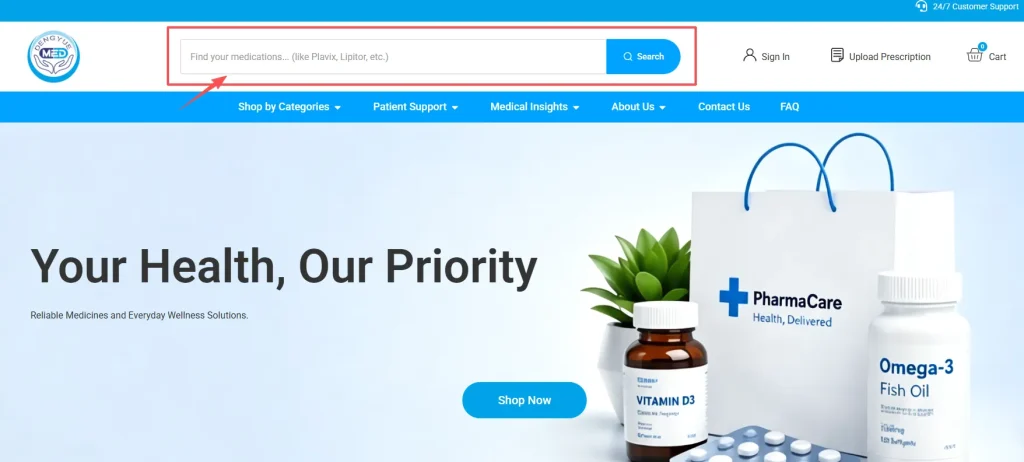
For certain professional procurement customers, online platforms can also provide a more systematic way to search for pharmaceutical products. For example, users may search for a target medicine based on its generic name, brand name, active ingredient, dosage form, strength, or pack size, rather than relying entirely on in-person inquiries at physical pharmacies.
However, whether a medicine can be purchased, whether a prescription is required, and whether it can be supplied across regions or internationally must be determined according to the characteristics of the medicine and the applicable laws and regulations of the relevant country or region. Therefore, online platforms provide an additional connection between medicine information and pharmaceutical supply, rather than removing existing medical and regulatory requirements.
II. Making Medicine Information More Accessible
The role of a modern online pharmacy is not limited to “selling medicines.” For users, a well-structured online pharmaceutical platform can also serve as a digital gateway to basic medicine information.
For example, when researching a medicine, users typically need to pay attention to the following information:
- Generic Name
- Brand Name
- Active Ingredient
- Dosage Form
- Strength
- Indications
- Storage Conditions
- Prescription Requirements
- Manufacturer and relevant product information
This information can help users better understand the medicine they are researching and can also assist professional procurement personnel in product selection and supply information verification.
Therefore, as online pharmacies continue to develop, their role is gradually expanding from a traditional “medicine sales channel” to a “gateway to pharmaceutical information.” This is particularly important for prescription medicines, specialty medicines, biologics, and products that require specific storage conditions, where accurate and clearly presented product information can play an important role.
It is important to note that accessing medicine information is not the same as receiving a medical diagnosis. Users can use online platforms to learn about the basic characteristics and information of medicines, but whether a particular medicine is appropriate, as well as the specific treatment plan and medication adjustments, should still be determined by qualified healthcare professionals based on the individual’s circumstances.
III. Supporting Everyday Medication Management
The digital nature of online pharmacies also enables them to support everyday medication management to a certain extent.
For people who need to take medicines over the long term, digital platforms can help users review previous orders, access medicine information, check product specifications, and arrange subsequent purchases when permitted by applicable regulations and platform requirements.
For prescription medicines, some online pharmacies may also provide prescription submission and review processes. Users can submit the required documents through a digital platform, after which qualified professionals can review the information according to the platform’s procedures.
✨ This approach can reduce some of the information-transfer costs associated with traditional offline processes while also making medicine purchasing records more digital and easier to manage.
However, it is important to emphasize that the medication management functions provided by online pharmacies cannot replace medical consultation or treatment by a doctor. Particularly in cases involving chronic conditions, complex diseases, or treatment adjustments, patients should continue to attend follow-up appointments and use medicines according to the treatment plan established by their healthcare professionals. Online pharmacies are better positioned to provide support for the medicine information and supply aspects of healthcare.
IV. Connecting the Pharmaceutical Supply Chain with End Users
As online pharmacies continue to develop, their connection with the broader pharmaceutical supply chain is also becoming increasingly important.
When a medicine moves from a manufacturer to the end user, the process involves much more than a simple online transaction. It may include manufacturing, quality management, warehousing, distribution, transportation, and pharmacy or professional procurement channels. A simplified pharmaceutical supply chain can be represented as:
Manufacturer → Pharmaceutical Distributor → Pharmacy or Professional Procurement Channel → User
Within this structure, an online pharmacy can serve as a digital connection point. In addition to displaying products and facilitating orders, online platforms may also be involved in providing information about inventory, batch numbers, medicine traceability, logistics status, and other supply-related details.
This is one of the key differences between modern online pharmacies and general e-commerce platforms. Ordinary consumer goods can typically be transported through standard logistics networks, whereas pharmaceutical supply needs to take into account product characteristics, storage conditions, batch management, transportation requirements, and applicable regulatory standards.
✅ For medicines that require cold-chain storage or transportation, temperature control is particularly important. Certain biologics and other temperature-sensitive products need to be stored and transported under specific conditions. As a result, warehousing, packaging, and transportation within the pharmaceutical supply chain require a higher level of professional management.
From this perspective, an online pharmacy is not simply an independent website. It can form part of the broader digital infrastructure of the modern pharmaceutical supply chain, helping connect medicine information, pharmaceutical distribution, procurement, logistics, and end users.
V. Facilitating International Pharmaceutical Procurement and Cross-Border Supply Connections
The development of the internet is also changing the way international pharmaceutical procurement is conducted.
In the past, cross-border medicine procurement often required buyers to contact manufacturers, wholesalers, or local distributors directly. With the development of digital platforms, some medicine information, supply information, and procurement requirements can now be connected through online channels.
For international procurement customers, an online pharmaceutical platform can serve as an entry point for finding products and understanding supply information. For example, a buyer can first provide basic details such as the generic name, brand name, dosage form, strength, pack size, required quantity, and destination, and then proceed to confirm product availability, supply conditions, and other applicable requirements.
For the Chinese pharmaceutical market, pharmaceutical distributors and professional suppliers can also play a role in connecting manufacturers with international procurement needs. Through more digitalized medicine information and procurement processes, international customers can more efficiently identify relevant products and understand available supply channels.
However, cross-border pharmaceutical supply involves much more than logistics. Matters such as medicine import and export, registration requirements, prescription requirements, product use, customs clearance, and other regulatory procedures may be subject to the laws and regulations of both the source and destination markets.
Therefore, international pharmaceutical procurement needs to consider not only the characteristics and information of the medicine itself, but also the compliance requirements involved in cross-border supply.
How Technology Is Changing the Way Online Pharmacies Operate
Digital technology is one of the key factors distinguishing online pharmacies from traditional pharmacies.
Modern online pharmacies can integrate multiple medicine-related processes into a digital platform, such as:
Medicine Search → Product Information → Prescription Submission (if applicable) → Professional Review → Order Confirmation → Logistics Tracking → Delivery
In addition, digital technology can also be applied to inventory management, order management, batch tracking, and logistics information recording.

For pharmaceutical suppliers and distributors, digital systems can help manage increasingly complex product information and supply processes. For users, they can make it easier to search for products and check order or logistics status.
In the future, online pharmacies may also become more closely connected with digital healthcare platforms, electronic health records, and other healthcare technologies. However, this development needs to be built on appropriate foundations, including data protection, healthcare regulations, pharmaceutical supervision, and responsible handling of medical information.
Online Pharmacies Still Face Several Important Challenges
Although online pharmacies have introduced new digital channels into the modern healthcare system, their development also involves a range of important issues that require careful attention.
- Prescription Drug Regulation:
- Different countries and regions have different requirements governing the sale, procurement, and use of prescription medicines. The fact that a transaction takes place online does not mean that an online pharmacy can bypass prescription requirements or applicable regulatory standards.
- Medicine Quality and Traceability:
- The pharmaceutical supply chain needs to maintain information such as the manufacturer, batch number, expiration date, and product source. For professional pharmaceutical procurement, supply-chain transparency and batch-level traceability are particularly important.
- Storage and Transportation:
- Some medicines require specific temperatures and storage conditions. Completing an online order does not mean that the pharmaceutical supply process is complete. Subsequent warehousing, packaging, and transportation can also affect the quality and integrity of the medicine supply.
- Differences in Cross-Border Regulations:
- International pharmaceutical procurement needs to take into account the regulatory requirements of both the source country and the destination country. The same medicine may have different registration statuses, prescription requirements, and import regulations across different markets.
- Professional Medical Guidance:
- Online pharmacies can provide medicine information and access to pharmaceutical supply channels, but they cannot replace doctors, pharmacists, and other healthcare professionals in making decisions regarding diagnosis and treatment.
Therefore, a mature online pharmacy ecosystem needs to consider more than just the efficiency of digital transactions. It also needs to place appropriate emphasis on medicine quality, regulatory compliance, supply-chain management, and the boundaries of professional medical care.
The Future Development of Online Pharmacies
As digital healthcare continues to evolve, the role of online pharmacies may gradually expand from a simple “online medicine purchasing channel” into a more comprehensive digital pharmaceutical platform.
On the one hand, medicine information is likely to become increasingly digitalized, giving users more diverse ways to access pharmaceutical information. On the other hand, procurement, inventory, warehousing, and logistics information across the pharmaceutical supply chain may also become more closely connected through digital technologies.

For international pharmaceutical supply, online platforms may also become important digital connection points linking medicine manufacturers, pharmaceutical distributors, professional procurement customers, and other healthcare institutions. At the same time, as online pharmaceutical services continue to develop, the importance of regulatory compliance, medicine traceability, data protection, and professional pharmaceutical support is also likely to increase.
Therefore, the online pharmacy of the future may be more than simply a “website where medicines can be purchased online.” Instead, it may evolve into an integrated platform connecting medicine information, professional procurement, pharmaceutical supply chains, and digital healthcare resources.
Conclusion
The development of online pharmacies reflects the broader transformation of medicine access and the digitalization of the modern healthcare system. As medicine information, healthcare resources, and pharmaceutical supply chains increasingly move into digital environments, users are no longer concerned only with “where they can purchase a medicine.” They are also paying greater attention to whether medicine information is clear, supply channels are properly regulated, and the entire process can be effectively connected with the existing healthcare system.
Therefore, the value of a modern online pharmacy should not be measured simply by whether it can complete an online transaction. Greater attention should be given to the information, professional support, supply-chain, and regulatory systems behind the platform. Only when digital tools are integrated with medicine quality management, professional healthcare support, and applicable regulatory requirements can online pharmacies become an effective complement to the modern healthcare system.
✨ From a longer-term perspective, the development of online pharmacies also indicates that pharmaceutical supply is moving from a traditional transaction-based model toward a more digital, information-driven, and interconnected model. For patients, healthcare institutions, and professional pharmaceutical procurement customers, this transformation is not only changing how medicines are accessed but also creating closer connections between medicine information and global pharmaceutical supply chains.
🧑💼 DengYue Online Pharmacy focuses not only on online access to medicines, but also on connecting medicine information, professional procurement, and international pharmaceutical supply chains. In the evolving digital healthcare environment, we aim to provide qualified customers with medicine information and professional procurement support through more transparent and structured information and supply-chain connections, while respecting the regulatory requirements governing prescription medicines, pharmaceutical imports, and cross-border supply in different countries and regions.
Ultimately, the future of online pharmacies is not simply about moving traditional pharmacies onto the internet. It is about enabling medicine information, professional resources, and pharmaceutical supply chains to become more efficiently integrated into the modern healthcare system.
FAQ About The Role of Online Pharmacy in Modern Healthcare
What does an online pharmacy do?
Online pharmacies are businesses which sell medicines including those which require a prescription, on the Internet. It is estimated that 1 in 6 US consumers have bought pharmaceutical drugs online.
What are the benefits of using an online pharmacy?
This eliminates the need to visit a physical pharmacy, saving time and effort, particularly for those with busy schedules or limited mobility. Whether it’s refilling a prescription in the middle of the night or ordering medications from the comfort of home, online pharmacies provide unparalleled convenience.
What are the responsibilities of a pharmacist in an online pharmacy?
Pharmacists may specialize in counseling patients, verifying prescriptions, performing clinical assessments, and speaking with other care providers.
What is the role of Internet in pharmacy?
More than half of the pharmacists (>50%) felt positively toward the usage of Internet-based medication information by patients, where they agreed/strongly agreed that it has positive effects on patients’ confidence during their communication with pharmacists, patients’ role in taking responsibility, patients adherence.
What is a digital pharmacy?
Digital pharmacy, a fusion of healthcare and technology, has revolutionized the pharmaceutical sector by enabling remote dispensing, patient counseling, and medication adherence monitoring through digital platforms.