In October 2026, three notable drug approval developments in breast cancer treatment in China attracted attention. Datopotamab deruxtecan, trastuzumab deruxtecan, and oral paclitaxel solution received approval from China’s National Medical Products Administration (NMPA) for new indications or treatment settings, covering advanced triple-negative breast cancer, adjuvant treatment of early-stage HER2-positive breast cancer, and recurrent or metastatic HER2-negative breast cancer, respectively.

These three medicines represent distinct therapeutic approaches: TROP2-targeted antibody-drug conjugates (ADCs), HER2-targeted ADCs, and an oral taxane-based chemotherapy formulation. These developments not only expand treatment options for specific patient populations but also highlight broader trends in the October 2026 advances in innovative breast cancer treatment, including precision medicine, earlier intervention, and optimization of drug administration routes.
Overview of Three Breast Cancer Drugs Approved in October 2026
According to relevant approval information from China’s National Medical Products Administration (NMPA) and publicly available company announcements, information on the approval of new indications or treatment settings for the following three drugs was released between September 29 and October 8, 2026. It is important to note that the regulatory approval date may differ from the date on which a company publicly announces the approval.
| Drug | Newly Approved Indication |
|---|---|
| Datopotamab deruxtecan (Dato-DXd) | Treatment of adult patients with unresectable or metastatic triple-negative breast cancer (TNBC) who are not eligible for treatment with PD-1/PD-L1 inhibitors. |
| Trastuzumab deruxtecan (T-DXd) | Adjuvant treatment of adult patients with HER2-positive early-stage breast cancer who have residual invasive disease following neoadjuvant therapy based on a taxane and trastuzumab. |
| Paclitaxel oral solution (DHP107/RMX3001) | Treatment of recurrent or metastatic HER2-negative breast cancer. |
These three medicines target different breast cancer subtypes and stages of treatment and should not be considered interchangeable treatment options. Actual treatment decisions should take into account tumor subtype, previous treatments, the patient’s overall health status, and the applicable approved prescribing information.
Why Does Breast Cancer Treatment Need Continuous Innovation?
Breast cancer is a highly heterogeneous disease. Tumors can differ significantly among patients in terms of hormone receptor status, HER2 expression, genetic alterations, and patterns of disease progression. As a result, treatment strategies need to be tailored to the specific characteristics of each patient’s disease.
In clinical practice, breast cancer is commonly classified according to biomarkers such as estrogen receptor (ER), progesterone receptor (PR), and human epidermal growth factor receptor 2 (HER2). Hormone receptor-positive breast cancer may be treated with endocrine therapy, while HER2-positive breast cancer may benefit from targeted anti-HER2 therapies. Triple-negative breast cancer (TNBC), by contrast, lacks all three of these commonly assessed targets, leaving some patients with more limited treatment options.
The stage of the disease is equally important. For early-stage breast cancer, treatment generally aims to control the tumor, reduce the risk of recurrence, and improve the likelihood of long-term disease-free survival. For unresectable or metastatic breast cancer, treatment focuses more on controlling disease progression, prolonging survival, and maintaining quality of life.
✨ Therefore, innovation in breast cancer drug development involves not only identifying new therapeutic targets but also optimizing the use of existing medicines across different stages of treatment and exploring more convenient routes of administration. The three drugs highlighted in the October 2026 advances in innovative breast cancer treatment illustrate these distinct directions of progress.
Datopotamab Deruxtecan: Targeting TROP2 to Expand Treatment Options for Advanced Triple-Negative Breast Cancer
Triple-negative breast cancer (TNBC) generally lacks three commonly targeted biomarkers: estrogen receptor (ER), progesterone receptor (PR), and human epidermal growth factor receptor 2 (HER2). As a result, treatment options may be limited for some patients with advanced disease. For patients who are not eligible for PD-1/PD-L1 inhibitor therapy, the development of medicines with different mechanisms of action is particularly important.
| Category | Details |
|---|---|
| Drug | Datopotamab deruxtecan (Dato-DXd) |
| Brand name | Datroway® |
| Companies | AstraZeneca and Daiichi Sankyo |
| Indication | Treatment of adult patients with unresectable or metastatic triple-negative breast cancer who are not eligible for PD-1/PD-L1 inhibitor therapy |
| Drug class | TROP2-targeted antibody-drug conjugate (ADC) |
| Administration | Intravenous infusion |
| Approval in China | September 29, 2026; the relevant announcement was published on October 8 |
| Key feature | Targets TROP2 to deliver a cytotoxic payload to tumor cells |
✨ Datopotamab deruxtecan is a TROP2-targeted antibody-drug conjugate. TROP2 is a cell-surface protein expressed in various epithelial tumors. The drug uses an antibody to recognize TROP2 and deliver DXd, a topoisomerase I inhibitor payload, which interferes with DNA-related processes in tumor cells and produces an antitumor effect.

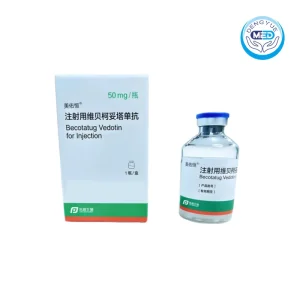
Datroway® | Datopotamab Deruxtecan for Injection | Breast Cancer | DengYueRX
Datopotamab Deruxtecan for Injection is a novel TROP2-targeted antibody-drug conjugate (ADC) for intravenous infusion. Composed of anti-TROP2 monoclonal antibody, cleavable linker and topoisomerase I inhibitor payload, it can precisely target TROP2-overexpressed breast cancer cells, release cytotoxic substances intracellularly to damage tumor DNA and kill cancer cells, and has a unique bystander anti-tumor effect.
The approval for this indication was supported by the global Phase III TROPION-Breast02 trial. According to publicly reported results, the median overall survival (OS) was 23.7 months in the datopotamab deruxtecan group, compared with 18.7 months in the investigator’s choice chemotherapy group. Median progression-free survival (PFS) was 10.8 months versus 5.6 months, respectively. The confirmed objective response rates (ORRs) were 63% and 29%, respectively.
These findings indicate that datopotamab deruxtecan has demonstrated clinical value in the relevant population of patients with advanced TNBC. Its approval further expands the application of TROP2-targeted ADCs and highlights the growing role of selecting treatment strategies based on tumor targets and individual treatment eligibility.
As part of the October 2026 advances in innovative breast cancer treatment, this development illustrates progress in targeted therapy for advanced disease. Actual treatment decisions should be based on the approved prescribing information, the patient’s previous treatments, and an appropriate safety assessment.
Trastuzumab Deruxtecan: Expanding Adjuvant Treatment Options for HER2-Positive Early Breast Cancer
| Category | Details |
|---|---|
| Drug | Trastuzumab deruxtecan (T-DXd) |
| Brand name | Enhertu® |
| Companies | AstraZeneca and Daiichi Sankyo |
| New indication | Adjuvant treatment of adult patients with HER2-positive early-stage breast cancer who have residual invasive disease following neoadjuvant therapy based on a taxane and trastuzumab |
| Drug class | HER2-targeted antibody-drug conjugate (ADC) |
| Administration | Intravenous infusion |
| Approval in China | September 29, 2026; the relevant announcement was published on October 8 |
| Key feature | Targets HER2 and delivers a topoisomerase I inhibitor payload, expanding adjuvant treatment options for early breast cancer |
HER2-positive breast cancer has a well-defined therapeutic target, and HER2-targeted therapy has become an important treatment strategy. For patients with early-stage breast cancer who still have residual invasive disease after neoadjuvant treatment, the risk of recurrence may persist following surgery. Optimizing adjuvant therapy is therefore an important approach to improving long-term outcomes.
✨ Trastuzumab deruxtecan is a HER2-targeted antibody-drug conjugate composed of an anti-HER2 monoclonal antibody, a linker, and DXd, a topoisomerase I inhibitor payload. By recognizing HER2 on tumor cells, the drug delivers its cytotoxic payload to the target cells, thereby exerting an antitumor effect.
The approval for this indication was supported by the Phase III DESTINY-Breast05 trial. According to the reported results, compared with trastuzumab emtansine (T-DM1), trastuzumab deruxtecan reduced the risk of invasive disease recurrence or death by 53%. At three years of follow-up, 92.4% of patients in the trastuzumab deruxtecan group were alive and free of invasive disease, an absolute difference of 8.7 percentage points compared with the T-DM1 group.

The significance of this development lies in the extension of trastuzumab deruxtecan into the post-neoadjuvant treatment setting for a specific group of patients with HER2-positive early breast cancer. Rather than focusing solely on controlling advanced tumors, this treatment setting places greater emphasis on reducing recurrence risk and improving long-term outcomes.
These findings apply to patients with specific treatment histories and pathological characteristics. They do not mean that trastuzumab deruxtecan is appropriate for every patient with HER2-positive breast cancer. Treatment decisions should be guided by the approved prescribing information and an individualized clinical assessment.
Paclitaxel Oral Solution: Exploring New Chemotherapy Options for Breast Cancer Through Formulation Innovation
Paclitaxel is a widely used taxane chemotherapy drug that interferes with microtubule dynamics, disrupting cell division and inhibiting tumor cell growth. Traditional paclitaxel formulations are generally administered through intravenous infusion, while oral paclitaxel solution explores an alternative route of administration.
| Category | Details |
|---|---|
| Drug | Paclitaxel oral solution |
| Company | Hutchmed (China) Limited |
| Indication | Recurrent or metastatic HER2-negative breast cancer |
| Drug class | Taxane-based cytotoxic chemotherapy |
| Administration | Oral |
| Approval in China | September 29, 2026; the relevant announcement was published on October 8 |
| Key feature | Introduces an oral formulation to explore an alternative route of administration and expand the use of paclitaxel in breast cancer treatment |
Paclitaxel oral solution contains the same active pharmaceutical ingredient as conventional paclitaxel formulations, and its primary antitumor mechanism remains the same. Its development focuses on using an oral formulation and drug delivery technology to address challenges associated with oral paclitaxel administration, including absorption and bioavailability, thereby providing patients with an alternative administration option.
An oral formulation can reduce reliance on intravenous infusion and offer a different treatment option for some patients. However, oral administration does not mean that patients can use chemotherapy independently at home or reduce medical monitoring. Oral chemotherapy still requires a prescription, appropriate medication guidance, monitoring for adverse reactions, and laboratory tests when necessary.

Liporaxel® | Paclitaxel Solution | Breast Cancer | DengYueRX
Paclitaxel Solution (Liporaxel®) is a lipid self-emulsifying oral taxane anti-tumor drug. It binds to tubulin, stabilizes microtubule structure, inhibits microtubule depolymerization, blocks tumor cell mitosis and causes tumor cell apoptosis; the lipid formulation improves oral bioavailability, enabling oral chemotherapy administration.
5 in stock
The approval for this indication was supported by the international, multicenter Phase III OPTIMAL trial, which compared the efficacy and safety of paclitaxel oral solution with those of paclitaxel injection in patients with recurrent or metastatic HER2-negative breast cancer. Publicly reported results indicated that the oral solution met the prespecified non-inferiority criterion for progression-free survival (PFS). The study also suggested differences in certain adverse reactions between the two administration methods, with gastrointestinal adverse events remaining an important consideration in the oral solution group.
Overall, the approval of paclitaxel oral solution highlights another direction in oncology drug development: optimizing drug administration through formulation technology while retaining the established pharmacological basis of an anticancer agent. This approach may broaden the range of treatment options available in clinical practice.
Together with the developments involving datopotamab deruxtecan and trastuzumab deruxtecan, this approval forms part of the October 2026 advances in innovative breast cancer treatment, illustrating how innovation can encompass targeted drug delivery as well as alternative administration routes.
What Are the Future Trends in Breast Cancer Drug Development?
The developments involving these three medicines highlight several directions in which breast cancer drug development continues to advance. Future progress will involve not only the discovery of new active ingredients but also the identification of more precise therapeutic targets, optimization of treatment strategies across different disease stages, and improvements in the overall treatment experience for patients.
- First, antibody-drug conjugate (ADC) technology will remain an important area of research.
Datopotamab deruxtecan and trastuzumab deruxtecan target TROP2 and HER2, respectively, demonstrating the potential applications of ADC technology across different breast cancer subtypes and stages of disease. Future research may explore new targets, cytotoxic payloads, linker designs, and combination strategies involving ADCs and other treatment modalities. However, ADCs differ in their mechanisms of action, approved indications, and safety profiles. Their clinical effectiveness cannot be determined solely by their classification as ADCs.
- Second, treatment strategies will increasingly focus on earlier stages of disease.
The expansion of trastuzumab deruxtecan into an adjuvant treatment setting reflects continued clinical interest in early breast cancer with a high risk of recurrence. Future research will continue to examine how to identify patients at greater risk of recurrence and optimize neoadjuvant or adjuvant treatment strategies at appropriate stages of care.
- Third, molecular classification and personalized treatment will become increasingly important.
As understanding of tumor biology deepens, treatment selection may increasingly incorporate receptor status, genetic alterations, biomarkers, and responses to previous therapies. The key to precision medicine lies not only in identifying therapeutic targets but also in determining which patients are most likely to benefit from specific treatments while balancing efficacy and safety.
- Fourth, there remains considerable scope for optimizing administration routes and drug delivery technologies.
The approval of paclitaxel oral solution illustrates how formulation innovation may provide additional treatment options. Future research into oral formulations, subcutaneous injections, and other drug delivery approaches may further broaden the range of cancer treatments available. However, the convenience of an administration route must always be evaluated alongside drug absorption, efficacy, safety, and patient suitability.
Overall, future breast cancer drug development is likely to continue focusing on precision targeting, earlier intervention, combination therapies, and optimization of drug administration. As additional clinical trial results become available, new medicines and indications may continue to expand treatment options for specific patient populations. Nevertheless, each development must undergo rigorous clinical investigation and regulatory evaluation to establish its appropriate use and clinical value.
These directions provide important context for the October 2026 advances in innovative breast cancer treatment, illustrating how innovation can extend beyond new drug discovery to include treatment timing, patient selection, and drug delivery.
DengYue RX: Innovative Drug Information and Compliant Pharmaceutical Supply
As breast cancer treatment continues to evolve, patients, healthcare institutions, and qualified procurement partners are paying increasing attention to drug indications, available formulations and strengths, and supply information. Staying informed about regulatory approvals and clinical research developments can help improve understanding of the clinical positioning and appropriate use of different medicines.
DengYue RX follows developments in innovative medicines and global pharmaceutical supply, providing drug information inquiries and supply request communication services for qualified procurement partners.
For inquiries about the availability of relevant medicines, please visit the official website at dengyuerx.com and submit details such as the drug name, strength or specification, requested quantity, and destination. This information can help facilitate further communication regarding supply requirements.
Actual availability is subject to current inventory, lawful supply channels, and the applicable regulatory requirements of the destination market. All medicines must be sourced, supplied, and used in accordance with relevant laws and regulations.

Conclusion
In October 2026, datopotamab deruxtecan, trastuzumab deruxtecan, and paclitaxel oral solution received approval for new breast cancer-related indications in China, highlighting three distinct areas of progress: TROP2-targeted ADC therapy, adjuvant treatment for HER2-positive early breast cancer, and oral chemotherapy formulations.
Although these three medicines serve different clinical purposes, they collectively reflect the ongoing evolution of breast cancer treatment toward more refined disease classification, more targeted drug selection, and greater attention to treatment convenience and patient needs. As research into new therapeutic targets, innovative formulations, and clinical applications continues, further developments in breast cancer treatment are expected to remain an important area of interest.
The October 2026 advances in innovative breast cancer treatment demonstrate that progress involves not only developing new medicines but also expanding their applications and exploring alternative approaches to delivering established therapies.
References and Sources
- National Medical Products Administration (NMPA). Drug Approval Document Delivery Information. Official source for checking drug approval records and relevant dates in China.
- AstraZeneca China. Datroway® Approved in China for Adults with Metastatic Triple-Negative Breast Cancer Who Are Not Eligible for PD-1/PD-L1 Inhibitor Therapy. Provides approval information for datopotamab deruxtecan and results from the TROPION-Breast02 study.
- AstraZeneca China. Enhertu® Approved in China as Adjuvant Treatment for Patients with HER2-Positive Early Breast Cancer with Residual Invasive Disease After Neoadjuvant Treatment. Provides approval information for trastuzumab deruxtecan and results from the DESTINY-Breast05 study.
- Hansoh Pharmaceutical / HUTCHMED-related announcement, as reported by Sina Finance. Paclitaxel Oral Solution Approved in China for a Breast Cancer Indication. Provides information on the newly approved indication and the OPTIMAL study.
FAQ About October 2026 Advances in Innovative Breast Cancer Treatment
What are some recent innovations in breast cancer treatment?
Over the past decade, breast cancer treatment has advanced more rapidly than ever before. New targeted medicines improved immune-based therapies, modern drug-delivery technologies, and highly precise molecular diagnostic tools have made it possible to tailor treatment to the unique biology of each tumor.
What are the potential breakthroughs in breast cancer treatments for 2026?
As clinicians gather for the 2026 symposium, the breast cancer track is generating intense buzz. From novel oral hormonal options and potent antibody-drug combinations to a major lifestyle trial, these are five study outcomes that have the potential to rewrite the future of breast cancer care.
What is currently the most effective cancer treatment?
The most recommended conventional cancer treatment strategies include surgical resection of the tumors followed by radiotherapy with x-rays and/or chemotherapy. Of these modalities, surgery is most effective at an early stage of disease progression. Radiation therapy can damage healthy cells, organs, and tissues.
What is the newest type of cancer treatment?
Immunotherapy is a type of cancer treatment that helps the immune system find and attack cancer cells. It uses substances made by the body or in a lab to: Stimulate or boost the immune system so it works better against cancer. Add lab-made substances that act like natural parts of the immune system.
What kills cancer cells in the body naturally?
Your immune system is your body’s first line of defense, even against cancer. Through a process called immune surveillance, immune cells like T cells and natural killer (NK) cells continuously scan the body, identifying and destroying abnormal cells, including cancerous ones.