As the treatment of autoimmune diseases continues to move toward more targeted and precise approaches, JAK inhibitors have become important oral targeted therapies in the fields of rheumatology and immune-mediated skin diseases. Ivarmacitinib is a highly selective JAK1 inhibitor independently developed by Jiangsu Hengrui Pharmaceuticals, with the marketed product available as Ivarmacitinib Sulfate Tablets, under the brand name Aisuda®.
The drug was approved for marketing in March 2025. Since then, its approved indications have continued to expand. It currently covers five therapeutic areas: ankylosing spondylitis (AS), rheumatoid arthritis (RA), atopic dermatitis (AD), severe alopecia areata in adults, and active non-radiographic axial spondyloarthritis (nr-axSpA).
In August 2026, Ivarmacitinib received an additional indication for active non-radiographic axial spondyloarthritis (nr-axSpA), making it the fifth approved indication for the product since its initial marketing authorization. This expansion represents an important milestone in the continued development of Ivarmacitinib’s therapeutic portfolio. However, when considering the product’s overall development, what is Ivarmacitinib cannot be defined solely by its latest indication. Its key characteristics lie in its oral small-molecule therapeutic approach targeting JAK1, as well as its expanding indication portfolio across multiple autoimmune and immune-mediated diseases.
What Is Ivarmacitinib?
What is Ivarmacitinib? Ivarmacitinib is an oral, highly selective JAK1 inhibitor independently developed by Jiangsu Hengrui Pharmaceuticals. The marketed product is Ivarmacitinib Sulfate Tablets, sold under the brand name AiSuDa®, with the development code SHR-0302. The drug primarily works by selectively inhibiting JAK1-related signaling pathways, thereby modulating cytokine signaling involved in immune and inflammatory responses. It has now been approved for the treatment of several autoimmune and immune-mediated diseases.
👉 In terms of drug classification, Ivarmacitinib is an oral small-molecule targeted drug. It is not a peptide drug and does not belong to biologics such as monoclonal antibodies. Its primary molecular target is JAK1, and it is administered orally in tablet form. As its indications have continued to expand, Ivarmacitinib now covers several disease areas, including ankylosing spondylitis (AS), rheumatoid arthritis (RA), atopic dermatitis (AD), severe alopecia areata (AA) in adults, and active non-radiographic axial spondyloarthritis (nr-axSpA).

Core Product Information
| Item | Details |
|---|---|
| Generic Name | Ivarmacitinib Sulfate Tablets |
| English Name | Ivarmacitinib Sulfate Tablets |
| Active Ingredient | Ivarmacitinib |
| Brand Name | AiSuDa® |
| Development Code | SHR-0302 |
| Drug Type | Oral small-molecule JAK1 inhibitor |
| Primary Target | Janus kinase 1 (JAK1) |
| Drug Classification | Highly selective JAK1 inhibitor |
| Dosage Form | Tablet |
| Strength | 4 mg/tablet |
| Route of Administration | Oral |
| Initial Marketing Approval | March 2025 |
| Latest Indication Approval | August 6, 2026 |
| Currently Approved Indications | Ankylosing spondylitis (AS), rheumatoid arthritis (RA), atopic dermatitis (AD), severe alopecia areata (AA) in adults, and active non-radiographic axial spondyloarthritis (nr-axSpA) |
| Developer | Jiangsu Hengrui Pharmaceuticals Co., Ltd. |
Core Pharmacological Characteristics of Ivarmacitinib: Highly Selective JAK1 Inhibition
The JAK family mainly consists of JAK1, JAK2, JAK3, and TYK2. Different JAK proteins participate in the signaling of different cytokines, meaning that JAK inhibitors can vary in their degree of target selectivity. One of the key focuses in the development of Ivarmacitinib was to achieve relatively high selectivity for JAK1, thereby modulating signaling pathways involved in inflammatory and immune responses.

JAK1 is involved in the intracellular transmission of signals from multiple cytokines. Therefore, JAK1 inhibition can affect several inflammatory signaling pathways associated with autoimmune and immune-mediated diseases. This provides an important pharmacological basis for the use of JAK1 inhibitors across both rheumatologic diseases and certain immune-mediated skin diseases. According to publicly available information from Jiangsu Hengrui Pharmaceuticals, Ivarmacitinib can bind to JAK1 and inhibit the phosphorylation of downstream effector proteins, thereby affecting cytokine signaling pathways involved in immune-mediated diseases.
It is important to note that pharmacological target selectivity should not be directly equated with a clinical safety advantage. As systemic immune-modulating therapies, JAK inhibitors still require attention to potential risks such as infections, hematological abnormalities, liver function changes, lipid abnormalities, and other safety considerations. Their use should therefore be guided by the specific indication and the latest approved prescribing information. Accordingly, when describing Ivarmacitinib, it is more accurate to refer to it as a “highly selective JAK1 inhibitor” rather than simply characterizing it as “safer” or having “fewer side effects.”
From the First Indication to Five Approved Indications: Ivarmacitinib’s Expanding Therapeutic Portfolio
Since its initial marketing approval in March 2025, Ivarmacitinib has continued to expand its approved indications, with its therapeutic applications gradually extending from axial spondyloarthritis to rheumatoid arthritis, atopic dermatitis, severe alopecia areata in adults, and other immune-mediated diseases. Following the addition of active non-radiographic axial spondyloarthritis (nr-axSpA) in August 2026, Ivarmacitinib Sulfate Tablets currently have five approved indications. Publicly available information from Jiangsu Hengrui Pharmaceuticals shows that these five indications cover several areas, including rheumatology and immune-mediated dermatology, reflecting the continued expansion of Ivarmacitinib’s clinical applications around its JAK1 target.
The five currently approved indications of Ivarmacitinib can be summarized as follows:
| No. | Approved Indication | Patient Population and Main Treatment Conditions | Approval Date |
|---|---|---|---|
| 1 | Ankylosing spondylitis (AS) | Adult patients with active ankylosing spondylitis who have had an inadequate response to or intolerance of one or more TNF inhibitors | March 2025 |
| 2 | Rheumatoid arthritis (RA) | Adult patients with moderately to severely active rheumatoid arthritis who have had an inadequate response to or intolerance of one or more TNF inhibitors | March 2025 |
| 3 | Atopic dermatitis (AD) | Adult patients with moderate-to-severe atopic dermatitis who have had an inadequate response to or intolerance of topical treatments or other systemic therapies | April 2025 |
| 4 | Severe alopecia areata (AA) in adults | Adult patients with severe alopecia areata | June 2025 |
| 5 | Active non-radiographic axial spondyloarthritis (nr-axSpA) | Adult patients with active nr-axSpA who have had an inadequate response to or intolerance of NSAIDs and have objective signs of inflammation, such as elevated CRP and/or abnormalities on MRI | August 2026 |
These five indications do not simply represent an increase in the number of diseases covered by the product. Rather, they correspond to different treatment needs across autoimmune and immune-mediated diseases. Ankylosing spondylitis and nr-axSpA are both part of the axial spondyloarthritis disease spectrum, giving Ivarmacitinib an indication portfolio spanning both radiographic and non-radiographic forms of axial spondyloarthritis. Rheumatoid arthritis further extends its application to inflammatory joint disease, while atopic dermatitis and severe alopecia areata in adults broaden its therapeutic scope into immune-mediated dermatological diseases.
From a timeline perspective, Ivarmacitinib’s indication expansion has progressed relatively quickly following its initial approval:
- In 2025, Ivarmacitinib first entered the rheumatology field through indications for ankylosing spondylitis and rheumatoid arthritis, followed by approvals for atopic dermatitis and severe alopecia areata in adults. This established a therapeutic portfolio spanning both rheumatology and immune-mediated dermatology.
- In 2026, the addition of the nr-axSpA indication further expanded its coverage within the axial spondyloarthritis disease spectrum. Information released by Jiangsu Hengrui Pharmaceuticals in August 2026 confirmed that, following the approval of the nr-axSpA indication, Ivarmacitinib Sulfate Tablets had received five approved indications.
It is important to note that the patient populations, prior treatment requirements, and conditions of use differ among these indications.
‼️ For example, the approved indications for ankylosing spondylitis and rheumatoid arthritis involve prior treatment with TNF inhibitors; the atopic dermatitis indication involves an inadequate response to or intolerance of previous topical or systemic treatment; while the nr-axSpA indication requires an inadequate response to or intolerance of NSAIDs together with objective evidence of inflammation, such as elevated CRP and/or MRI abnormalities.
Therefore, when evaluating or procuring Ivarmacitinib, the latest approved prescribing information should be reviewed according to the specific indication rather than relying solely on the general statement that Ivarmacitinib has been approved.
From an overall product perspective, these five indications form the current clinical application base of Ivarmacitinib. Although the fifth indication for nr-axSpA represents the latest major expansion of its approved use, its significance lies primarily in further extending the existing JAK1-focused therapeutic portfolio. The drug’s pharmacological characteristics, mechanism of action, and previously established indications also remain important for understanding its current clinical applications.
The Fifth Approved Indication: Ivarmacitinib for Active nr-axSpA
Within the overall therapeutic portfolio of Ivarmacitinib, the addition of the nr-axSpA indication in 2026 represents its latest approved product development.
In August 2026, China’s National Medical Products Administration (NMPA) approved an additional indication for Ivarmacitinib for adult patients with active non-radiographic axial spondyloarthritis (nr-axSpA) who have had an inadequate response to or intolerance of nonsteroidal anti-inflammatory drugs (NSAIDs) and have objective signs of inflammation, including elevated C-reactive protein (CRP) and/or abnormalities on magnetic resonance imaging (MRI). This became the fifth approved indication for Ivarmacitinib, following its approvals for ankylosing spondylitis, rheumatoid arthritis, atopic dermatitis, and severe alopecia areata in adults.
nr-axSpA is part of the axial spondyloarthritis (axSpA) disease spectrum. Compared with ankylosing spondylitis, patients with non-radiographic axial spondyloarthritis may have significant clinical symptoms and objective evidence of inflammation, while conventional X-ray examinations have not yet demonstrated definite structural changes that meet established radiographic criteria. Therefore, nr-axSpA has its own disease characteristics and clinical management considerations.

✨ The approval of this additional indication extends Ivarmacitinib’s existing application in ankylosing spondylitis to the non-radiographic stage of axial spondyloarthritis, further broadening its therapeutic portfolio within the axial spondyloarthritis disease spectrum. Jiangsu Hengrui Pharmaceuticals has described the development as an expansion from ankylosing spondylitis to active nr-axSpA, further completing the product’s indication portfolio in the field of axial spondyloarthritis.
The SHR0302-305 Study Provides Clinical Evidence for the New Indication
One of the key clinical studies supporting the approval of Ivarmacitinib for nr-axSpA was the pivotal Phase III SHR0302-305 study. The study used a multicenter, randomized, double-blind, placebo-controlled design and involved 47 study centers across China, enrolling a total of 304 adults with active non-radiographic axial spondyloarthritis.
The primary endpoint was the proportion of participants achieving an ASAS40 response at Week 12. Publicly reported data showed that the ASAS40 response rate at Week 12 was 39.7% in the Ivarmacitinib group, compared with 24.8% in the placebo group, with a statistically significant difference between the two groups (P=0.0057). The relevant study results were also presented as an oral presentation at the 2026 European Alliance of Associations for Rheumatology (EULAR) Congress.
These findings provide clinical evidence supporting the use of Ivarmacitinib in the specified population of patients with active nr-axSpA and represent an important part of the clinical evidence supporting the approval of its fifth indication. However, response rates observed in clinical trials reflect outcomes from a specific study design and patient population and cannot be directly interpreted as meaning that all patients in routine clinical practice will achieve the same level of response. Treatment decisions should therefore take into account factors such as disease activity, previous treatment history, and the latest approved prescribing information.
From the perspective of Ivarmacitinib’s overall product development, the significance of the SHR0302-305 study extends beyond supporting a new indication. It also reflects the continued development strategy of exploring the application of this JAK1-targeted therapy across different autoimmune and immune-mediated diseases.
Oral Administration and Long-Term Treatment Management of Ivarmacitinib
As a small-molecule JAK1 inhibitor, Ivarmacitinib is available as an oral tablet, which differs in its route of administration from some biologic therapies that require intravenous infusion or subcutaneous injection. For patients with autoimmune and immune-mediated diseases who require long-term systemic treatment, the route of administration is one of the factors that may be considered as part of overall treatment management.
Publicly available product information indicates that the marketed formulation of Ivarmacitinib is Ivarmacitinib Sulfate Tablets, with a commonly available strength of 4 mg. The specific recommended dosage, treatment conditions, and any requirements for dose adjustment may differ between indications and should be determined according to the latest approved prescribing information for the relevant indication. Dosage regimens from clinical studies in other diseases should not simply be applied to a different indication.
🤔 At the same time, because JAK inhibitors are systemic immune-modulating therapies, their use requires consideration of factors such as infection risk, laboratory test results, medical history, and concomitant medications, according to the individual patient’s circumstances. Therefore, for healthcare institutions and qualified professional procurement customers, having a complete understanding of the product’s approved information and prescribing instructions is as important as knowing the drug’s name itself.
Ivarmacitinib’s Future Development and Therapeutic Portfolio
Ivarmacitinib has now established an approved indication portfolio covering multiple areas of rheumatology and immune-mediated dermatology. At the same time, publicly available information from Jiangsu Hengrui Pharmaceuticals indicates that several clinical studies involving Ivarmacitinib are ongoing or have been conducted in areas including psoriatic arthritis, ulcerative colitis, and vitiligo. ‼️ It is important to note that these are investigational development areas and do not mean that the corresponding indications have received marketing approval. Whether they can eventually become approved indications will depend on subsequent clinical research results and regulatory review.
Therefore, Ivarmacitinib is best understood from two perspectives: its currently approved indications and its clinical development pipeline.
- On the one hand, the five approved indications form the current foundation of its marketed therapeutic portfolio.
- On the other hand, ongoing clinical research reflects continued exploration of the potential application of this molecule in additional autoimmune and immune-mediated diseases.
For professional customers interested in Chinese innovative medicines and international pharmaceutical supply, changes in product information also highlight the importance of continuously updating pharmaceutical databases. Relevant information may include the generic name, brand name, strength, manufacturer, approved indications, latest regulatory status, and supply requirements applicable to the destination country or region.
DengYueRX: Product and Professional Procurement Information Support for Ivarmacitinib
As the approved indications for Ivarmacitinib continue to expand, healthcare institutions, pharmaceutical distributors, pharmacies, and other qualified professional procurement customers may have increasing interest in product information and supply channels. For cross-border pharmaceutical procurement, confirming the drug name and strength alone is generally not sufficient. Procurement eligibility, destination-country regulations, import requirements, transportation conditions, and relevant compliance documentation may also need to be considered.
DengYueRX focuses on pharmaceutical supply, procurement connections, and cross-border pharmaceutical supply-chain services. Based on information provided by professional customers, such as the generic name, brand name, strength, required quantity, and destination, DengYueRX can assist with product information verification and provide support related to supply inquiries, export, and logistics.
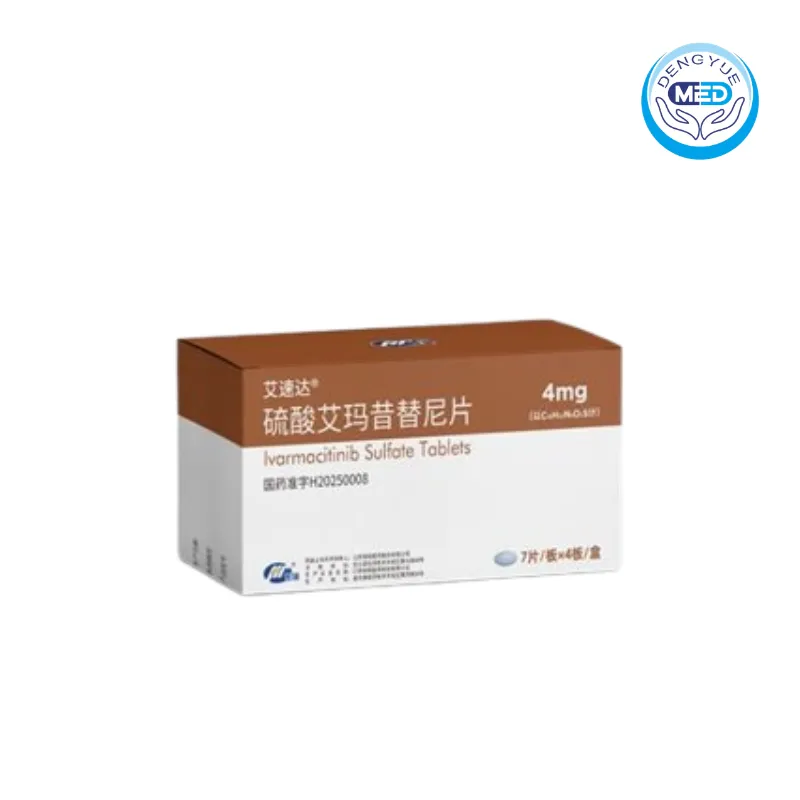
AiSuDa® | Ivarmacitinib Sulfate Tablets | Ankylosing Spondylitis | DengYueRX
Ivarmacitinib Sulfate Tablets is a novel oral selective JAK1 inhibitor for second-line treatment of refractory ankylosing spondylitis. It specifically targets inflammatory immune pathways without broad immune suppression, effectively improving spinal inflammation, pain, and patient mobility.
For prescription medicines such as Ivarmacitinib, actual supply availability needs to be confirmed based on factors including current inventory, the qualifications of the procurement entity, and the pharmaceutical regulatory requirements of the destination country or region. Cross-border procurement must also comply with the applicable laws and regulations of both the exporting country and the destination country or region.
DengYueRX provides support from the perspective of pharmaceutical supply and professional procurement connections and does not replace physicians in diagnosis, prescribing, or individualized treatment decisions.
Conclusion
Overall, Ivarmacitinib has gradually developed from a JAK1 inhibitor initially approved for a specific disease area into an oral small-molecule targeted therapy covering multiple fields of rheumatology and immune-mediated dermatology. Its product characteristics are reflected not only in its selectivity for the JAK1 target and oral route of administration, but also in its expanding range of clinical applications and increasingly established therapeutic portfolio.
For healthcare institutions, pharmaceutical distributors, and other qualified professional procurement customers, the continued development of Ivarmacitinib’s product information and approved indications makes it increasingly important to accurately verify the drug name, strength, approved indications, regulatory status, and applicable supply requirements. DengYueRX can provide product information inquiries, supply consultation, professional procurement connections, and cross-border pharmaceutical supply-chain support for prescription medicines such as Ivarmacitinib, providing qualified customers with more comprehensive reference information for pharmaceutical procurement.
FAQ About What Is Ivarmacitinib?
What is ivarmacitinib?
Ivarmacitinib is a selective JAK1 inhibitor under investigation for the treatment of immuno-inflammatory diseases. Generic Name Ivarmacitinib. DrugBank Accession Number DB16756.
Is Ivarmacitinib approved in China?
In April 2025, ivarmacitinib was approved in China for use in adult patients with moderate to severe atopic dermatitis (AD) who have had an inadequate response or intolerance to topical or other systemic treatments.
What is the mechanism of action of Ivarmacitinib?
Upon oral administration, ivarmacitinib binds to and inhibits JAK1, thereby preventing JAK-dependent signaling. This may lead to an inhibition of cellular proliferation in JAK1-overexpressing tumor cells.
What should I avoid when taking JAK inhibitors?
If you are aged 65 years or over, already have an increased risk of cardiovascular problems or cancer, or if you smoke (or had smoked for a long time in the past before giving up) then JAK inhibitors should only be used if there are no suitable alternatives for you.
How long can you take JAK inhibitor?
Treatment with a JAK inhibitor is probably for life–meaning if the treatment helps you regrow hair, but then you stop treatment, your hair most likely will fall out again.